01. The Kimberley Grande Resort
4 (399 reviews)
The Kimberley Grande Resort — The Kimberley
Book Direct & Save →The Kimberley has some of the most spectacular waterfalls in Australia, and they come with a catch that no other major waterfall region in the country shares: they're almost all conditional. Some flow only in the Wet season and are completely inaccessible when they run at their most dramatic; others are best in the early Dry when access roads have just reopened and the flow is high; and a few -- Horizontal Falls, Emma Gorge -- run year-round regardless of rainfall. The most-photographed falls in the region, Mitchell Falls (Punamii-Uunpuu on Wunambal Gaambera country), are reachable only by light aircraft, helicopter, or a serious multi-day walk that requires permits and preparation few visitors have.
View 3 Properties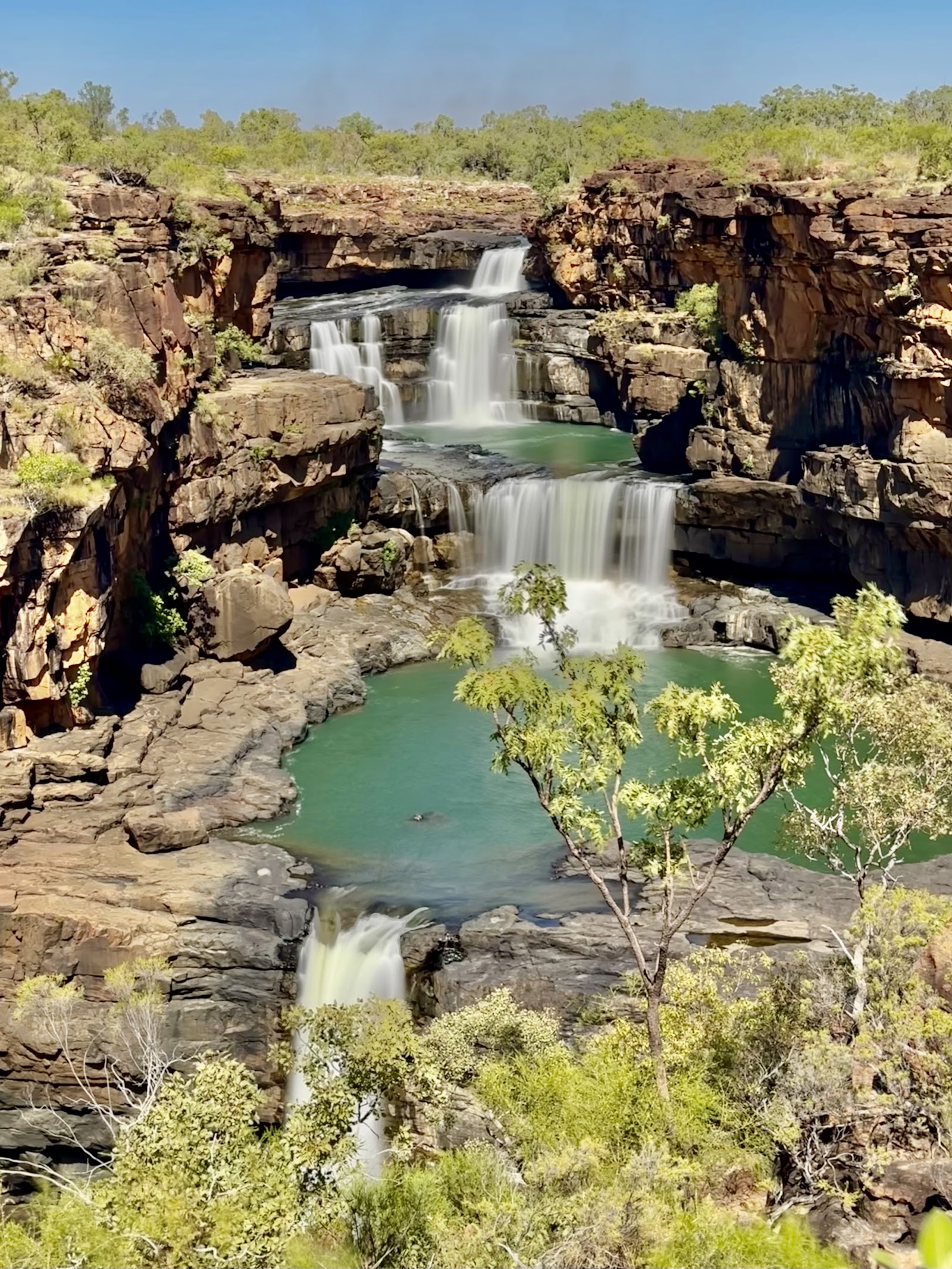
"Remote, powerful, extraordinary"
This guide covers the major Kimberley waterfalls honestly -- how to reach them, when they run at their best, what the experience is actually like, and which ones are accessible without a helicopter booking or a week of wilderness walking. Dry-season access (May-October) applies broadly, though the early Dry (May-June) typically delivers better falls volume while the late Dry (September-October) has less flow but is still manageable. All distances and routes are from the key Kimberley hubs of Kununurra and Derby.
The fundamental tension of Kimberley waterfall tourism is this: the falls are most spectacular during and immediately after the Wet season (November to April), but that is precisely when almost all access roads are flooded and closed. By the time the Dry season opens the roads in May, the peak flow is over, but the falls are still running strongly. By September and October, some falls have reduced significantly; by the Wet's return in November, the whole cycle starts again.
For practical purposes this means visiting in May or June delivers the best combination of access and waterfall volume. The roads have just been graded, the gorges have high water, and the temperatures are still comfortable. July and August are the most reliable months for travel but the falls are lower and the tourist numbers are at their peak. September and October are still workable but water volumes at the non-permanent falls are noticeably reduced, and the heat (regularly above 40 degreesC midday) is a serious consideration.
The exception to the seasonal rule is Horizontal Falls -- a tidal phenomenon that runs regardless of rainfall and can be visited through most of the year. Emma Gorge's spring-fed waterfall also runs year-round. But the great falls -- Mitchell, King George, Bell, Manning -- are Dry-season experiences, and within the Dry the earlier the visit, the better the flow.
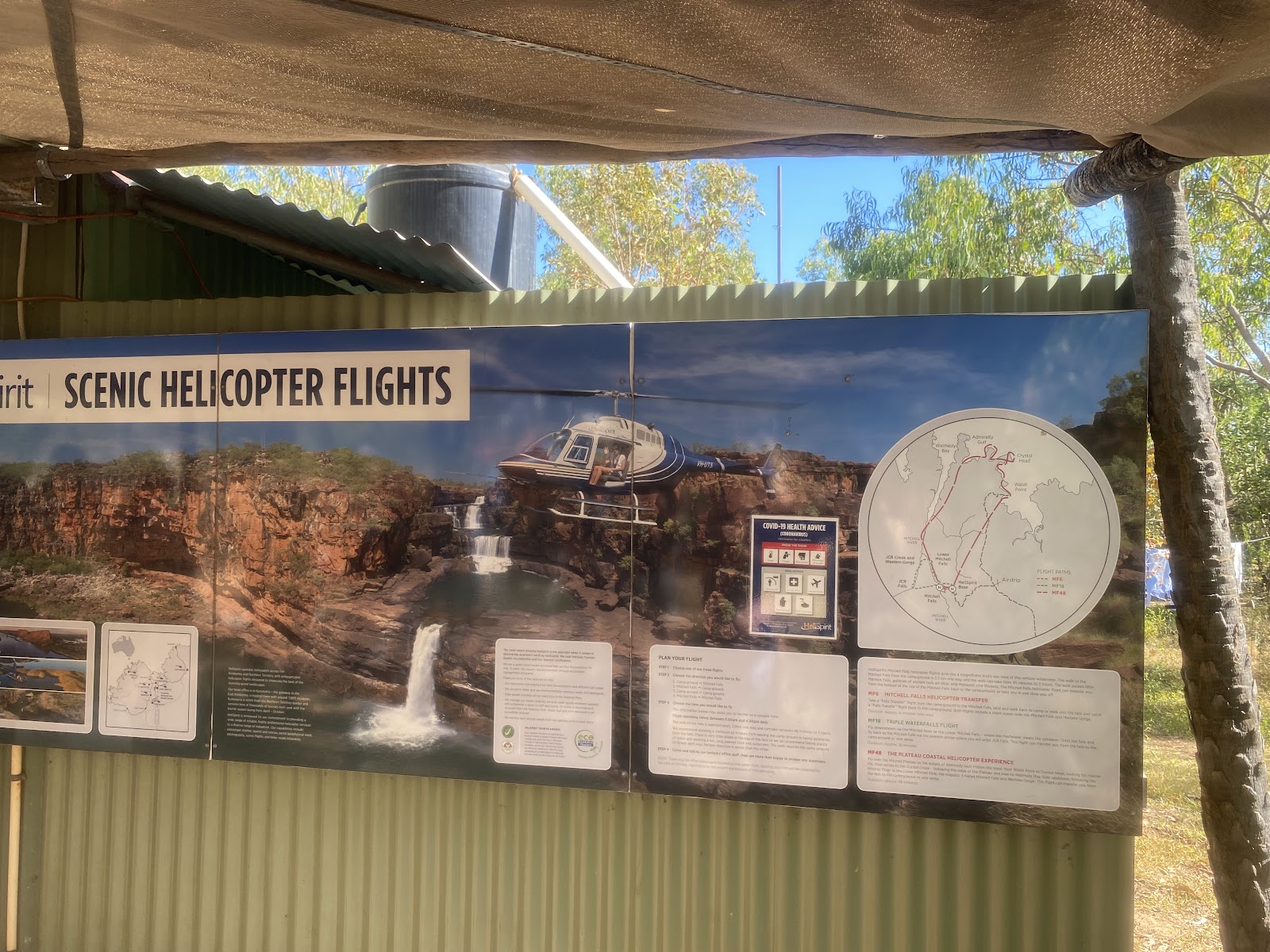
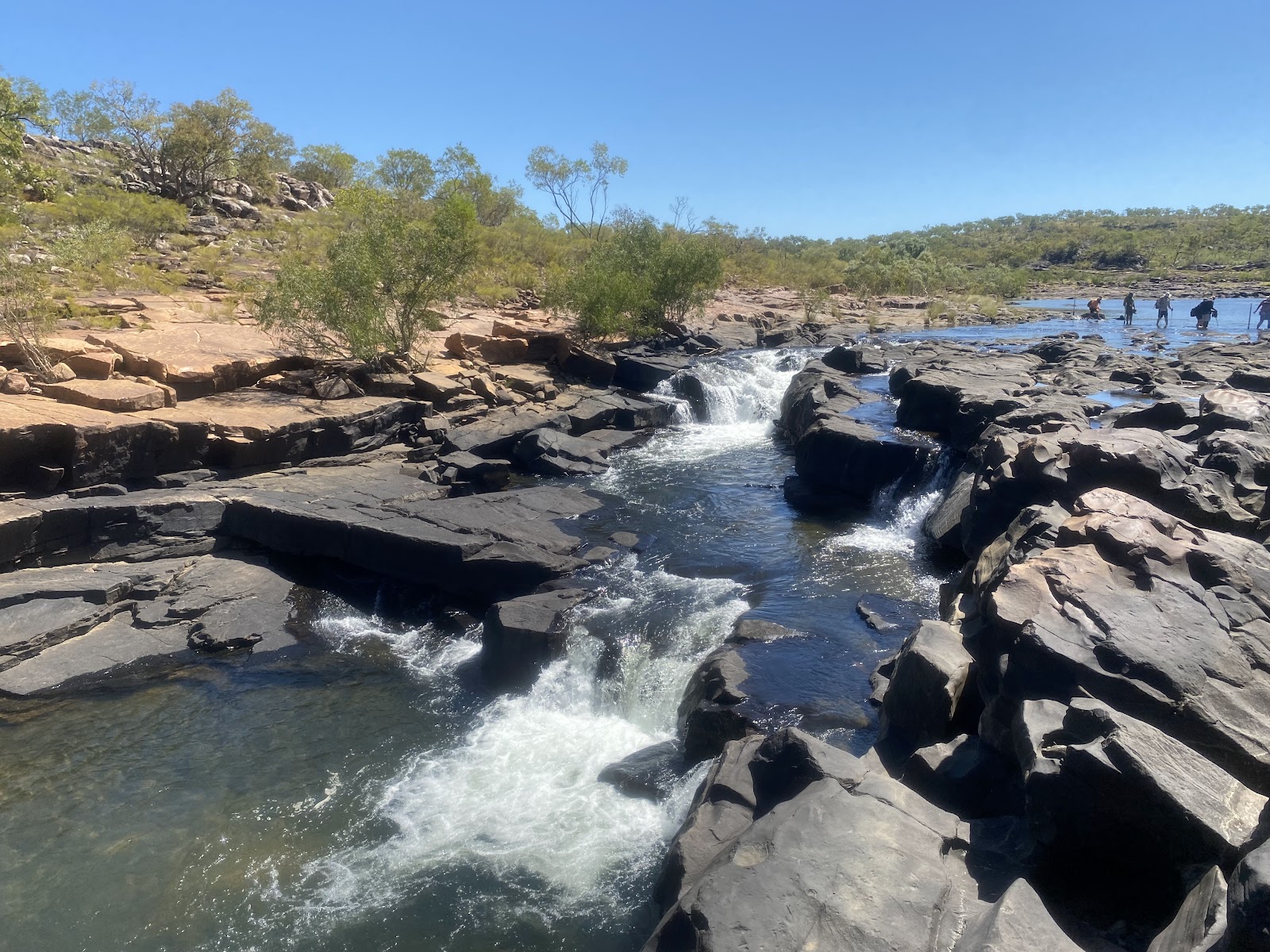
Mitchell Falls -- Punamii-Uunpuu in the Wunambal Gaambera language -- is the most iconic waterfall in the Kimberley and one of the most photographed in Australia. The falls drop in four tiers over ancient sandstone on the Mitchell Plateau in the Kimberley's remote north-west, with the whole tiered system running roughly 65 metres of cumulative drop into a broad plunge pool ringed by sandstone rock art galleries. The aerial view from a scenic flight -- the four-tiered cascade from above, with the Mitchell Plateau country stretching to the horizon -- is the defining image of the Kimberley that most people have seen before they visit.
Access requires a choice: fly in (light aircraft or helicopter from Kununurra, Drysdale River, or Kalumburu Road operators), or walk in on the multi-day Mitchell Plateau hike from the Mitchell Plateau campsite. The walk is approximately 8-9 kilometres each way on a marked track over rocky terrain, and requires camping at the falls area; it's a serious commitment with significant remoteness that demands preparation, a permit for the Wunambal Gaambera country, and self-sufficiency. Most travellers choose a scenic flight for the aerial view and a day-hike option from the fly-in camp nearby for the ground approach.
The falls and their surrounding rock art galleries are on Wunambal Gaambera traditional country. Cultural tours operate from the Kimberley Land Council-supported camps and are the recommended way to understand the landscape, the Wandjina and Gwion Gwion (Bradshaw) rock art, and the falls' significance. Approaching this site purely as a tourist attraction without that context misses most of what makes it extraordinary.
Four tiers of ancient sandstone, rock art galleries at the base, and the single most extraordinary aerial view in a region full of extraordinary aerial views.
“The helicopter landed next to the top tier and we walked down to the pools. The whole Mitchell Plateau spread out behind us. Nothing in Australia prepares you for it.”
— Google review
A scenic flight that lands near the falls -- the combination of the aerial panoramic view and the walk to the plunge pool at the base is the definitive Kimberley experience.
This is a remote, cultural site on Wunambal Gaambera country -- permits are required for extended stays. The multi-day hike is serious remote wilderness walking; do not attempt it without full preparation and self-sufficiency. Confirm flight and permit requirements before booking.
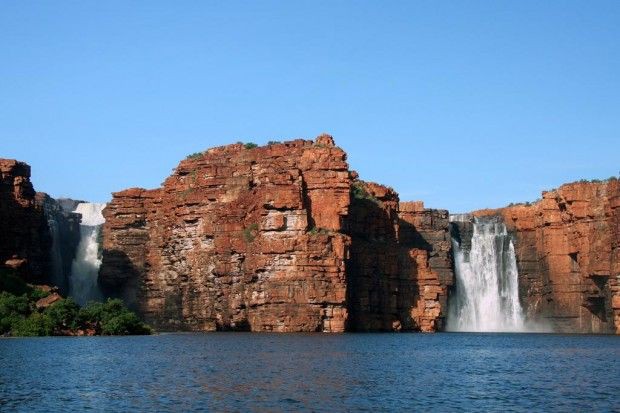
King George Falls are the highest twin waterfalls in Western Australia -- two parallel drops of approximately 80 metres falling directly into the tidal King George River, surrounded by red sandstone ranges and the Kimberley coast's extraordinary ancient landscape. The falls are only accessible by boat up the King George River from Wyndham, or by scenic flight from Kununurra or Wyndham. There is no road access and no walking track. The boat approach -- winding 14 kilometres up a narrow gorge with saltwater crocodiles in the river -- is one of the most dramatic journeys in the Kimberley.
The falls are at their most powerful in the early Dry season when Wet-season runoff is still clearing the plateau. By August they reduce and by late October some years they have slowed substantially; the boat experience of the gorge approach is compelling in any season, but checking current flow with operators before booking is worthwhile for those who are specifically coming for the falls. Saltwater crocodiles are in the river throughout -- the boat approach is safe, but do not enter the water at any point during the journey or at the falls base.
Day cruises operate from Wyndham and occasionally from Kununurra; some longer Kimberley cruise itineraries include King George Falls as part of a multi-day coastal expedition. The half-day boat tour from Wyndham is the most accessible option and one of the most rewarding single experiences on the Kimberley coast. Wyndham itself is often passed through without stopping on the Kununurra corridor -- it's worth the extra hour to appreciate the town's extraordinary view from the Five Rivers Lookout before or after the boat tour.
Approaching twin 80-metre falls through a narrow saltwater-croc gorge by boat is the most dramatically framed waterfall experience in Western Australia.
“The 14km gorge approach before the falls appears is the experience. The walls get higher and tighter. Then the falls. Then you just float there staring.”
— Traveller review
The gorge approach by boat -- 14 kilometres of narrowing saltwater gorge before the twin falls open up ahead.
Saltwater crocodiles are present throughout the river -- do not enter the water at any point. Flow reduces significantly in the late Dry; check current conditions before booking for a September or October trip.
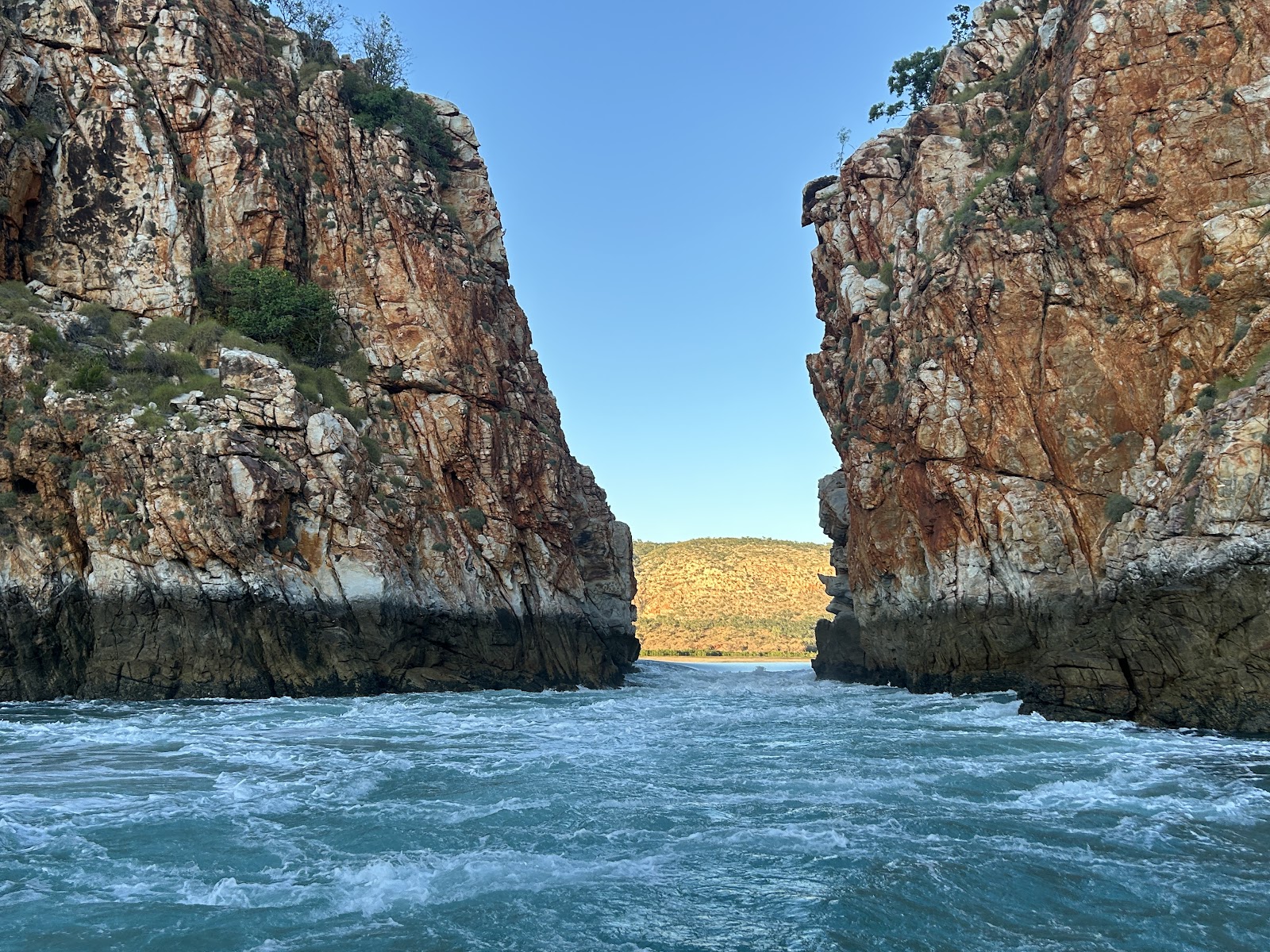
Horizontal Falls -- a name that initially makes no sense and becomes obvious the moment you see them -- are not a waterfall in the conventional sense. They are tidal surges: twice daily, the massive tidal differential of the Kimberley coast (among the largest in Australia, reaching 10 to 12 metres) drives enormous volumes of water through two narrow gaps in a coastal cliff range at Talbot Bay in the Buccaneer Archipelago. The water accelerates through each gap to create what appears to be a horizontal waterfall -- a churning, foaming surge of seawater running through a cliff face at speeds that can reach 15 kilometres per hour.
Accessing Horizontal Falls requires a boat charter or seaplane from Derby, approximately 300 kilometres west of Kununurra. Several operators run full-day tours that include a fast-boat ride through the falls (at safer tidal windows), a fish feeding session in the bay, and in some cases an overnight stay on a moored pontoon. The tourist infrastructure at the falls site is significant by remote Kimberley standards -- this is one of the region's most visited attractions and tour bookings in July and August should be made at least a month in advance.
Unlike every other waterfall in this guide, Horizontal Falls are available across most of the year -- the tidal cycle is independent of the Wet-Dry season. The Wet season makes the seaplane approach to Derby more difficult, but boat-accessible Dry-season timing is also fine. The experience is as much about the tidal power and the spectacular Buccaneer Archipelago coastline as the surge itself.
A boat accelerating through a tidal surge in a cliff gap at 15km/h is a completely unique natural experience -- the Kimberley geology doing something that doesn't look possible.
“The fast boat through the gap feels like entering a washing machine at speed. Terrifying for about 30 seconds, then absolutely incredible. Nothing else like it.”
— Google review
The fast-boat passage through the narrow falls gap at the right tidal window -- the surge and roar of the water at close range.
Not suitable for anyone with balance or inner-ear issues who can't manage a fast boat in rough water. Tours book out significantly in July-August; reserve at least a month ahead. Not a conventional waterfall -- manage expectations for those expecting a vertical cascade.
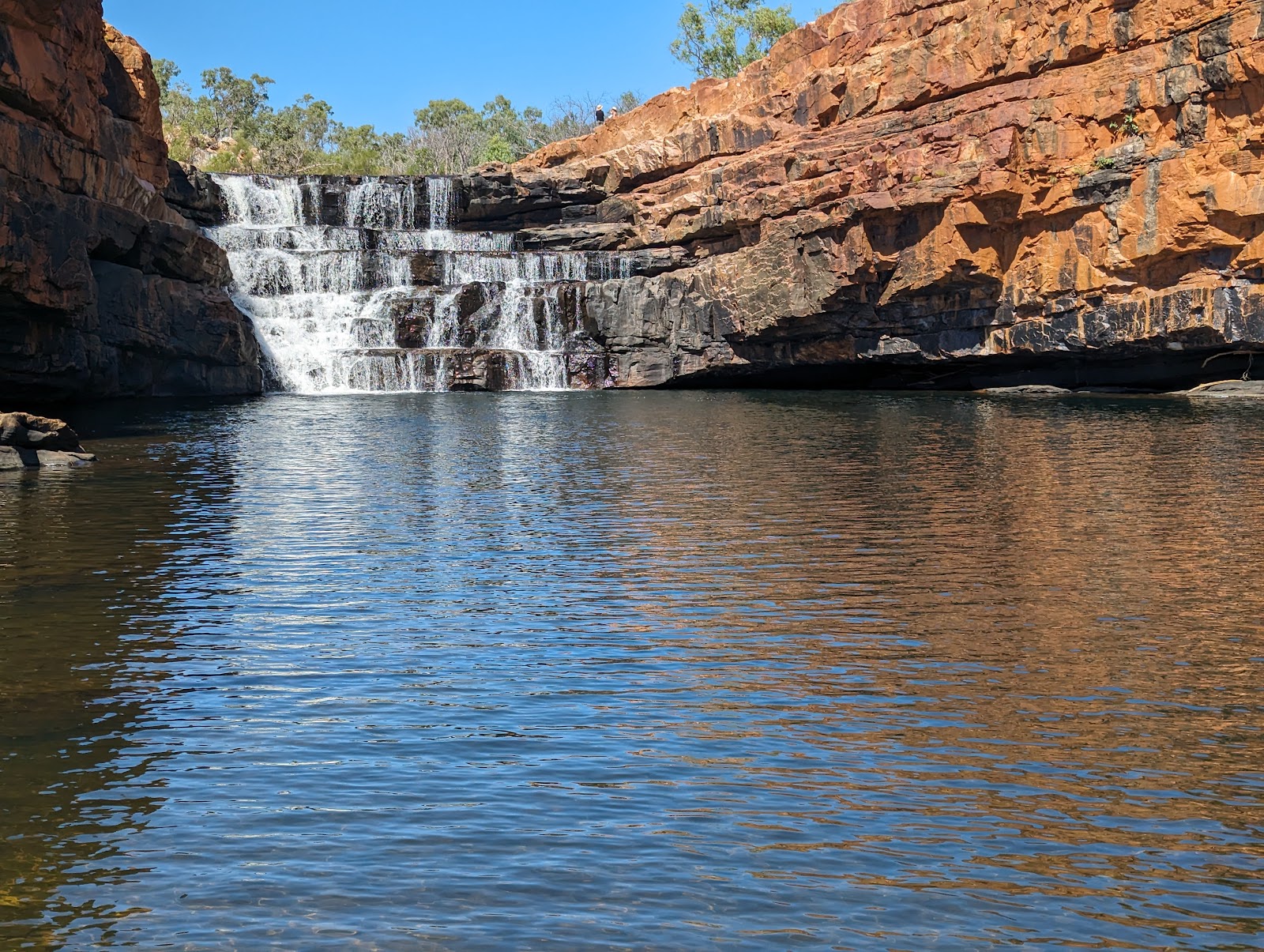
Bell Gorge is the most photographed waterfall-swimming hole combination in the Gibb River Road corridor. Tiered drops of orange and grey sandstone step down through the gorge into a deep, cold plunge pool -- the photography works because the geometry is nearly perfect: horizontal water on a horizontal shelf, vertical rock faces, the pool glittering in the morning light. The falls are at their most powerful in May and June immediately after the Wet season when the creek is running full; by late in the Dry they slow to a more modest flow but the swimming hole remains deep.
The walk in from the Silent Grove campsite is approximately 3.5 kilometres return over rocky, uneven terrain -- a moderate walk that rewards those who take their time and start early. The silent hours before 8am at Bell Gorge, when the only sound is the falls and the only light is the early-morning sun on the stone, are the reason experienced Kimberley travellers camp at Silent Grove rather than day-visiting. The gorge is usually signed safe for swimming in the main pool area through the Dry season; always verify the current signage on arrival.
For families and mixed-fitness groups, Bell Gorge falls represent the most accessible significant waterfall on the Gibb -- no helicopter required, no boat tour, just the walk, the pool, and one of the best natural swimming spots in Western Australia.
A tiered waterfall into a cold, deep plunge pool at the end of a 3.5km walk -- the most rewarding walk-access waterfall on the Gibb.
“We got there at 6.30am, the sun was just catching the upper tier, and the pool was absolutely clear and cold. I've been dreaming about it ever since.”
— Google review
The upper tiered plunge at first light before the heat and the tour groups arrive.
Moderate walk on rough terrain -- not for the less-mobile; check croc safety signage on arrival; do not swim near the falls after rain.
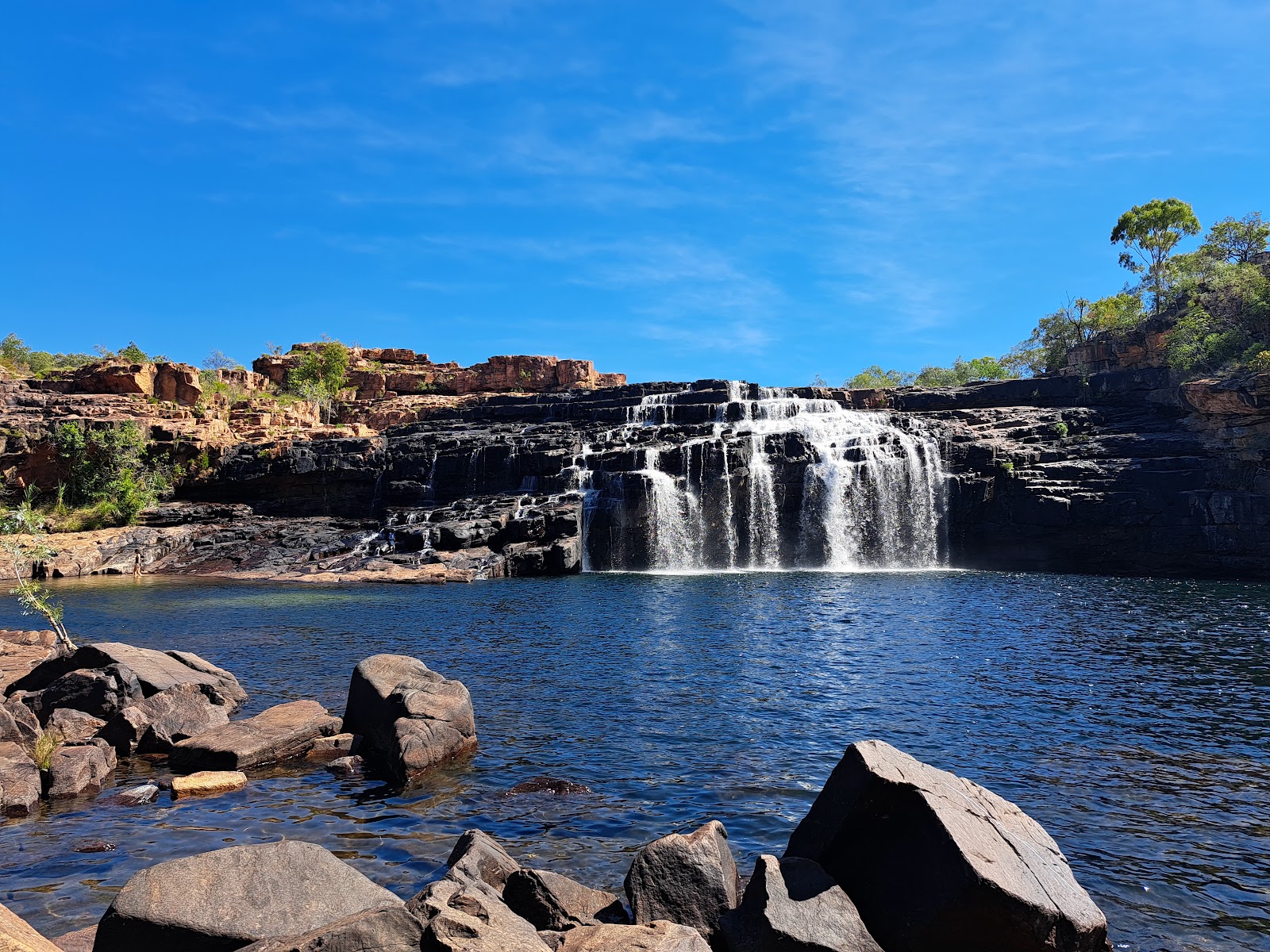
Manning Falls rewards walkers who are willing to put in a full half-day on a hot, rocky track. From the Mt Barnett campsite, a short lower-section walk with a rope-assisted river crossing delivers the lower Manning Falls -- a reasonable cascade into a wide swimming hole that most Gibb visitors access without too much difficulty. The upper falls, reached via an 8-kilometre return walk across exposed sandstone plateau, are genuinely spectacular: a wide, powerful multi-step waterfall in a large plunge-pool amphitheatre that receives a fraction of the visitors that the lower section does.
The plateau walk to the upper falls is one of the physically hardest day walks on the Gibb. The track is rocky and largely exposed, the distances are real, and the heat in the Kimberley Dry makes a pre-6am start essential. But the upper Manning Falls sitting in their broad pool basin -- often visited by travellers who have the gorge to themselves -- are worth the effort. The falls are at full power in May and June and reduce through the Dry, but they remain strong enough through July and August to be spectacular.
Mt Barnett Roadhouse, at the start of the Manning Gorge walk, is a critical fuel stop on the Gibb regardless of whether you walk. Fill your tank here -- it's one of the few reliable fuel points between the Gibb's central section and the eastern end.
The wide upper Manning Falls in a plunge pool basin that almost nobody reaches -- a proper wilderness waterfall earned by a proper wilderness walk.
“Eight kilometres in the Kimberley heat to a giant waterfall that we had to ourselves. No question -- the hardest and the best walk we did on the whole Gibb.”
— Traveller review
Standing at the base of the upper Manning Falls in a pool basin that most Gibb travellers never reach.
The upper walk is hard, hot and remote -- not for the unfit or late starters. Always check lower-section swim safety signage on arrival.
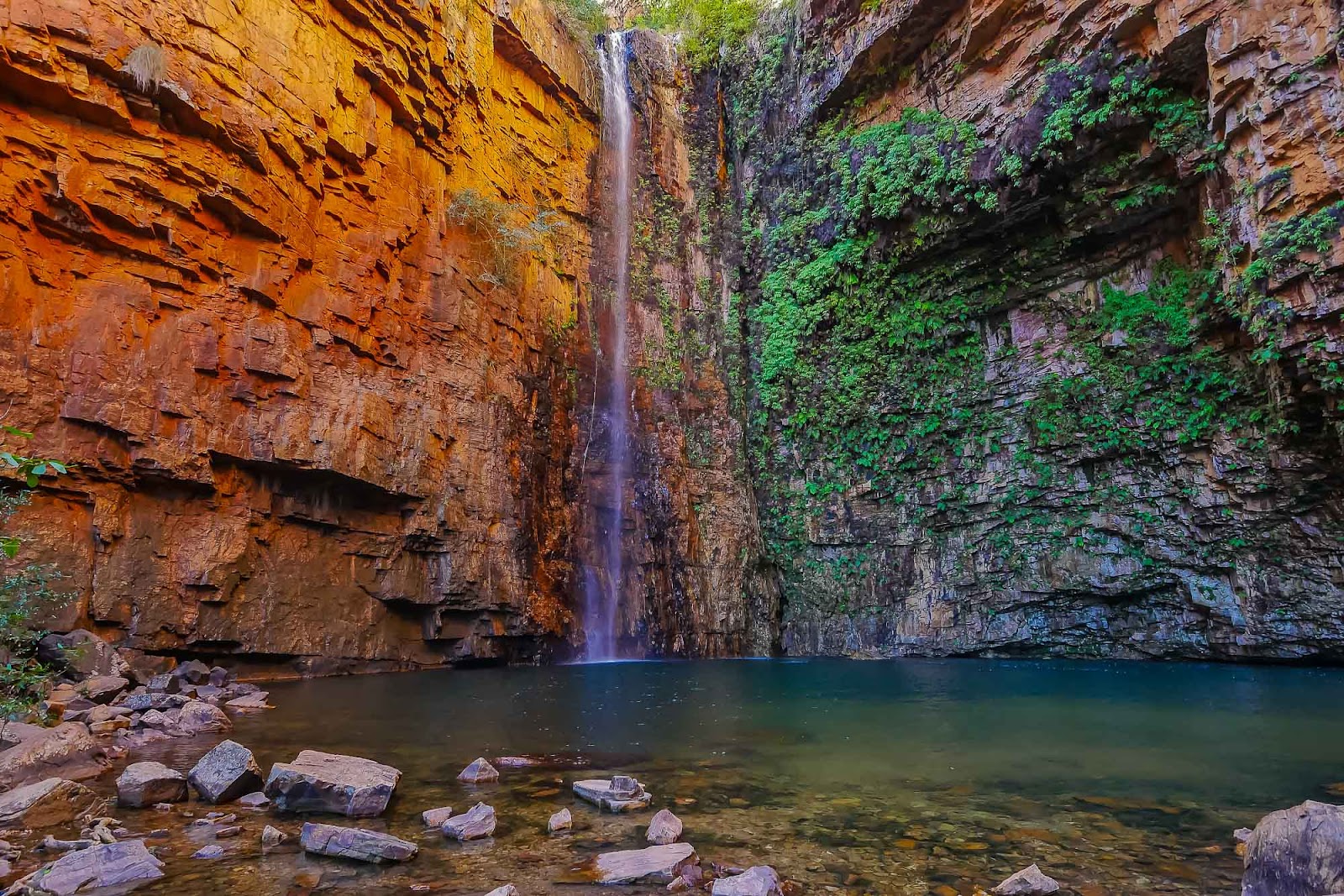
Emma Gorge Waterfall at El Questro is the most accessible significant waterfall in the Kimberley corridor and the only one in this guide fed by a thermal spring rather than rainfall. A 65-metre waterfall runs year-round from a warm spring seeping through the sandstone, falling into a swimming pool that stays between 20 and 30 degrees Celsius from the spring water mixing with the gorge pool. The surrounding canyon is lined with livistona palms and tall sandstone walls, and the 2-kilometre return walk from the El Questro gorge campsite is well-marked, flat and manageable for most fitness levels.
Because Emma Gorge Waterfall is spring-fed, it doesn't follow the Wet-Dry seasonal pattern of the other falls in this guide. The flow remains consistent and the swimming is available from the park's opening in April through to its close in late October. This makes Emma Gorge the reliable fallback for those who arrive late in the Dry season and find other falls at low volume, and the first choice for those who want an easy, beautiful waterfall swim without a long drive or a hard walk.
The El Questro entry fee and gorge campsite booking apply. The campsite guests reach Emma Gorge before the day visitors, who typically arrive from Kununurra from mid-morning. An early walk from the camp ensures the gorge and pool to yourself for the first hour -- warm spring water, cold morning air, the falls running against orange sandstone and palms.
A warm spring-fed waterfall that runs year-round into a beautiful pool at the end of an easy 2km walk -- the most accessible great waterfall experience in the Kimberley.
“Walked over from the camp at 6.30am. Warm water, cold air, no one else. The 65-metre falls were running full. How is this real?”
— Google review
An early-morning swim in the warm spring-fed pool below the running falls before the day visitors arrive from Kununurra.
El Questro has an entry fee and peak-season gorge campsite books out -- plan ahead. Follow saltwater croc signage across the station (the gorge pool is safe but surrounding waterways are not).
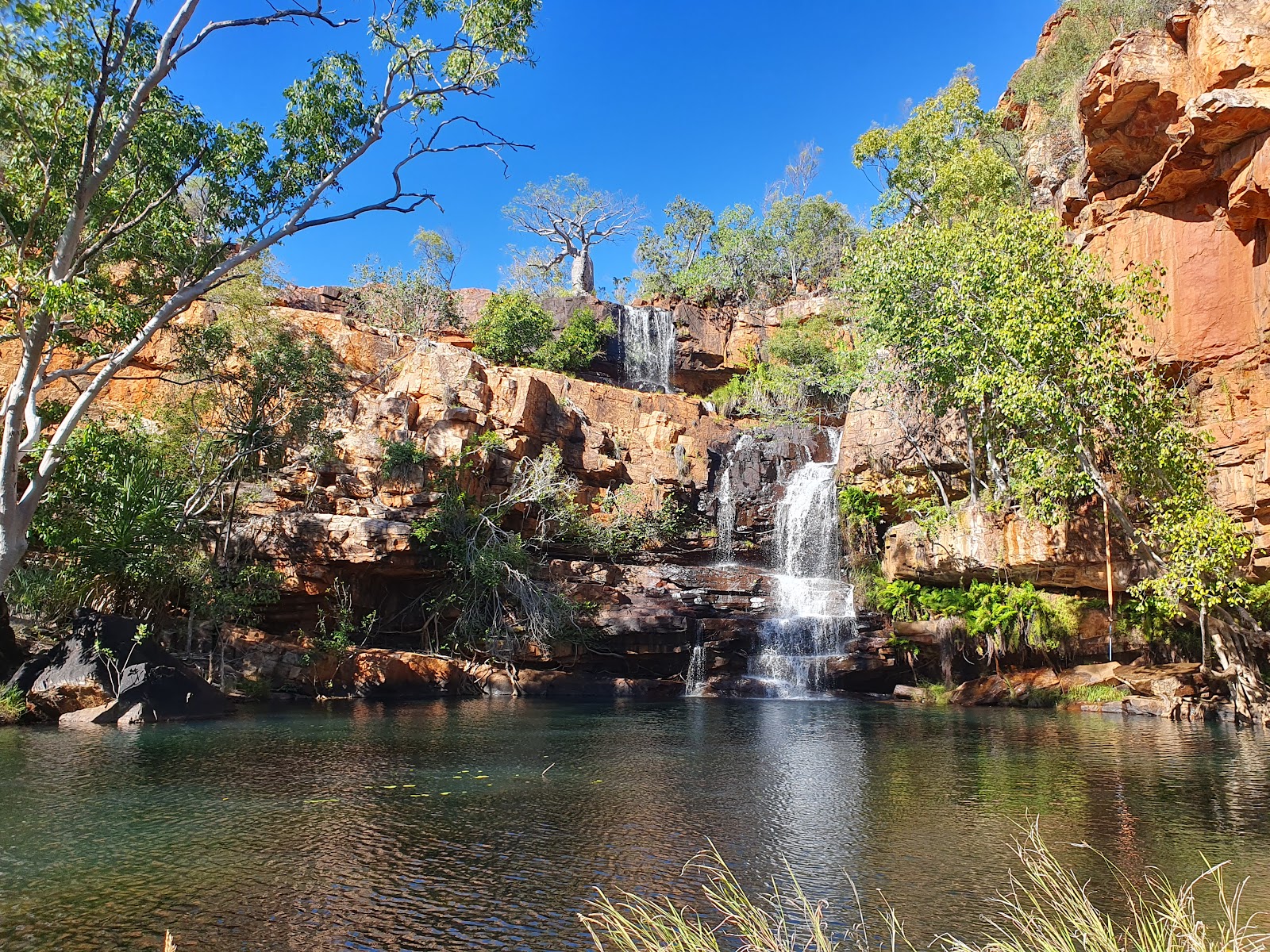
The waterfall at Galvans Gorge is modest compared with Mitchell or King George, but it more than compensates with accessibility and context. A low, wide drop feeds a clear swimming pool at the base, with the Wandjina painted overhang directly above the water -- ancestral figures that have been repainted and maintained across generations on Wunambal Gaambera country. The combination of the falls, the swim, and the cultural art site in a 10-minute walk from the road is why Galvans has the best effort-to-reward ratio of any waterfall stop on the Gibb.
The falls are at their best in May and June immediately after the Wet, when water volumes are highest. They continue through July and August and provide a good swimming depth through the Dry, but by late September flow reduces. Freshwater crocodiles are visible on the rocky margins of the pool -- swim in the main body, not the rocks, and check current safety signage at the site on arrival.
Galvans is signposted near the Mt Barnett Roadhouse on the central Gibb, making it a natural fuel-and-stop combination. Even travellers rushing the Gibb on a tight schedule should stop here -- it takes 20 to 30 minutes, delivers a proper swim and a rock-art site, and is one of the most concentrated single experiences on the road.
Wandjina art above a waterfall pool -- the richest single stop on the Gibb for the time it requires.
“Ten minutes from the road. A waterfall, a cold pool, and Wandjina figures painted above the water thousands of years ago. Stop here, don't skip it.”
— Google review
The Wandjina-painted overhang framing the waterfall and pool -- an art site and a swim in one.
Freshwater crocs present at the pool margins -- swim in the main body; never touch the rock art.
| Season | Conditions | Highlights | Crowds |
|---|---|---|---|
| May-June (Early Dry) | Post-Wet runoff, maximum flow, roads newly open | Best waterfall volume at Bell, Manning, Galvans and Mitchell. Roads may still have sections reopening. Mornings cool. | Low-moderate |
| July-August (Peak Dry) | Perfect temperatures, all roads open | The most reliable travel conditions; waterfalls at medium-good flow. Busiest period for tours and campsites. | High -- book everything ahead |
| September-October (Late Dry) | Increasing heat (35-42 degreesC), falls reducing | Most falls at lower volume; Emma Gorge (spring-fed) unaffected. Very hot midday -- early starts essential. Roads may close early October. | Moderate-low |
| November-April (Wet) | Roads closed, falls at maximum volume -- inaccessible | The great irony of Kimberley waterfalls: they are at their most powerful and completely unreachable. Do not attempt travel in this period. | None |
What recent visitors say:
“OMG...this place reduced me to tears due to being overwhelmed by its grandeur and spectacular scenery. We had two days here but would have loved a week. Echidna Chasm was amazing, Cathedral Gorge breathtaking and Mini Palms gorgeous. I have travelled extensively throughout Europe, Australia, Asia and parts of Canada and the US and l rate this as No 1. This I”— Megan Hollick (on The Bungle Bungles), Google review
“I'll admit that before I visited The Kimberley all I knew about The Bungles Bungles was the classic aerial image of the striated doom rocks. We visited at sunrise so caught the early morning, 'golden hour' light on the ranges. Early start meant that the day use area was not busy, and the trails were cool, shaded and not crowded. Trial heads had maps, paths w”— Zeglar “Zeg” Fergus (on The Bungle Bungles), Google review
“A place that is kinda impossible to review, you gotta see it for yourself! First warning, the track in is not for the faint hearted (even when graded) but if you can do that you will be fine. Its over 45kms from the front gate to the Visitors centre, which you have to stop at and check in if you are staying at either campsite (Walardi or Kurrajon). Special ”— cktravels (on The Bungle Bungles), Google review
Timing and flow: Arrive as early in the Dry as possible (May is ideal) if waterfall volume is important to your trip. The trade-off is that roads may still be reopening and some operators may not have full schedules running. By July and August everything is reliable, but flows are lower. By October, many falls are well down on their peak. For Emma Gorge (spring-fed) and Horizontal Falls (tidal), the seasonal rule doesn't apply -- both run through the park season regardless of rainfall.
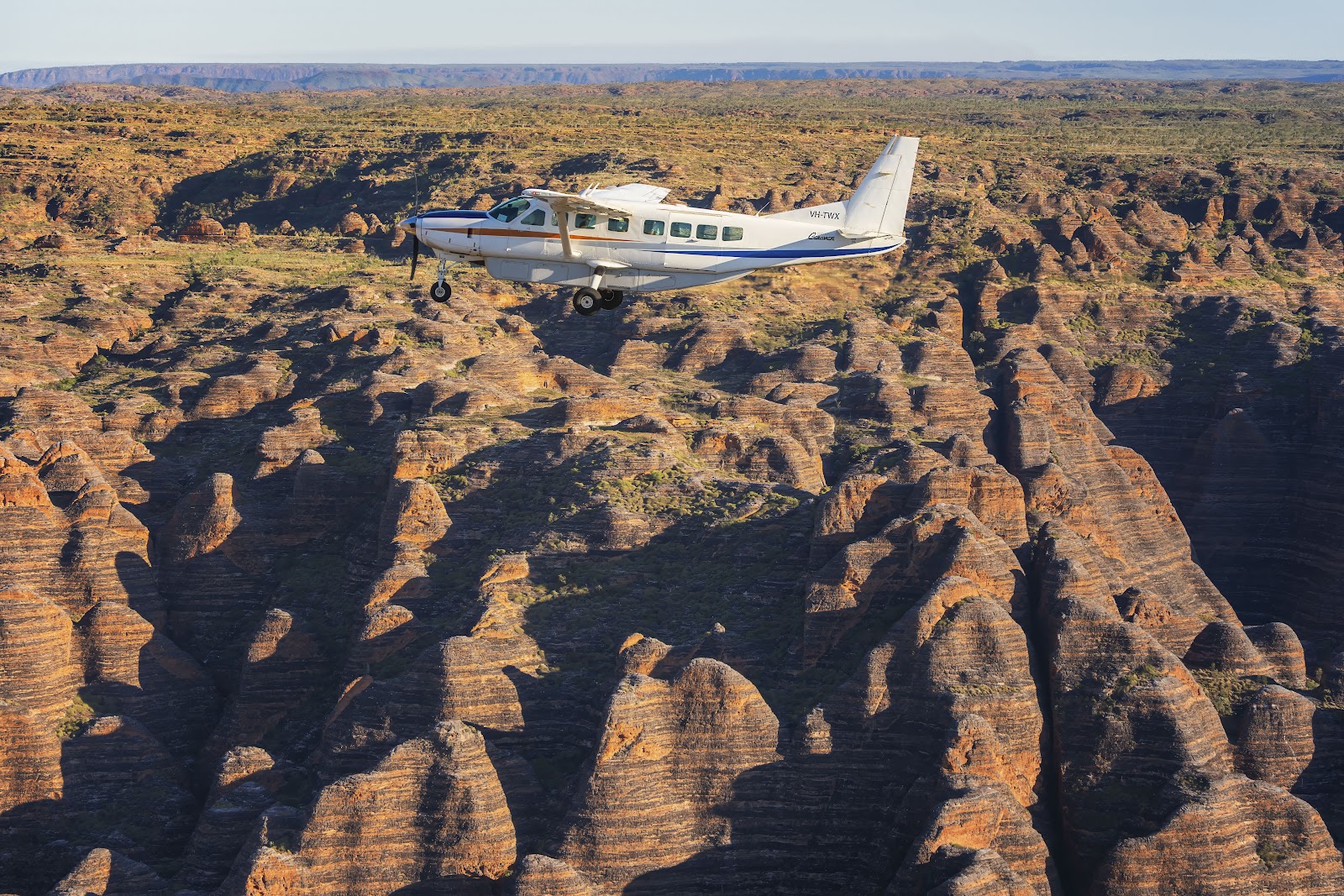
Access reality check: Several of the most spectacular falls in the Kimberley are accessible only by air or boat. Mitchell Falls and King George Falls have no road access. Horizontal Falls requires a boat charter or seaplane from Derby. The accessible falls -- Bell, Manning, Galvans, Emma Gorge -- all require a high-clearance 4WD to reach. If you don't have a 4WD, scenic flights from Kununurra cover Mitchell Falls and King George Falls in a single day and are genuinely exceptional in their own right.
Crocodiles and swim safety: Most Kimberley waterfalls discharge into pools or waterways that are crocodile-assessed. Never swim without current signed safety confirmation at the site. The swim-safe gorges (Bell, Emma Gorge, Galvans main body) are assessed by rangers and station managers and are signed accordingly; always verify on arrival, as conditions can change after localised rain or seasonal movement.
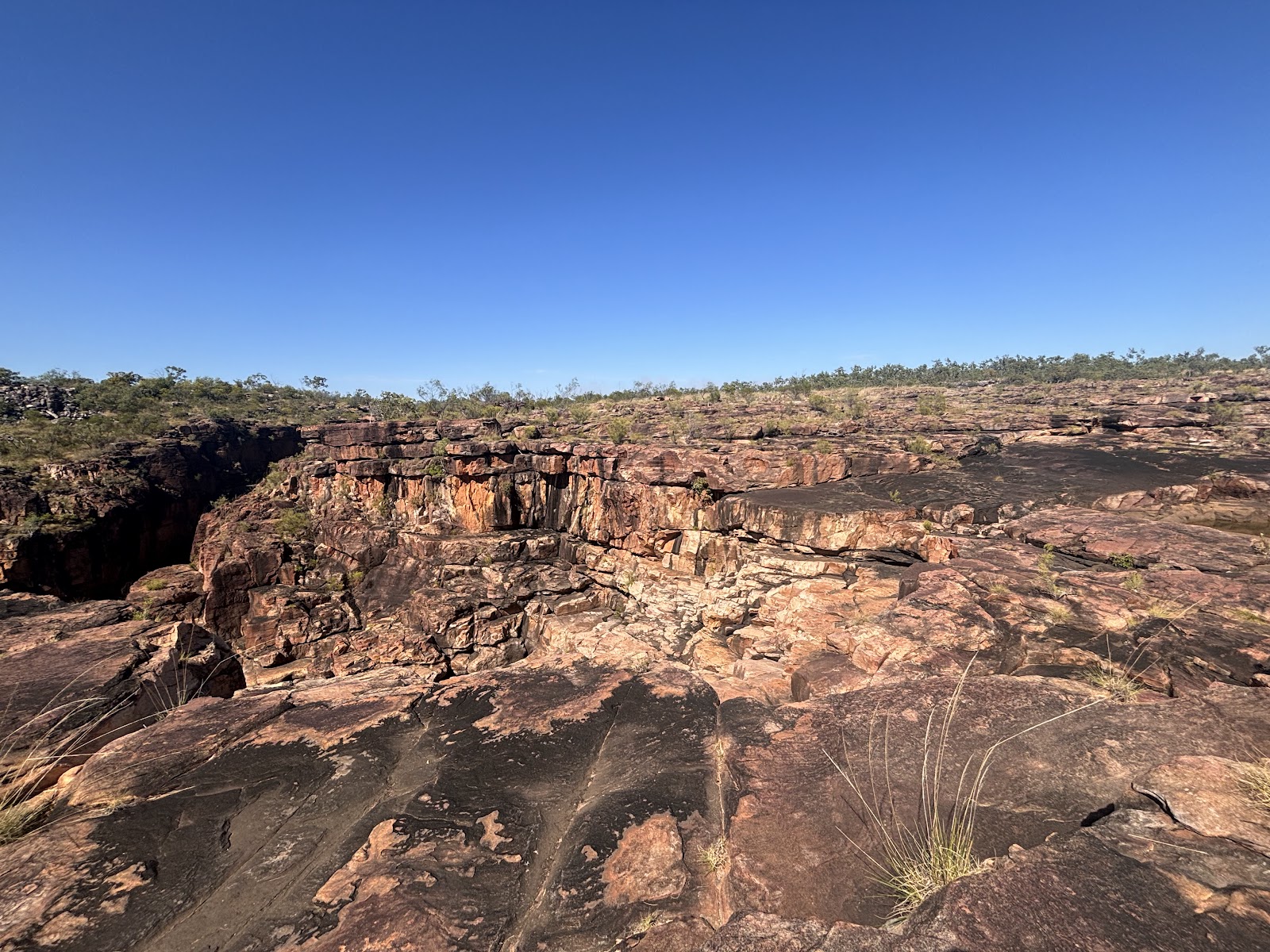
The Kimberley's waterfalls are among the most spectacular in Australia and also among the most work to reach. Mitchell Falls requires a helicopter or a multi-day wilderness hike. King George Falls requires a boat. Horizontal Falls requires a charter from Derby. Bell and Manning Falls require a 4WD and a Gibb River Road trip. Only Emma Gorge -- spring-fed, at El Questro, at the end of a 2-kilometre walk -- is straightforwardly accessible to most travellers.
The effort is the whole point. Waterfalls you can reach easily in a flash-in day trip are not the Kimberley experience; these falls are. The travellers who remember them longest are the ones who earned each one -- who drove the corrugations, walked in the heat, flew the plateau at dawn, and stood at the base of something that most people will never see. Plan for that level of commitment and the Kimberley waterfalls will reward it.
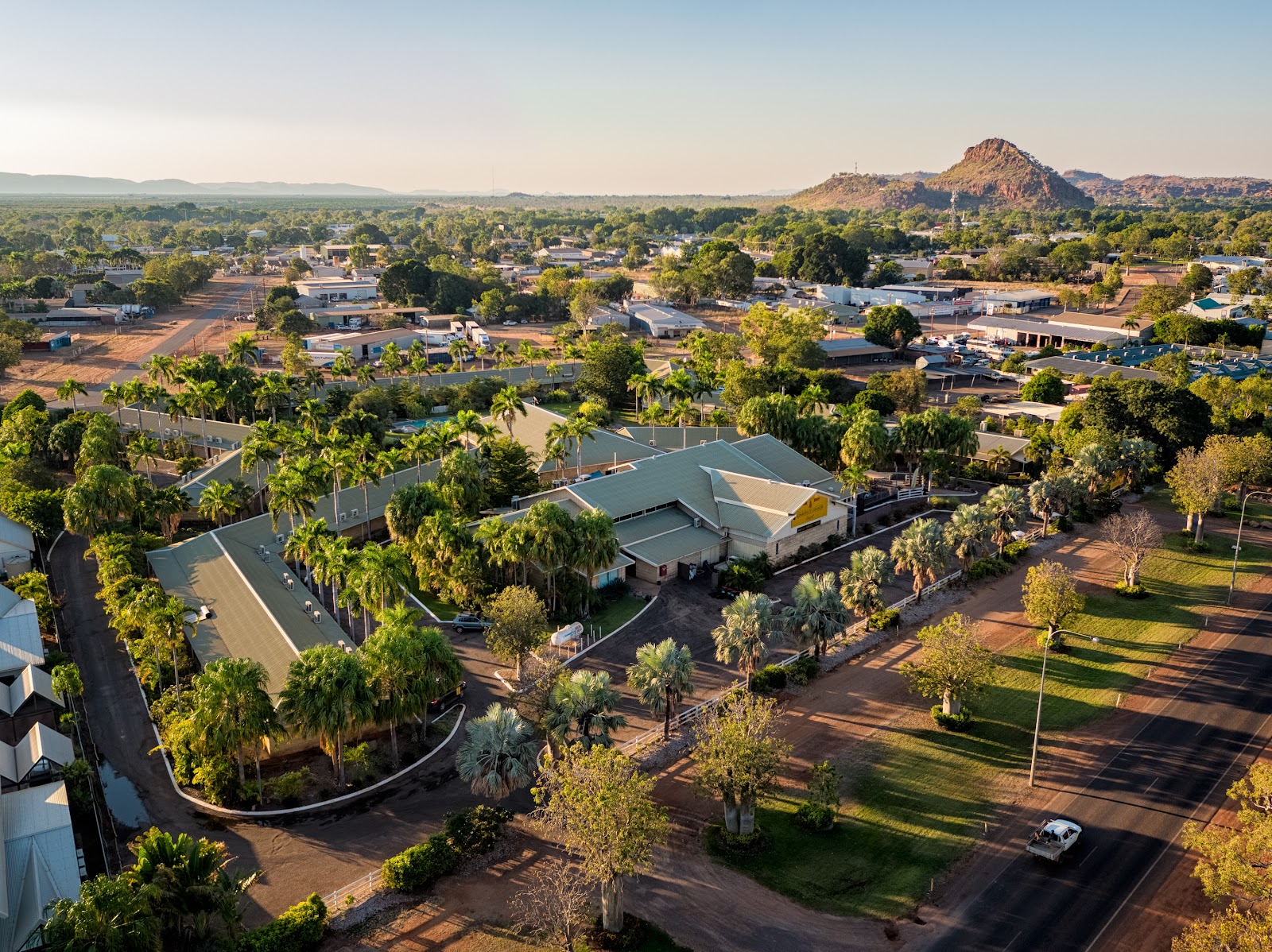
The Kimberley Grande Resort — The Kimberley
Book Direct & Save →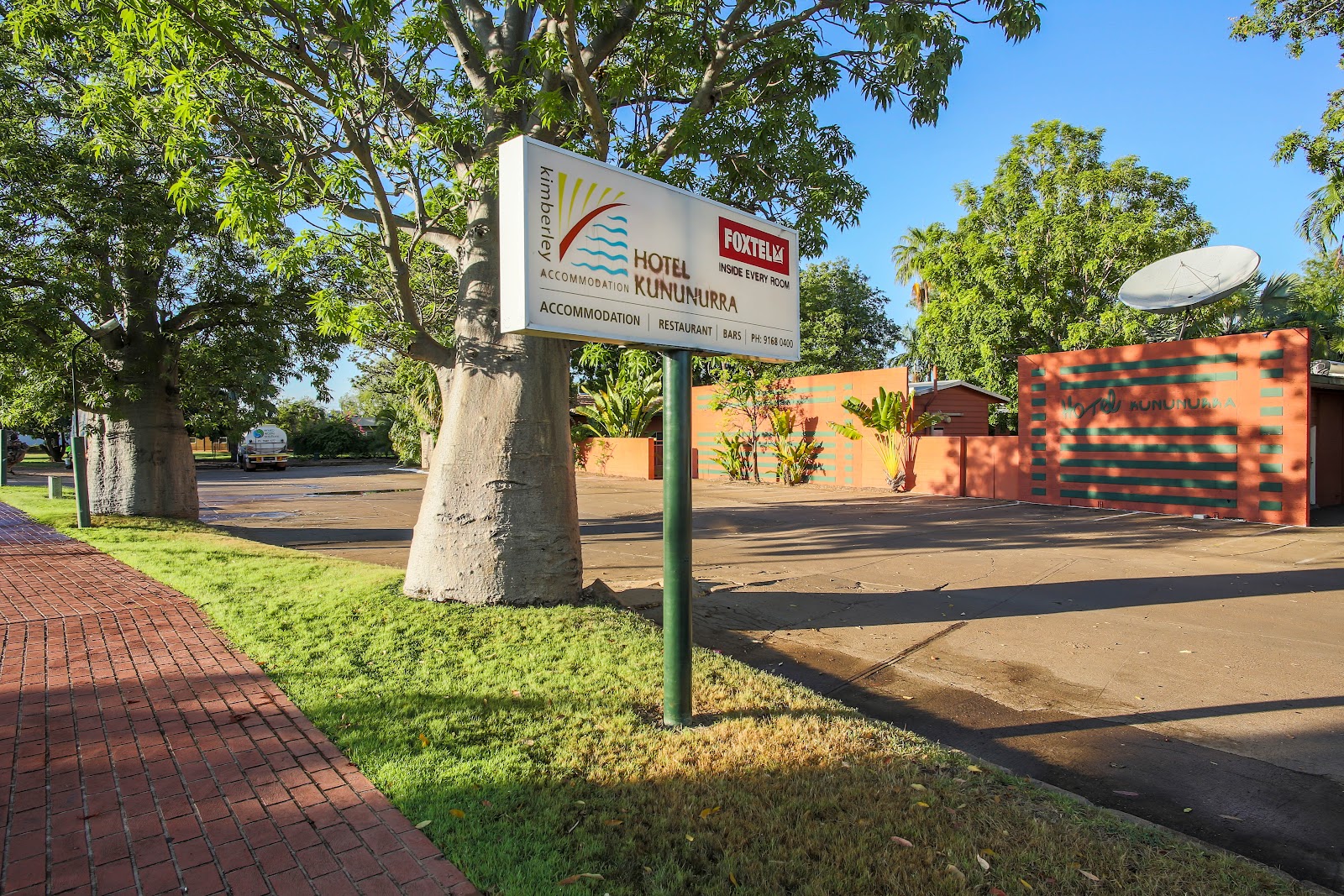
Best Western Cambridge Hotel Kununurra — The Kimberley
Book Direct & Save →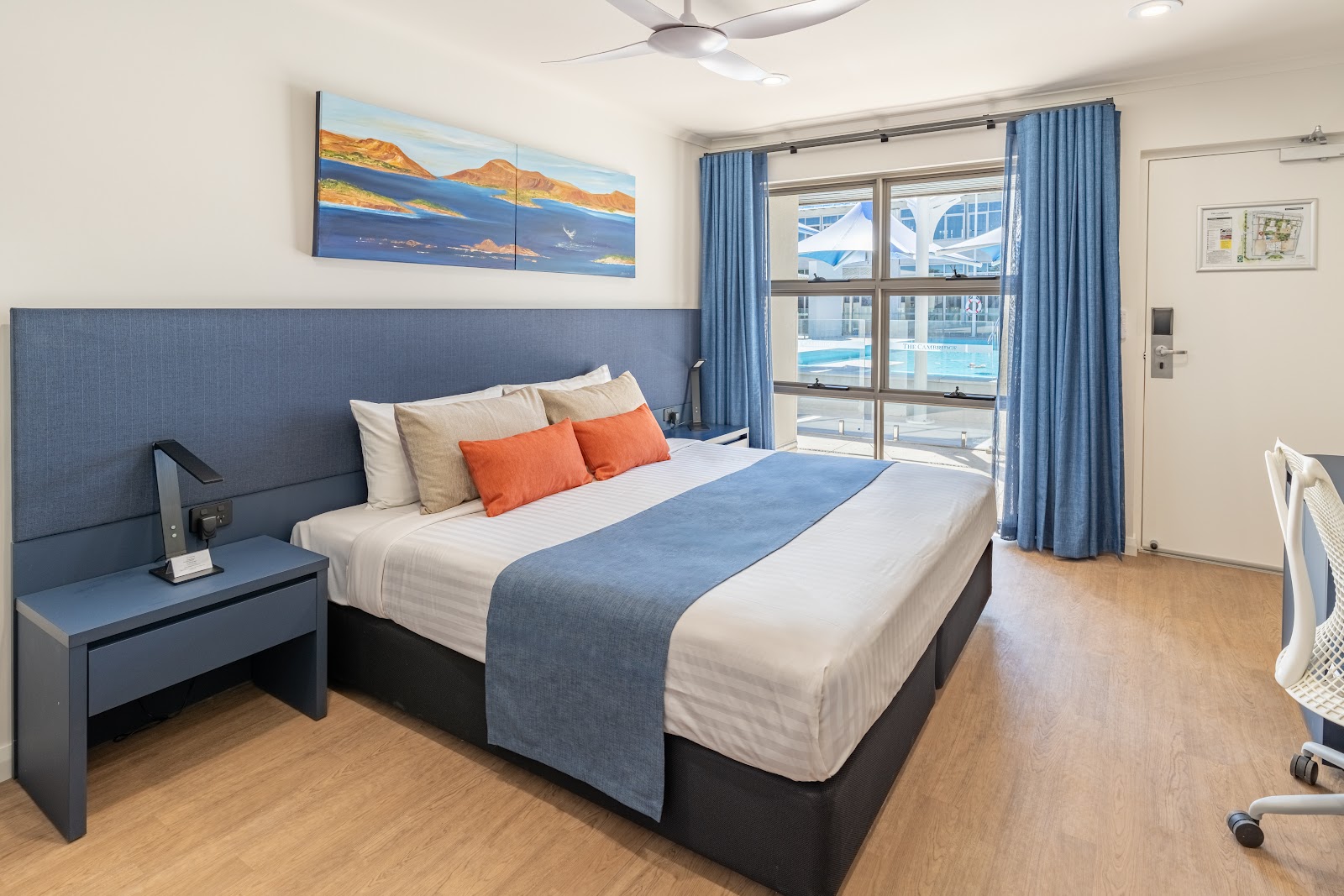
Hotel Kununurra — The Kimberley
Book Direct & Save →Skip OTA fees. Connect directly with The Kimberley owners for the best rates and a truly personal experience.
We match any online rate. No service fees — 100% of your payment supports local owners.
Direct guests receive complimentary hampers, early check-in, and priority access to experiences.
Speak directly with the people who manage the properties. No call centres, just local expertise.
Part of Western Australia · Australia's North West
 Glen Aplin
Granite Belt, Queensland
Queensland's most underrated wine valley
Explore the guide →
Glen Aplin
Granite Belt, Queensland
Queensland's most underrated wine valley
Explore the guide →
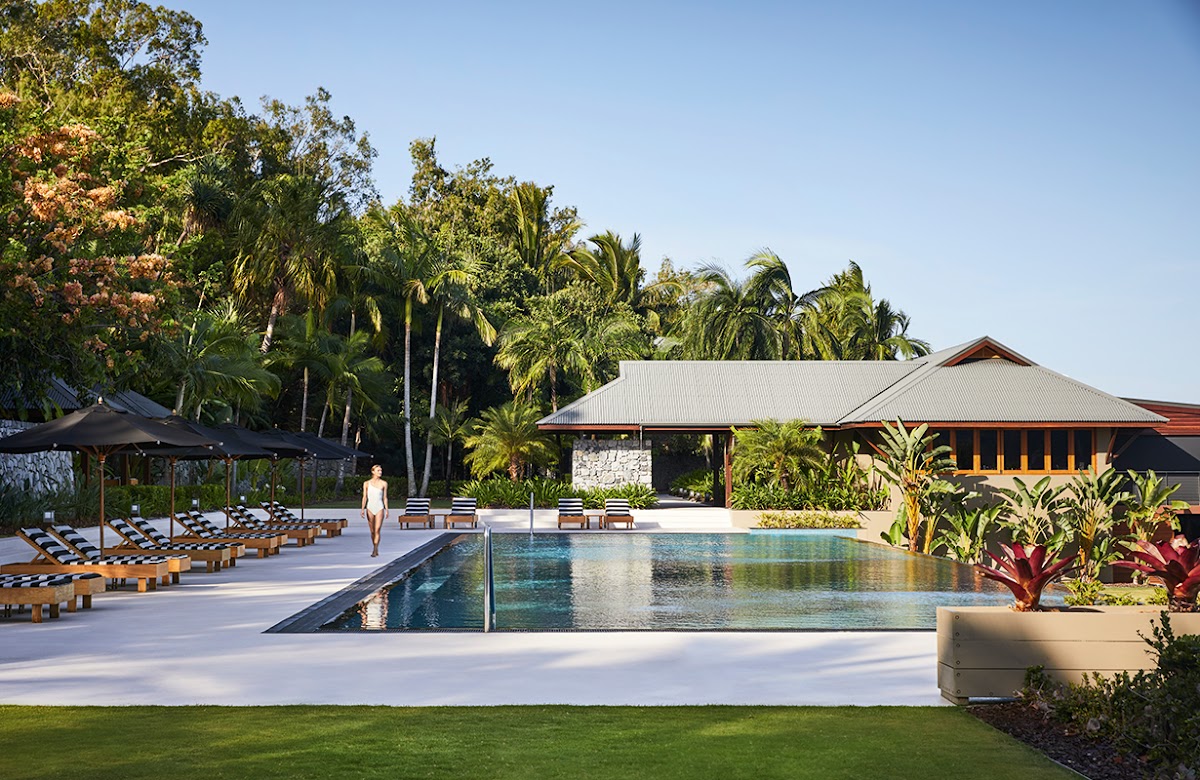 Hamilton Island
The Whitsundays, Queensland
Whitsundays island resort — Whitehaven Beach, reef trips and golf-buggy life
Explore the guide →
Hamilton Island
The Whitsundays, Queensland
Whitsundays island resort — Whitehaven Beach, reef trips and golf-buggy life
Explore the guide →
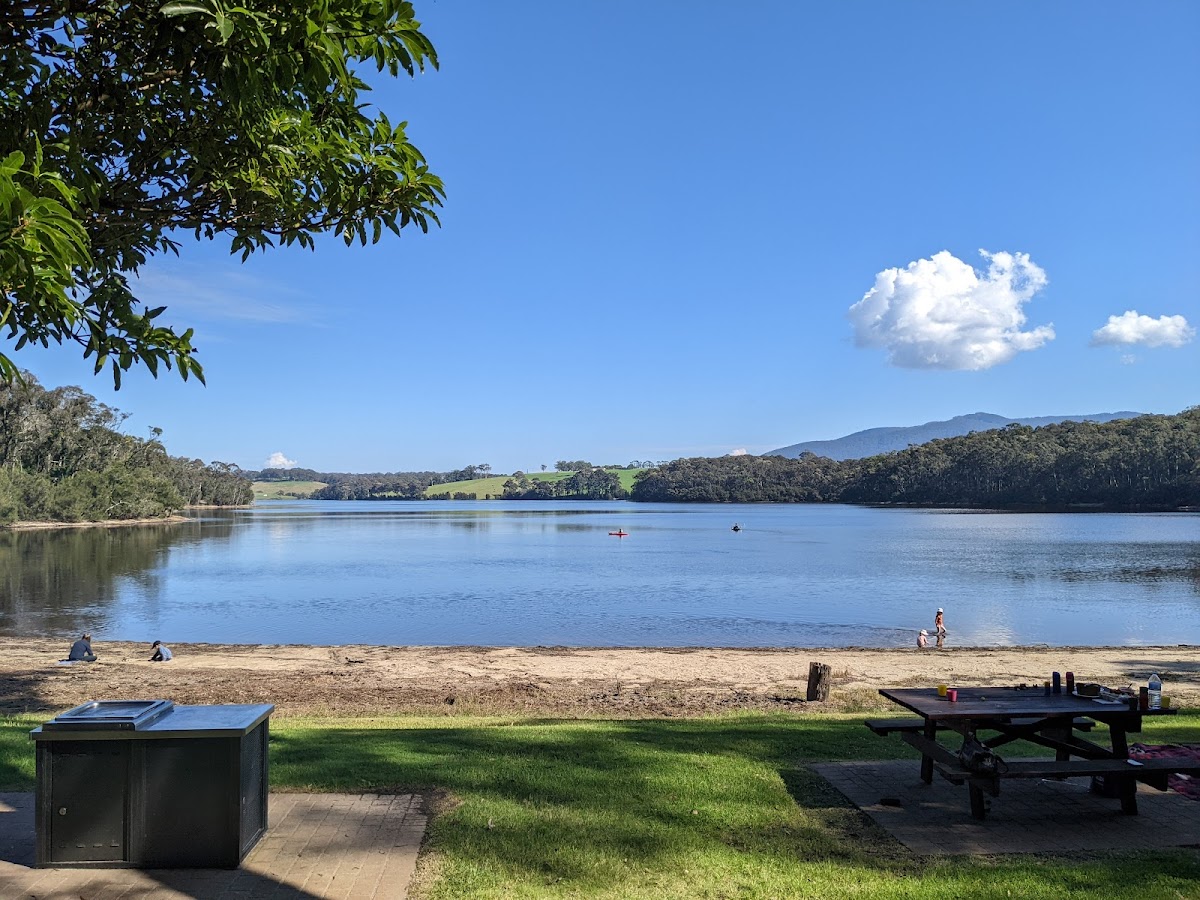 Narooma
South Coast, New South Wales
Crystal-clear inlet, surf beaches, oysters and Montague Island
Explore the guide →
Narooma
South Coast, New South Wales
Crystal-clear inlet, surf beaches, oysters and Montague Island
Explore the guide →
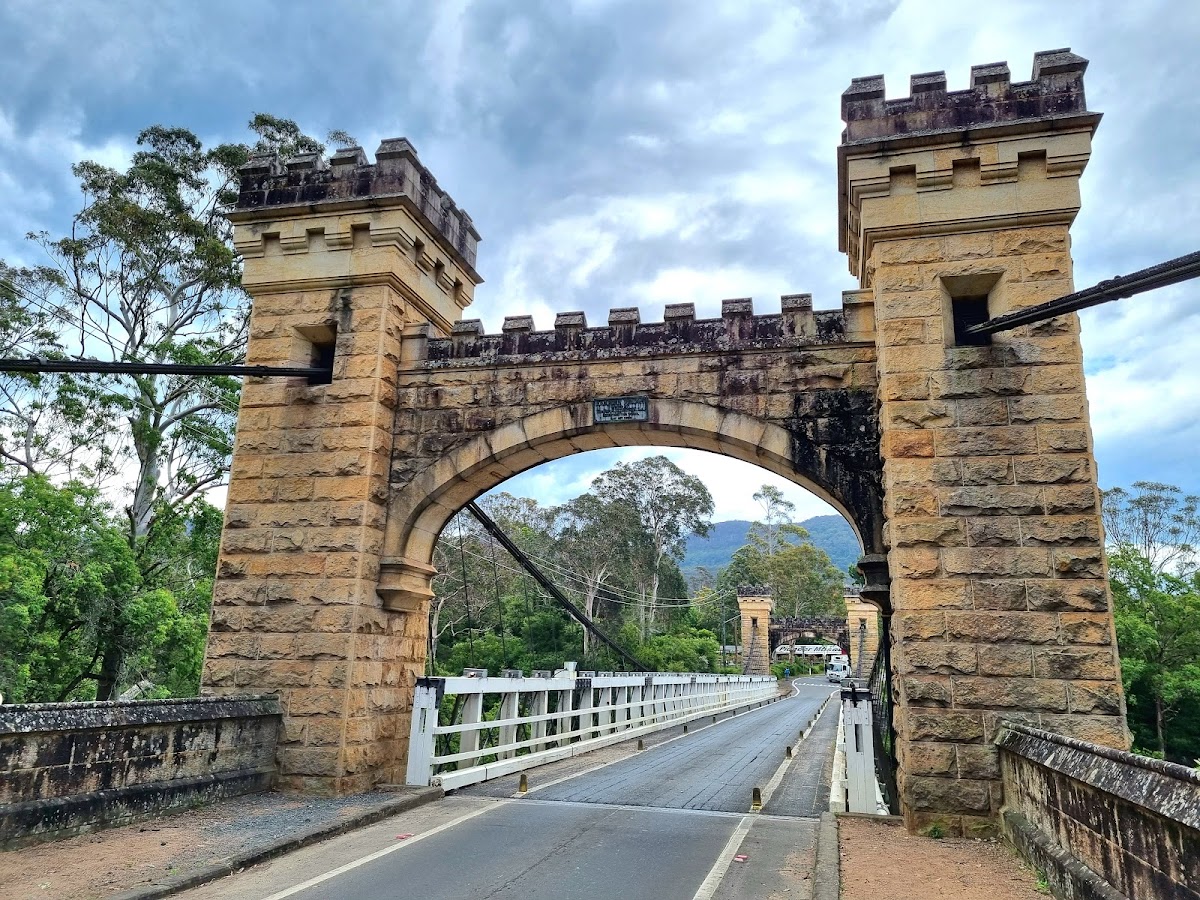 Kangaroo Valley
Shoalhaven, New South Wales
Hampden Bridge, kayaking and wombats in a green valley
Explore the guide →
Kangaroo Valley
Shoalhaven, New South Wales
Hampden Bridge, kayaking and wombats in a green valley
Explore the guide →
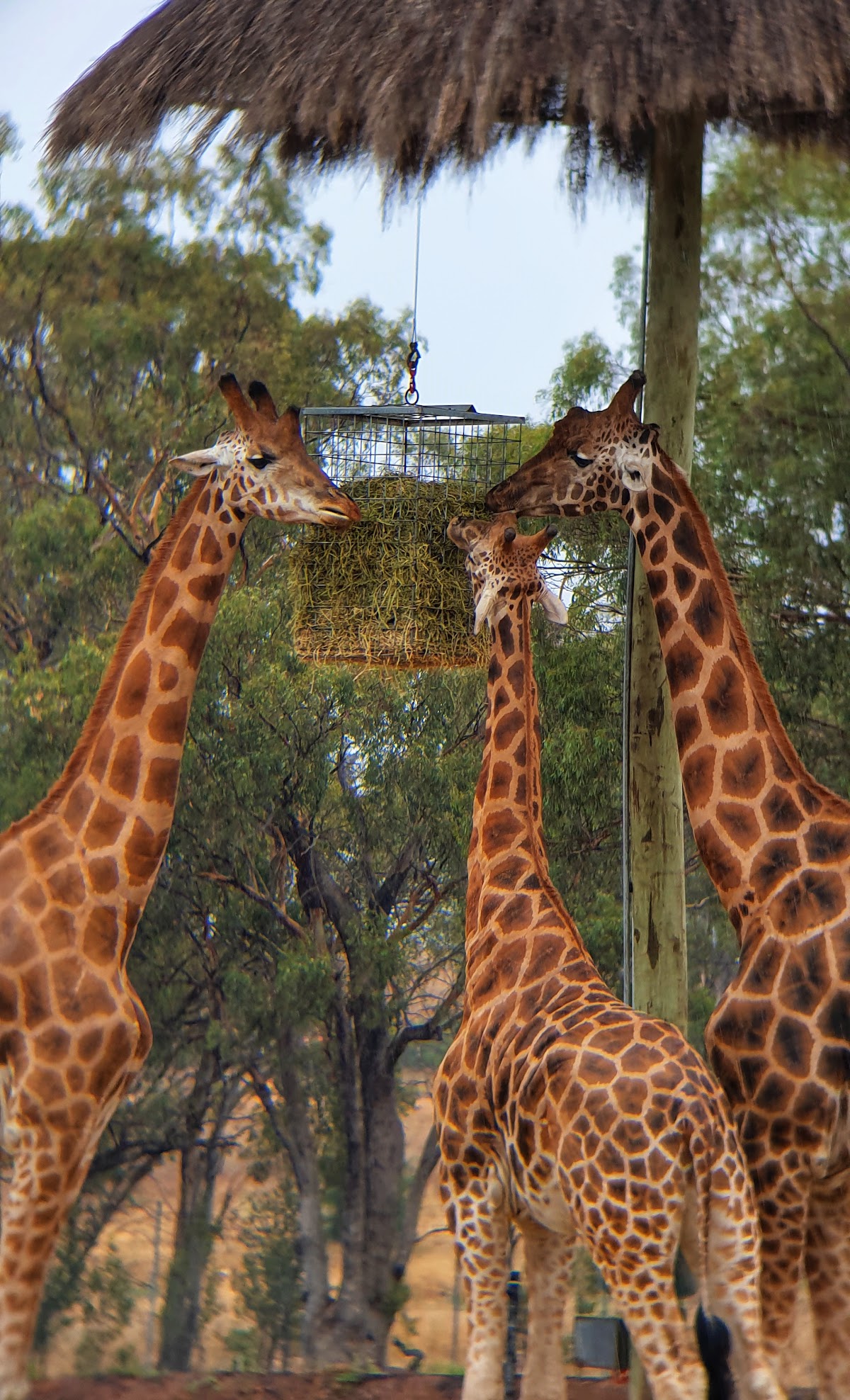 Dubbo
Central West, New South Wales
Open-range zoo and Outback gateway on the Macquarie River
Explore the guide →
Dubbo
Central West, New South Wales
Open-range zoo and Outback gateway on the Macquarie River
Explore the guide →
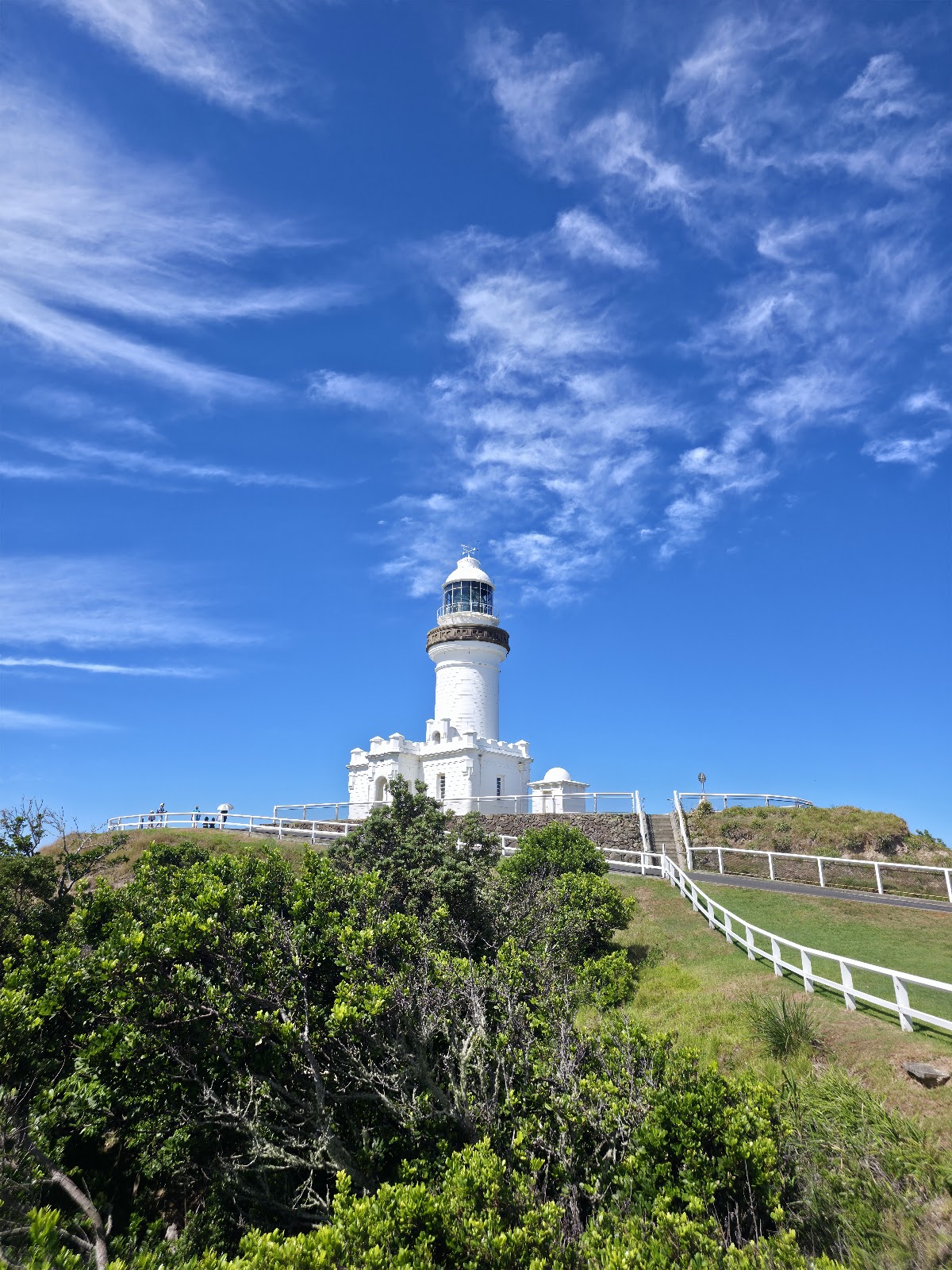 Byron Bay
Northern Rivers, New South Wales
Australia's iconic beach town and most easterly point
Explore the guide →
Byron Bay
Northern Rivers, New South Wales
Australia's iconic beach town and most easterly point
Explore the guide →
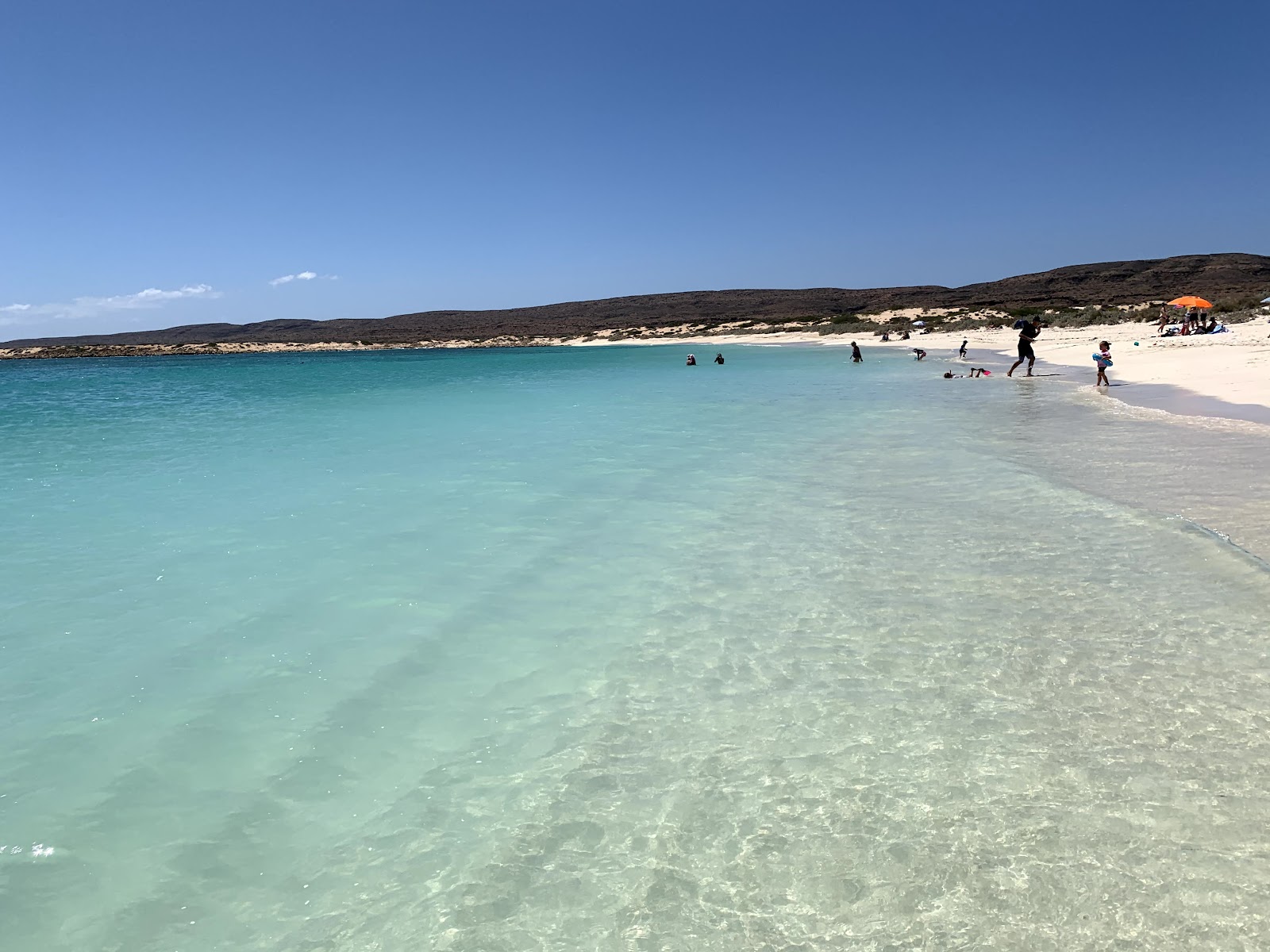 Ningaloo Reef
Australia's Coral Coast, Western Australia
Swim with whale sharks and snorkel a World-Heritage reef straight off the beach
Explore the guide →
Ningaloo Reef
Australia's Coral Coast, Western Australia
Swim with whale sharks and snorkel a World-Heritage reef straight off the beach
Explore the guide →
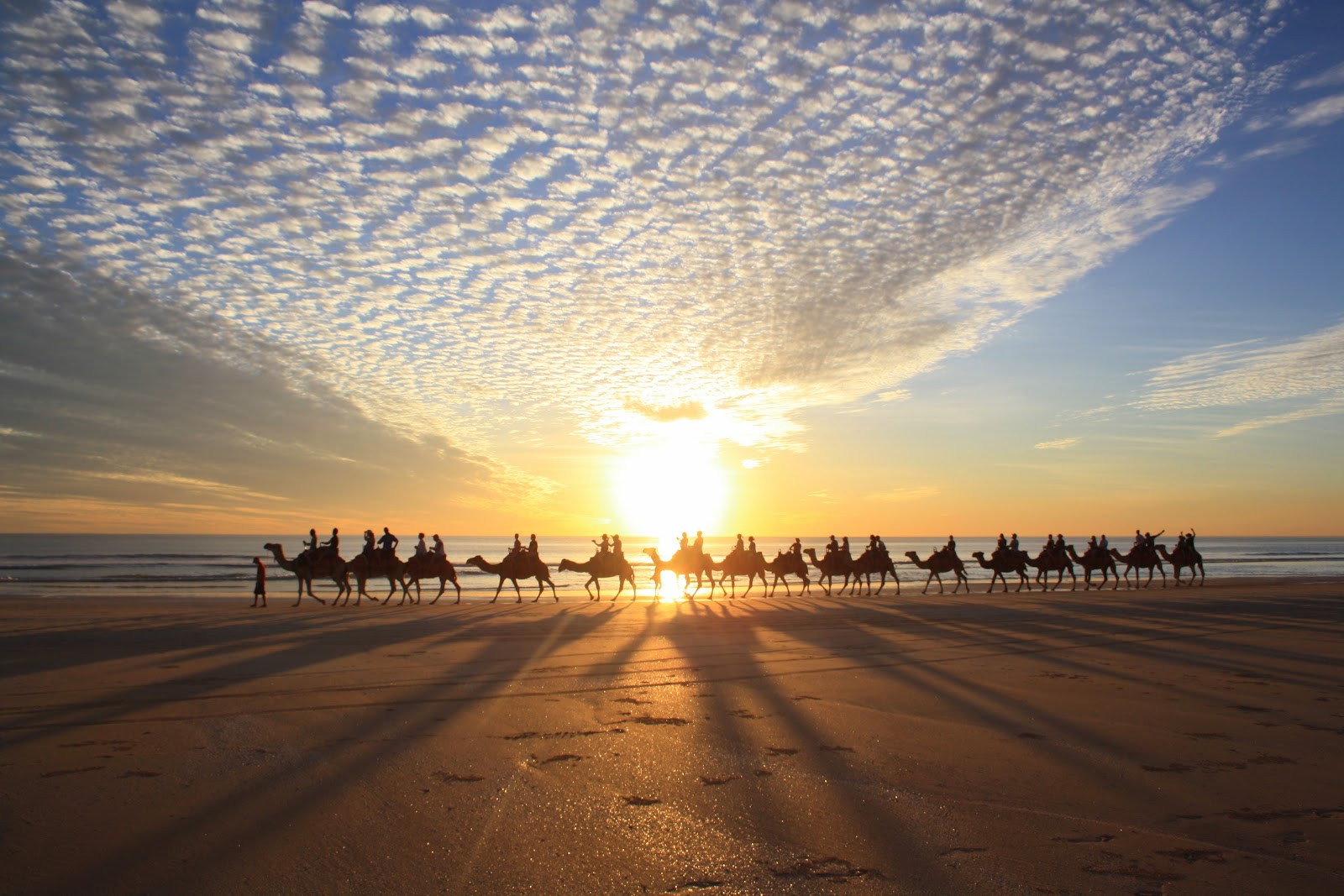 Broome
Australia's North West, Western Australia
Cable Beach sunsets, pearling history and camels on 22km of sand
Explore the guide →
Broome
Australia's North West, Western Australia
Cable Beach sunsets, pearling history and camels on 22km of sand
Explore the guide →
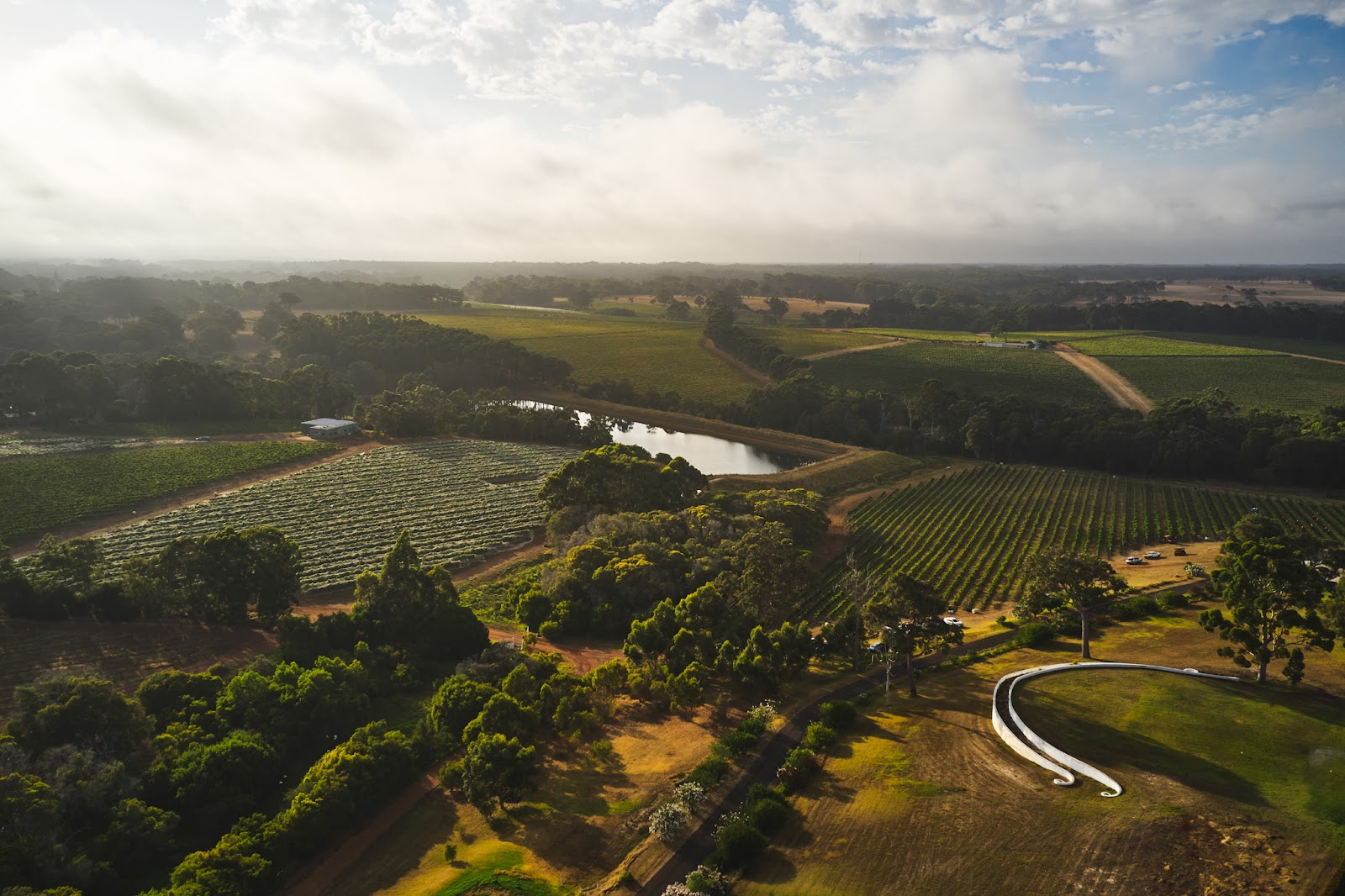 Margaret River
Australia's South West, Western Australia
World-class wineries, surf breaks and limestone caves three hours south of Perth
Explore the guide →
Margaret River
Australia's South West, Western Australia
World-class wineries, surf breaks and limestone caves three hours south of Perth
Explore the guide →