01. The Kimberley Grande Resort
4 (399 reviews)
The Kimberley Grande Resort — The Kimberley
Book Direct & Save →The Gibb River Road is 660 kilometres of corrugated red dirt between Derby in the west and the Kununurra-Wyndham junction in the east, and it runs through what many travellers describe as the most rewarding road trip in Australia. It was built as a cattle road to service the Kimberley stations, and it still has that quality -- wide, rough, unpolished, occasionally frightening, and almost entirely without the amenity that highway travel delivers as a default. What it offers instead is a string of gorges that you'd fly to see anywhere else in the world, plus the particular satisfaction of earning each one.
View 3 Properties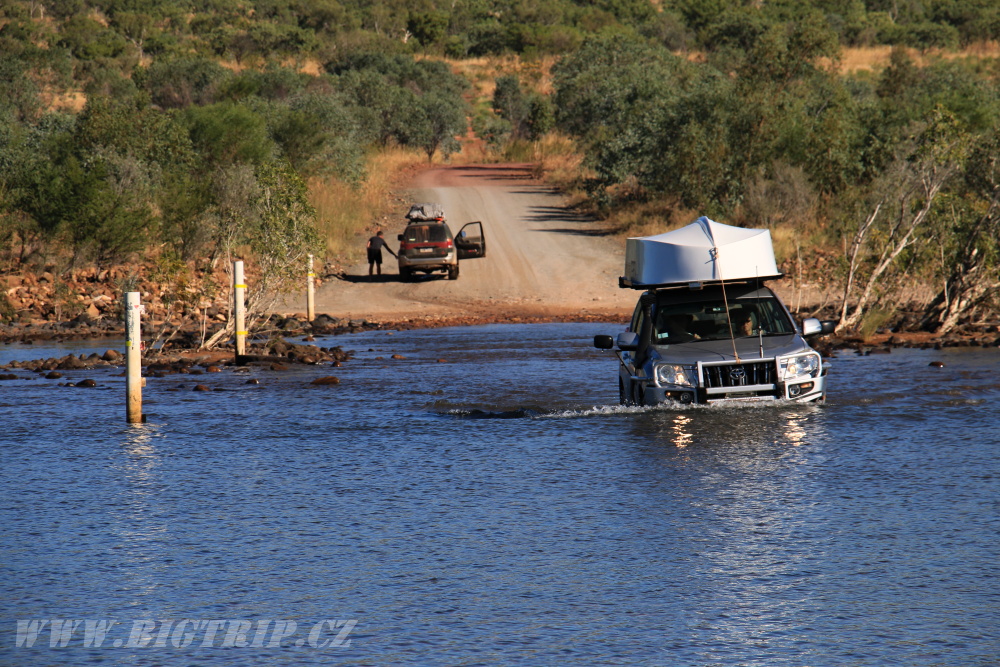
"Remote, rugged, gorge-to-gorge road trip"
This guide takes the Gibb in order from west to east -- the logical direction, departing Derby with a full tank -- covering every significant stop, what each one actually offers and who it suits, the river crossings and the tyre and fuel strategy that experienced Kimberley travellers swear by. The drive is a 4WD-only route from roughly May to October; the Wet floods it entirely and no vehicle should be on it before the roads are officially declared open each year. Plan for seven to fourteen days to do it properly, not as a transit.
The Gibb is not a tourist road with infrastructure -- it is a working outback track that was never built for leisure and has been only minimally improved for it. Corrugations develop quickly after grading and can loosen wheel nuts; river crossings require assessing depth and current before you enter; and assistance if something goes wrong can be hours away. Experienced travellers know this is the draw, not the deterrent. The Gibb rewards people who prepare and punishes those who don't.
What the preparation unlocks is a series of gorges -- Windjana, Bell, Manning, Galvans, Adcock, Emma -- that would justify a flight anywhere else. Each sits only a few kilometres off the main track, accessed by short side roads that vary from firm red dirt to slow, rocky switchbacks. The gorges are the reason travellers drive the Gibb, and the kilometres of corrugated track between them are simply the connective tissue. Treat the driving as part of the experience -- the flat-top ranges and ancient red rock on both sides of the road are spectacular in their own right.
For preparation, the key decisions are: vehicle (owned or hired 4WD, self-contained preferred), tyres (two full-size spares minimum, and the knowledge to change them), fuel (Derby full + top up at Imintji and Mt Barnett Roadhouse), water (minimum three litres per person per day, more in heat), and communications (a satellite device is strongly recommended). The road is typically declared open in May and can be officially closed again as early as October before the Wet arrives.
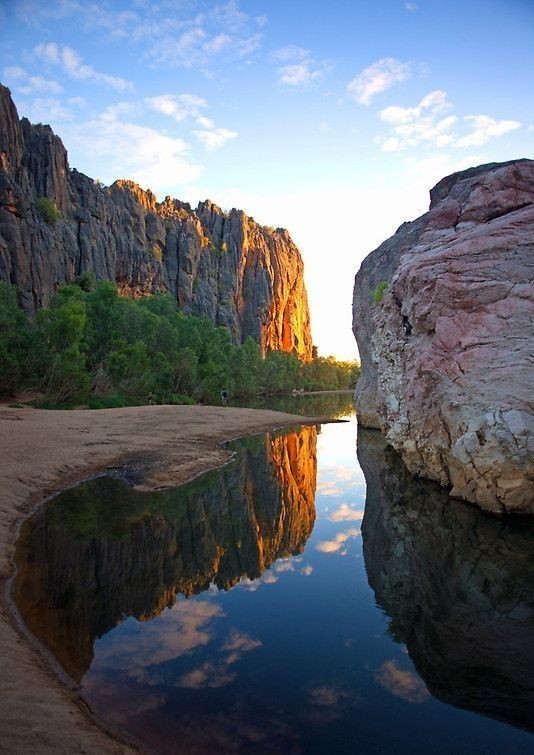
Windjana Gorge sits about 130 kilometres from Derby on a well-maintained side road, and it delivers one of the most visually striking gorge experiences on the western Gibb. The Lennard River has cut through a section of the ancient Devonian reef -- the same fossil reef that runs through the Kimberley landscape -- leaving sheer pale-grey limestone walls that rise up to 90 metres above a wide, sandy riverbed. The walk through the gorge (about 3.5 kilometres return) is flat, easy and deeply rewarding. For most of the Dry season the river holds a series of still pools lined with freshwater crocodiles sunning themselves on the banks -- sometimes dozens at once, generally indifferent to walkers who give them appropriate space.
The palms, fig trees and river red gums growing from the canyon floor give Windjana a lushness that contrasts with the spare red rock outside. The reflected limestone in the calm pool water makes for exceptional early-morning photographs before the heat and light flatten the canyon. The surrounding Windjana Gorge National Park also encompasses Tunnel Creek, about 30 kilometres south, usually visited in the same day.
Windjana is one of the Gibb's most accessible stops -- the side road is in reasonable condition, the walk is short enough for families and less-mobile walkers who take their time, and the freshwater croc viewing is genuinely spectacular. The crocs are freshwater (significantly smaller and less dangerous than saltwater crocs) but they are wild animals -- keep three to four metres away and never enter the water where crocs are present.
Watching dozens of freshwater crocodiles basking on the banks beneath towering limestone walls is one of the most extraordinary quiet scenes the Kimberley produces.
“Walked through at sunrise with limestone glowing and about 30 freshies in the pools. The most stunning gorge we did on the whole Gibb.”
— Traveller review
An early-morning walk through the gorge before the heat -- the crocs are out and the limestone light is at its best.
Never enter the water near crocodiles; keep the required distance on the banks. The side road and gorge are a detour from the Gibb -- budget at least half a day including Tunnel Creek nearby.
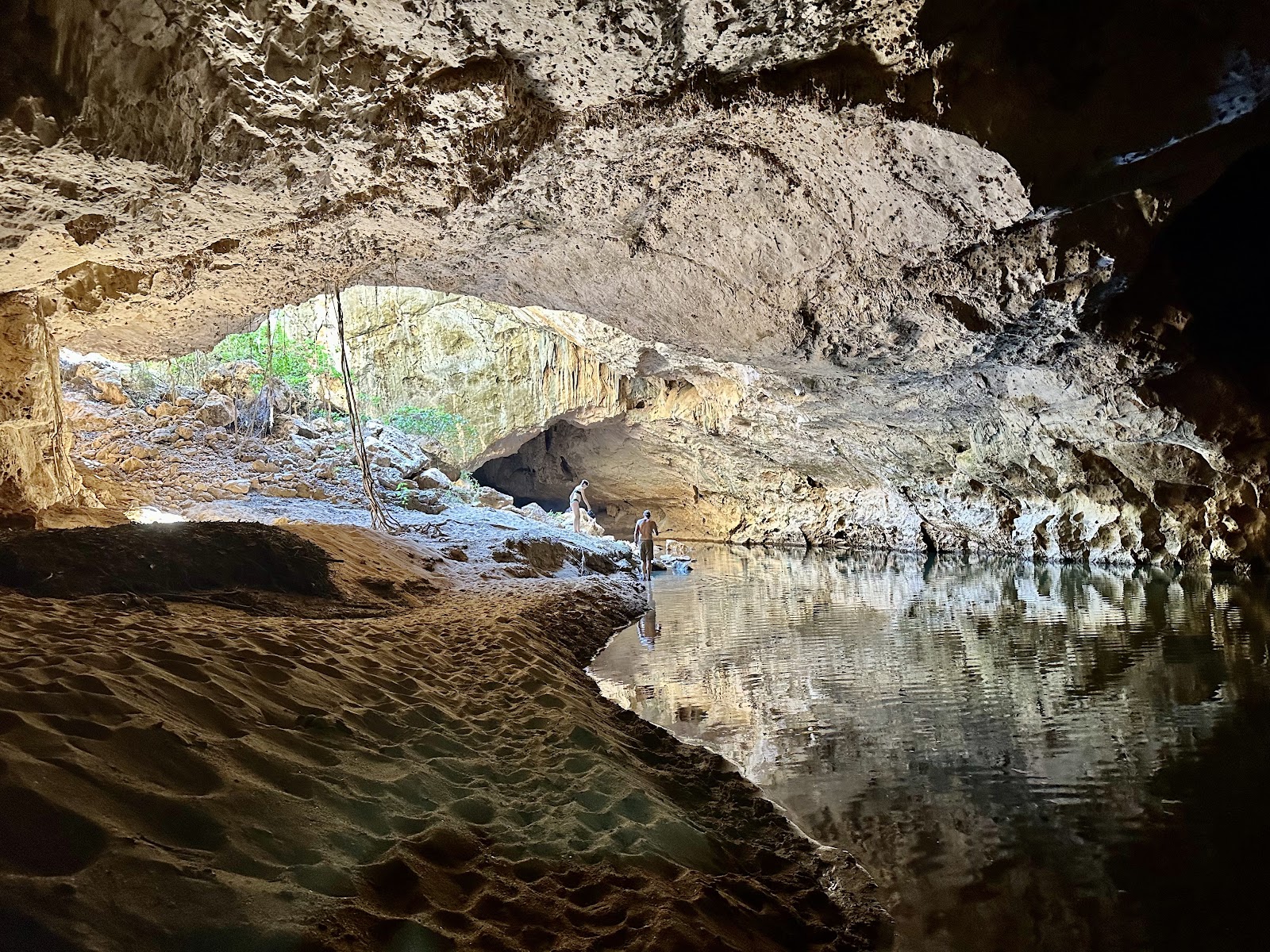
Tunnel Creek is unlike anything else on the Gibb. A natural tunnel about 750 metres long and up to 15 metres wide cuts through the Napier Range; walking through it means wading knee-deep (or sometimes deeper) in dark, cool water by torchlight, with stalactites above, freshwater crocs visible in the beam, and bats flushing out from the roof. The light at the far end resolves into a collapsed section of the tunnel where a shaft of blue sky falls into a pool -- one of those scenes that makes you stop mid-wade and stare. Allow at least an hour, bring two torches per person, and prepare to get wet.
Tunnel Creek is also a significant site in Kimberley history. The outlaw tracker Jandamarra -- Bunuba warrior and policeman turned resistance fighter -- used the creek's tunnel as a hide between 1894 and 1897, one of the most dramatic episodes in Australian frontier history. The Bunuba people today interpret this landscape and that history through cultural tours; if you have the chance to join one, take it. It gives the tunnel a depth that a purely physical visit doesn't reach.
The walk suits most travellers who are comfortable in dark confined spaces and can manage knee-deep water crossings. It's not suitable for very young children who can't manage the depth and darkness, or for anyone with a fear of enclosed spaces. The freshwater crocs in the tunnel are generally small and historically accustomed to walkers, but they are wild animals -- do not approach them, and follow any posted guidance at the entrance.
Wading through a pitch-dark river tunnel with a torch beam catching bats and croc eyes is the most singular experience on the entire Gibb.
“Walked through with two torches and a croc crossed our path in the water. Eerie, spectacular, and like nothing else we've done in Australia.”
— Google review
The beam of natural light falling into the collapsed mid-section pool -- pause there and let it register.
Not for those with claustrophobia or very young children who can't manage dark, knee-deep water. Bring two torches each -- losing your only light in a dark tunnel is a serious problem.
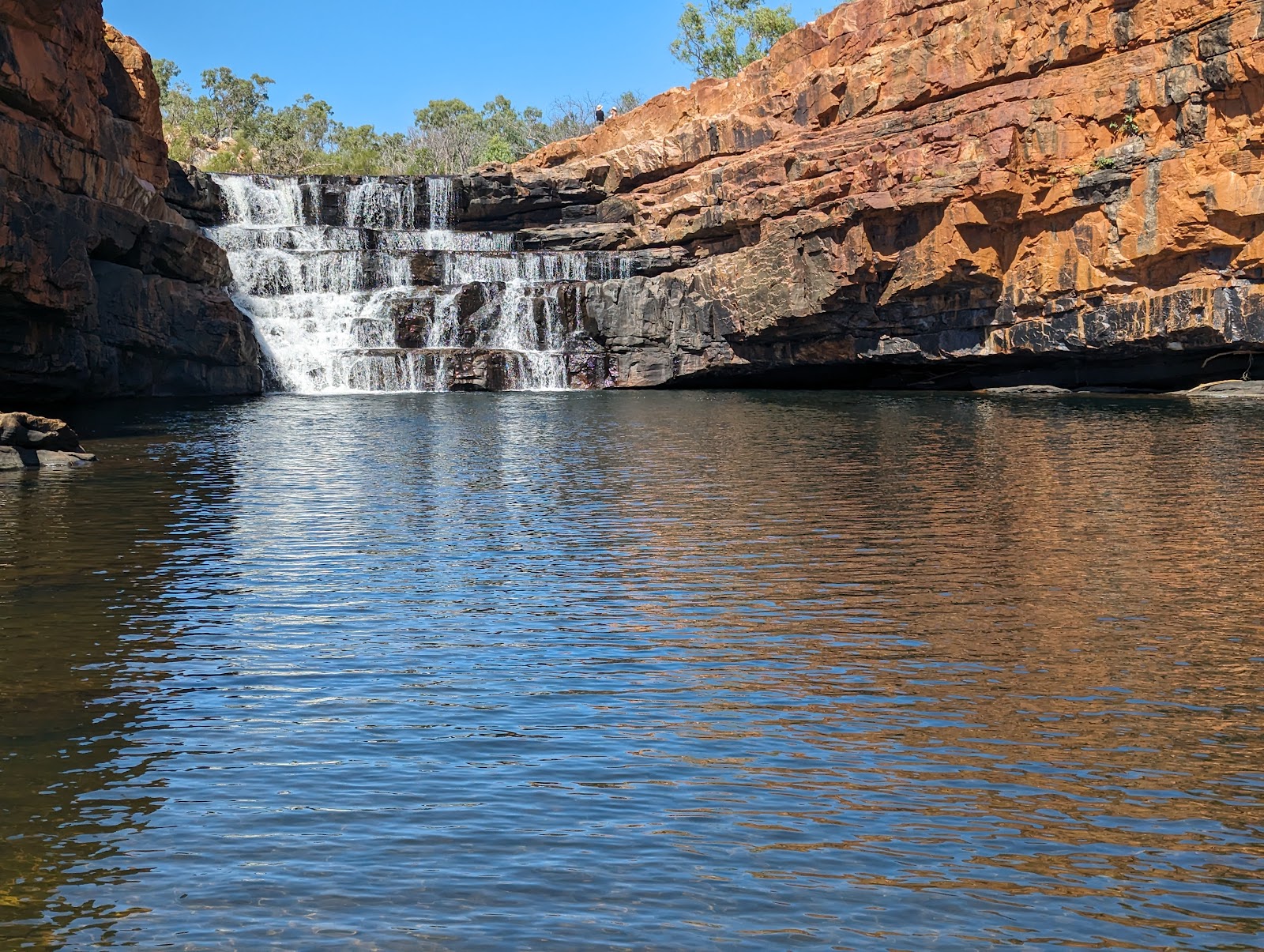
Bell Gorge is the gorge most travellers cite when you ask which Gibb stop they'd revisit. A series of tiered plunge pools and a low waterfall tumble over stepped orange and grey sandstone before the creek widens into a broad, deep swimming hole at the base. The geometry of it -- shallow rocky shelf falling to a clear pool, framed by stone walls and paperbarks, all under the deep blue Kimberley sky -- photographs magnificently and lives up to the photographs. Early in the Dry season the waterfall flow is at its strongest; later it slows, but the swimming hole remains one of the most rewarding swims in the Kimberley.
The walk from the Silent Grove campsite to the gorge is about 3.5 kilometres return over rocky terrain with some scrambling. It's categorised as a moderate walk and that's accurate -- fit walkers will find it manageable and the rocky footing is part of the experience, but it's not flat easy going like Windjana. Start early to reach the gorge before the heat and before the midday sun flattens the light on the pools. The campsite at Silent Grove is one of the better-serviced sites on the Gibb and it's worth a night to ensure you reach the gorge at the best time.
Bell suits most fit adults and older teenagers comfortable on uneven ground; the rocky section before the gorge limits it for less-mobile walkers, and young children need to be supervised carefully near the pools and the falls. The swimming hole is signed safe for swimming (unlike croc-inhabited gorges further east), but always check current signage at the site and never swim near waterfall run-outs after rain.
The tiered falls and deep plunge pools are the single most photogenic swimming spot on the Gibb -- and after days of dusty corrugations, that first cold swim is perfect.
“Arrived early, had the falls and the upper pool to ourselves for an hour. We were ready to keep driving and ended up staying two nights.”
— Traveller review
The upper tiered pools at dawn before anyone else arrives -- cold, clear and coloured orange by the sandstone.
The 3.5km rocky walk is not suitable for less-mobile visitors; always check current croc signage at the site, and never swim near the falls after heavy rain upstream.
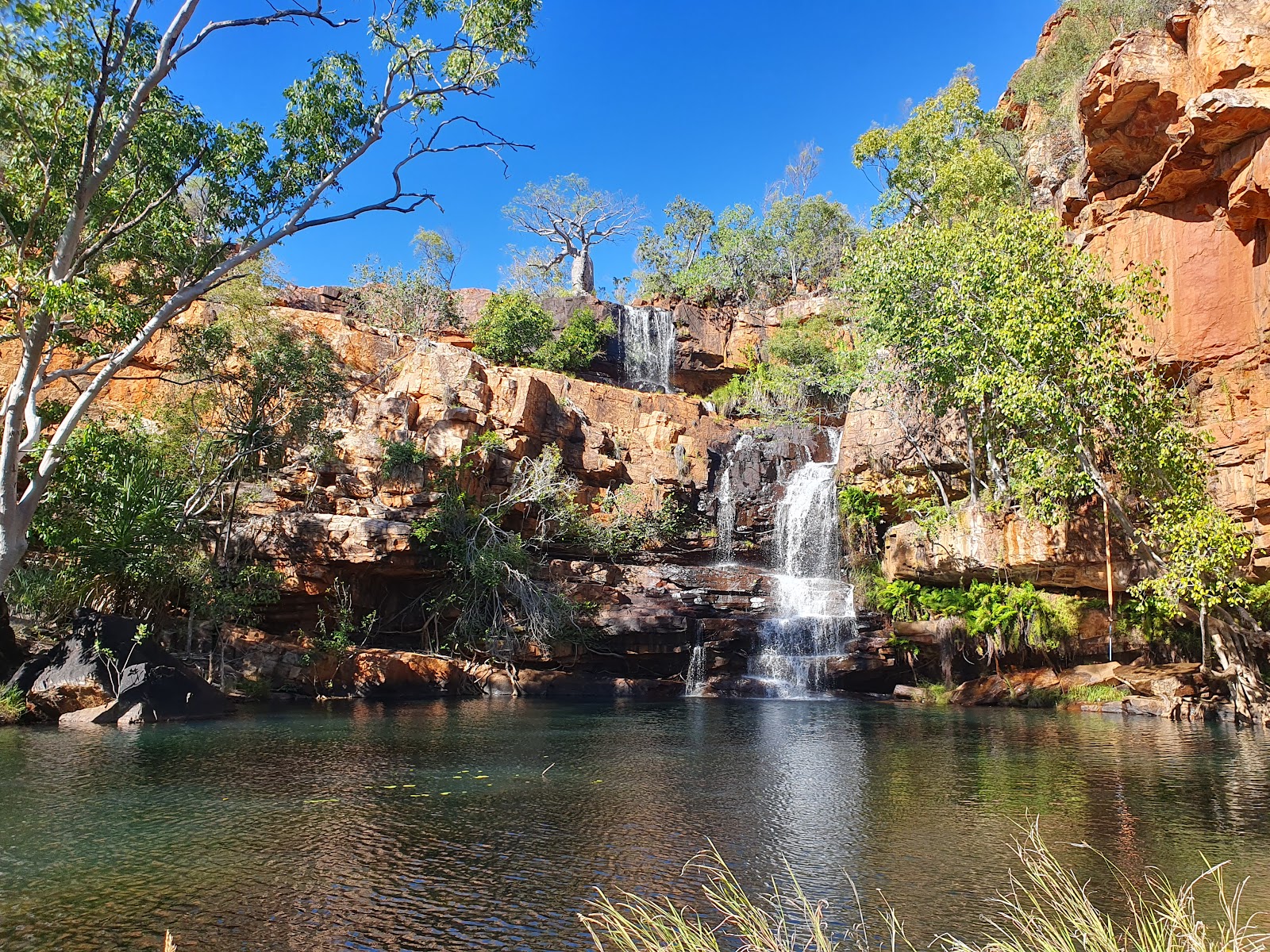
Galvans Gorge is the one that rewards the stop when you're tired and just want to keep driving. A short 10-minute walk from the road delivers a deep, clear swimming hole at the base of a low waterfall, with a painted overhang nearby holding Wandjina rock art -- the large-eyed ancestral figures associated with the Wunambal Gaambera people and one of the most distinctive Aboriginal art traditions in the world. The combination of a good swim and a culturally significant site in under half an hour is the reason Galvans is on nearly every Gibb itinerary.
The pool itself is one of the better swims accessible without a significant walk on the Gibb. The water is clear and deep, pooling at the base of the falls against a backdrop of palm-fringed sandstone. Freshwater crocodiles are present and visible at the edges -- they're part of the scene, not a hazard to panic about, but you should swim in the main pool rather than investigating the rocky edges where the crocs congregate. Check current signage at the site for any safety updates.
The site is signposted off the Gibb very close to the Mt Barnett Roadhouse, making it a natural fuel-and-stop combination. The walk is easy and short, which means it suits a wider range of travellers than the more demanding gorge hikes further along -- including families with younger children who can manage a 10-minute track. Always respect the Wandjina art site: look, photograph, don't touch, and keep voices down near the rock face.
A proper Kimberley swim and a Wandjina rock art site in 20 minutes from the car -- one of the best value-for-effort stops on the whole Gibb.
“Almost didn't stop because we were tired. Stayed two hours. The pool is beautiful and the rock art gives it a weight that the busier gorges don't have.”
— Google review
The Wandjina painted overhang above the pool -- one of the most significant and accessible examples of this art tradition in the Kimberley.
Swim in the main pool, not the rocky edges where freshwater crocs sun themselves; respect the rock art site and do not touch or approach too closely.
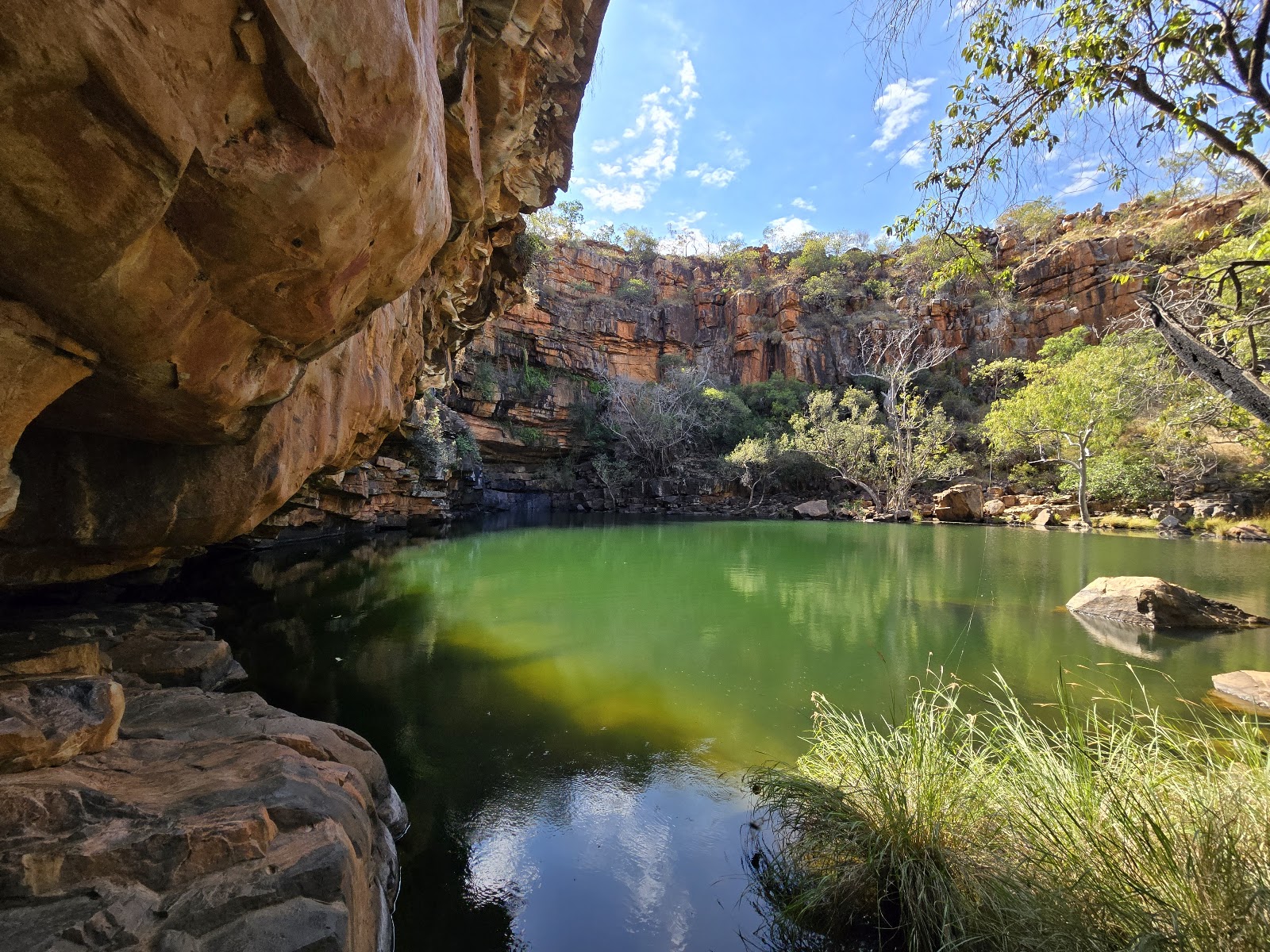
Adcock Gorge is the least-famous of the central Gibb gorges, which makes it the one where you're most likely to have the swimming hole to yourself. A short walk from the car park -- mostly flat with a little rock scrambling at the end -- delivers a compact, deep and beautifully clear pool tucked between red sandstone walls with no waterfall feature but an excellent natural swimming hole. The relative obscurity means even in peak July-August, Adcock is noticeably quieter than Bell or Manning.
The gorge is genuinely worth the short detour from the main road rather than skipping past for the bigger names. The rock walls are warmly coloured in the afternoon light, the water is cool and clear, and the short walk means you're in and swimming quickly. It suits travellers who want to decompress after a long driving day without committing to a major hike -- a quick swim and a sit in the shade at Adcock does exactly that.
It works for most fitness levels given the easy access, and the quieter atmosphere makes it good for families who want a low-pressure stop. The usual freshwater croc cautions apply on any Gibb waterway -- check current signage, swim in the main pool, and avoid the rocky margins. It's signed safe for swimming in the main section for most of the Dry, but always verify on arrival.
The quietest good swimming hole on the central Gibb -- the same clear red-rock water as the famous gorges, without the crowds.
“We had the gorge to ourselves for nearly an hour. Swimming in that silence with the red walls above is what the Kimberley is actually about.”
— Traveller review
An afternoon swim alone in the gorge pool with the warm red sandstone reflected in perfectly clear water.
It's easy to miss because it's not prominently marketed -- check your map or GPS before the turn-off; the side road is short but can be easy to pass.
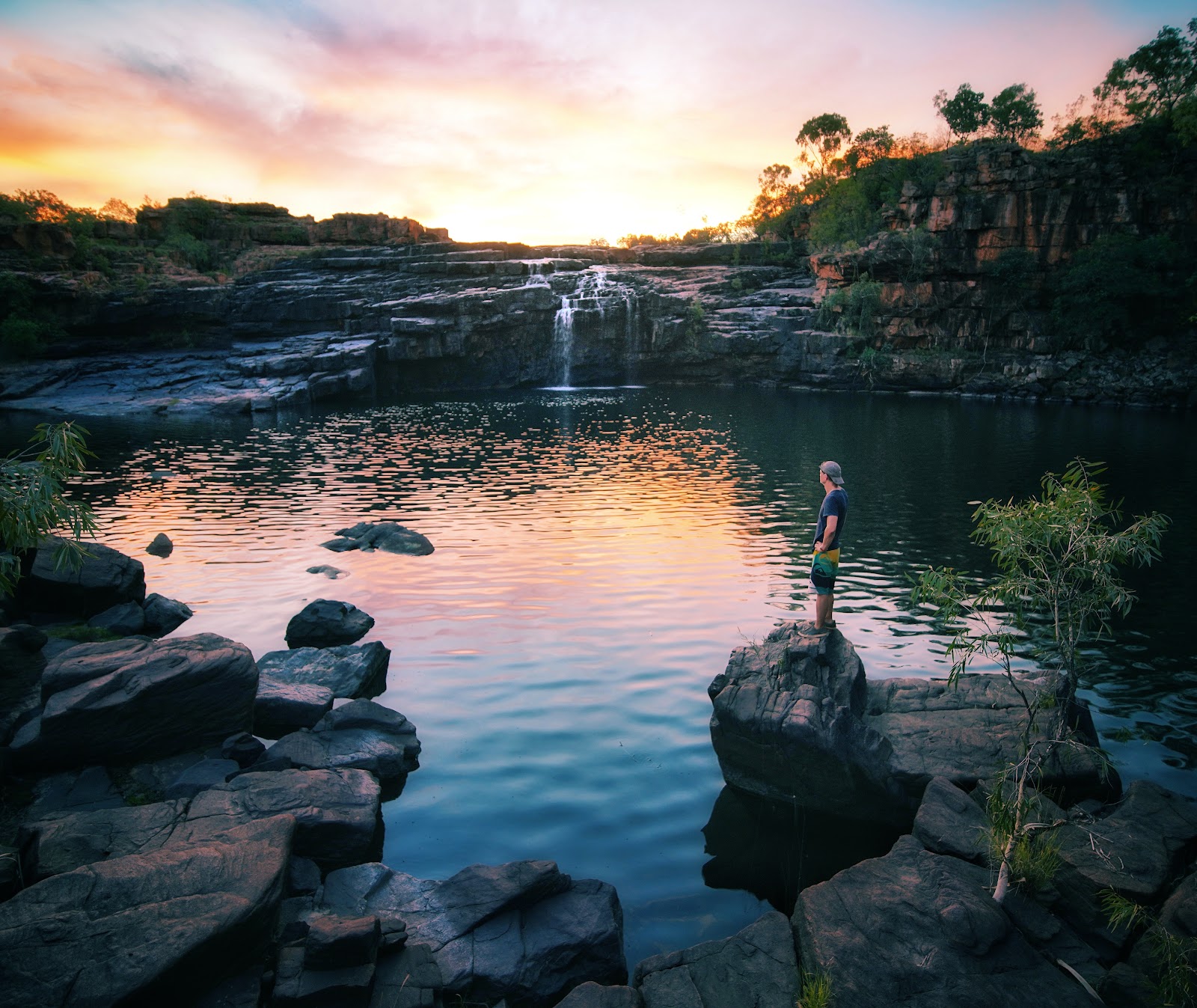
Manning Gorge is a two-stage experience accessed from the Mt Barnett Roadhouse and campsite on Barnett River Station. The lower section -- a short walk and a rope-assisted river crossing -- delivers a wide swimming hole with good flow from Manning Falls early in the Dry season. The upper gorge, reached via a two-to-three-hour return walk over rocky sandstone plateau, opens up a much larger waterfall and plunge pool system. The upper gorge is the goal; the lower swim is the reward after the walk back.
The full return trip from the campsite to the upper gorge and back is around 8 kilometres over uneven sandstone with minimal shade -- it's a proper half-day walk that deserves an early start and plenty of water. The terrain is spectacular on its own terms: wide open sandstone plateau with views across the ranges as you approach the upper falls. The campsite at Mt Barnett is one of the more comfortable on the Gibb, with a basic roadhouse, hot showers and vehicle servicing supplies -- it's a natural overnight stop before tackling the walk.
It suits fit walkers comfortable on uneven ground in significant heat. The lower gorge swim is accessible without the full walk and suits a wider range; the upper gorge rewards only those with the fitness and time for the full return. Mt Barnett Roadhouse also has one of the two Gibb fuel stops between Derby and El Questro -- fill your tank here regardless of whether you walk.
The upper Manning Falls -- a wide multi-drop plunge into a large, clear pool earned by two hours of walking across sun-bleached sandstone plateau.
“The walk to the upper gorge is hard but the falls at the end are genuinely jaw-dropping. One of the most beautiful things we saw in three weeks in the Kimberley.”
— Google review
The upper Manning Falls and plunge pool -- earned by the walk and worth every step.
The upper gorge walk is 8km return in significant heat with uneven footing -- not for the unfit, those without ample water, or anyone starting after 8am in high summer temperatures. Fill your tank at Mt Barnett Roadhouse regardless.
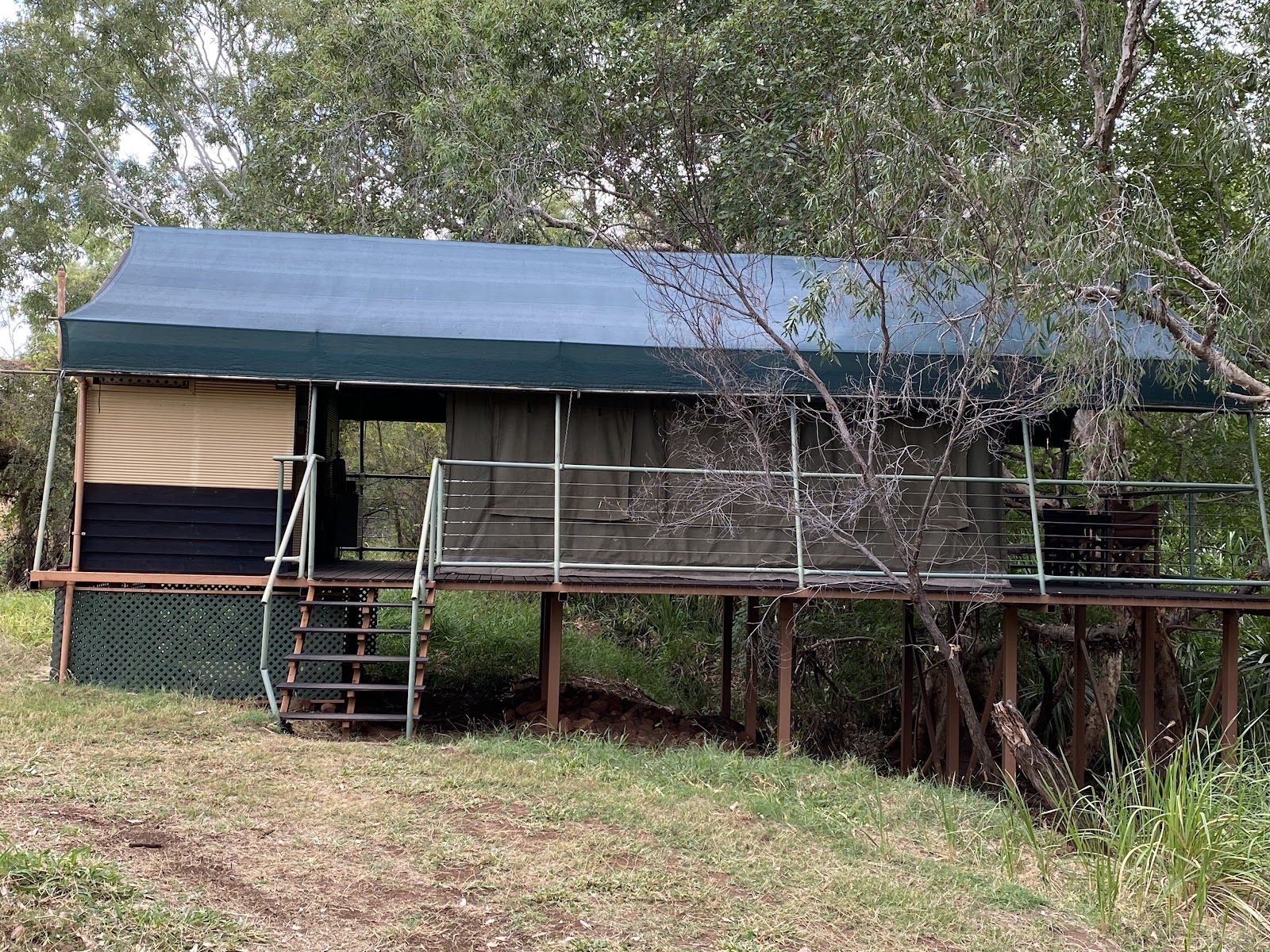
Mornington is a Bush Heritage Australia property covering over 300,000 hectares in the heart of the Kimberley, accessible via a rough side road off the Gibb. It's a conservation station rather than a commercial attraction, with a remote campsite, guided gorge walks, and extraordinary wildlife -- particularly birds. Birders specifically come to Mornington for species found nowhere else in the country, and the list of Kimberley endemics visible here is one of the most compelling in Australia. The Fitzroy River runs through the station and Dimond Gorge, accessible from camp, is as good as any Gibb gorge for swimming.
The experience at Mornington is genuinely different from the busier Gibb stops. It's quieter, more intimate, and run by conservation staff who know the land in unusual depth -- conversations over dinner at the camp often reveal more about the Kimberley than a week of solo driving. The walks and gorge visit are guided, which means you see and understand far more than you would alone. The accommodation ranges from camping to permanent safari tents; book well ahead as capacity is limited and the camp books out months in advance for the best weeks.
Mornington suits travellers who want depth rather than quantity -- the kind of Kimberley experience where you stay two or three nights in one place rather than driving past everything. It's less suited to those on a fixed schedule who can't afford a night's wait if the side road has been closed by weather. Birders should consider it a non-negotiable stop.
Mornington is where the Kimberley slows down -- world-class birds, a genuine conservation story, Dimond Gorge, and guides who know this country intimately.
“We planned one night and stayed three. The birding at dawn, the gorge walk, the guided evening -- Mornington made us understand what the Kimberley actually is.”
— Traveller review
A guided dawn bird walk at Mornington -- genuinely world-class birding on Aboriginal and conservation country.
Capacity is very limited and the camp books out months in advance for peak Dry season weeks -- book before you leave Perth, not from the road.
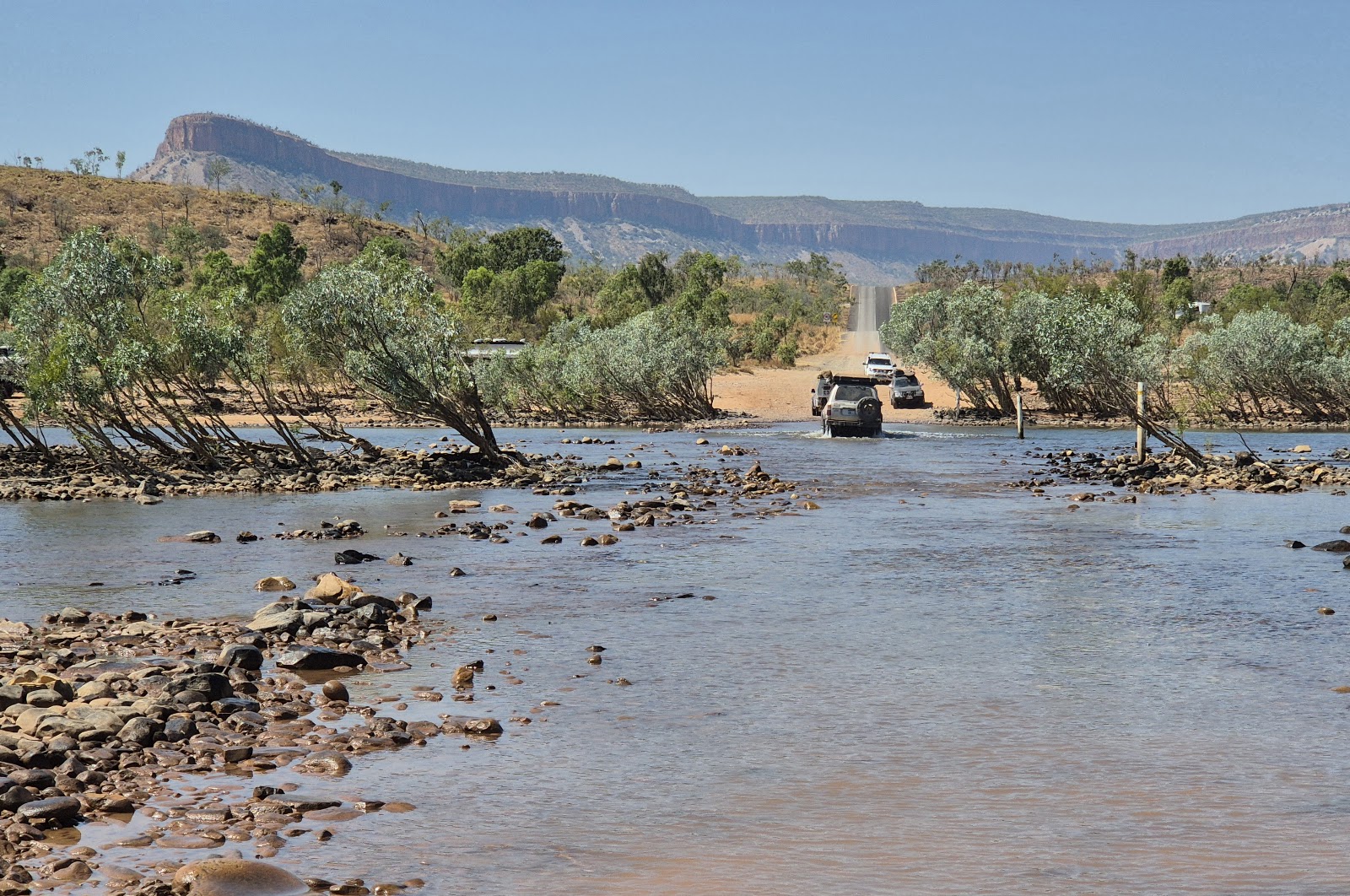
El Questro Wilderness Park at the eastern end of the Gibb is where the road ends and the full Kimberley experience synthesises. The station covers over 700,000 acres and offers Emma Gorge -- a short walk from the gorge camp to a warm-spring-fed pool beneath a 65-metre waterfall -- alongside Chamberlain Gorge (boat tour), Zebedee Springs (thermal pools, open mornings only), and Amalia Gorge. Accommodation ranges from riverside camping to the high-end homestead. Emma Gorge alone is worth the Gibb; the broader El Questro experience, with a night or two at the gorge camp, is what most travellers consider the best final chapter of the drive.
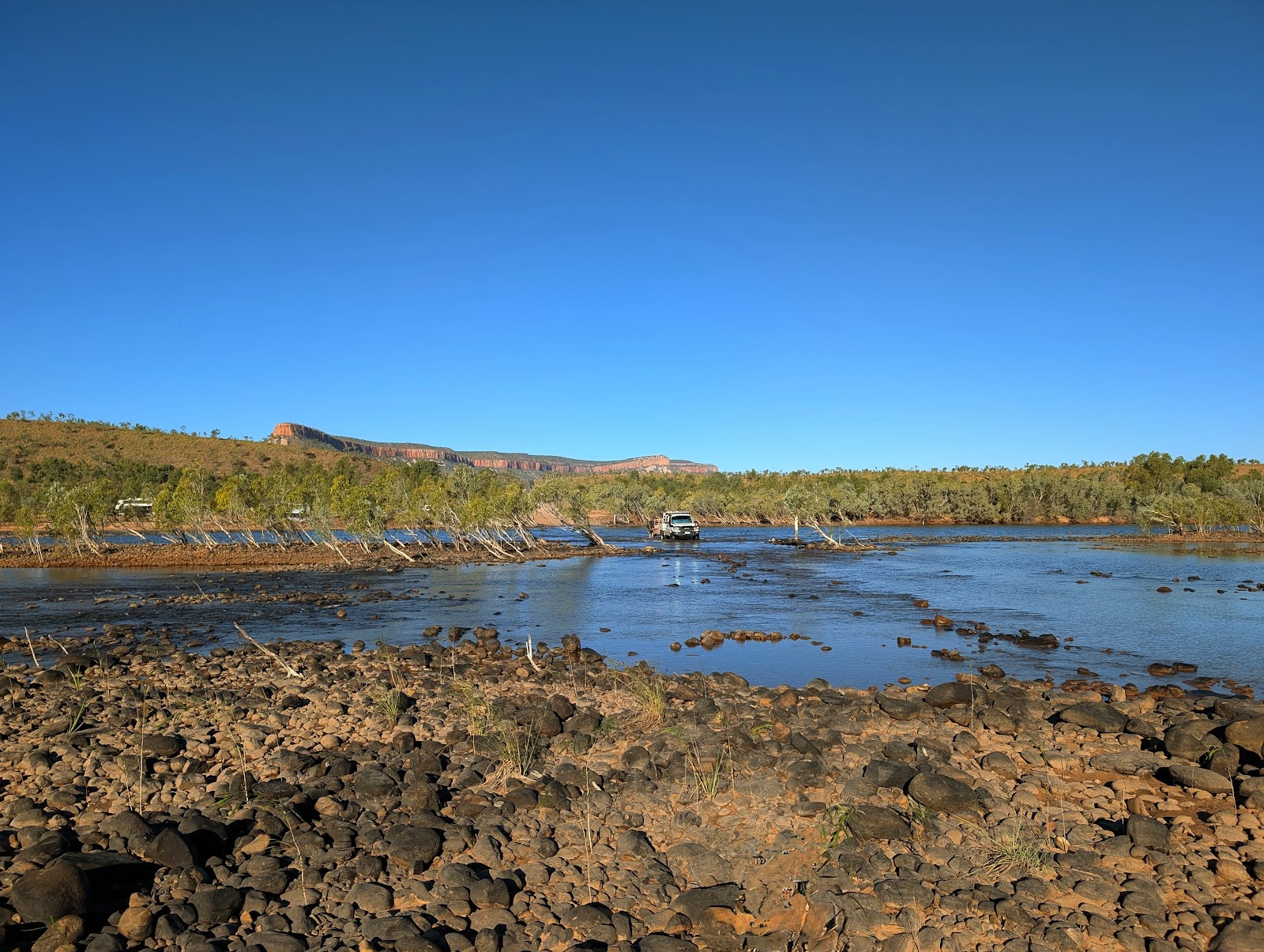
The Pentecost River crossing on the road into El Questro is the most famous moment on the Gibb. The Pentecost runs broad and shallow across the road with the Cockburn Ranges rising blood-red behind it -- it's the image the Kimberley is most often sold on, and the scene lives up to it. The crossing is typically passable for well-equipped 4WDs through the Dry, but saltwater crocodiles inhabit the river and the surrounding waterways. Do not exit the vehicle in the water; assess the crossing from the bank before driving through; and check recent conditions with El Questro before heading in.
El Questro suits most travellers as a two-to-three-night finale: the gorge, the springs, the homestead for a meal, and the crossing. Budget travellers camp; others upgrade to the gorge camp's permanent tents. The campsite books out in peak season -- reserve ahead from Perth, not from the road. After El Questro, the sealed road to Kununurra is about 100 kilometres and feels almost surreal.
Driving the Pentecost crossing with the Cockburn Ranges lit up behind it and the river running wide -- it's the Kimberley in one frame, and Emma Gorge is the Gibb's best farewell swim.
“We came around the corner onto the Pentecost and just stopped. No photograph captures those ranges. El Questro for the last three nights was perfect.”
— Google review
The Pentecost River crossing at golden hour -- stop on the bank, let the vehicle cool, and stare at the Cockburn Ranges before you drive through.
Saltwater crocs inhabit the Pentecost and surrounding waterways -- do not exit the vehicle in the water. The road into El Questro is rough even by Gibb standards; assess and confirm conditions before the final leg.
| Season | Conditions | Highlights | Crowds |
|---|---|---|---|
| May-June (Early Dry) | Road freshly graded, waterfalls at peak flow | Best waterfall volume at Bell, Manning and Galvans; roads just opened; mornings cool | Low-moderate |
| July-August (Peak Dry) | Perfect temperature, settled, dry | The busiest period -- campsite bookings essential; all roads reliably open; evenings warm | High -- book ahead |
| September-October (Late Dry) | Increasing heat, some falls slow | Still good for gorges; dramatically hot (40 degreesC+) midday; early starts essential; roads close again in October | Moderate-low |
| November-April (The Wet) | Flooded; roads closed | The Gibb is impassable; most gorges flood; the region is inaccessible to travellers | None -- do not attempt |
What recent visitors say:
“OMG...this place reduced me to tears due to being overwhelmed by its grandeur and spectacular scenery. We had two days here but would have loved a week. Echidna Chasm was amazing, Cathedral Gorge breathtaking and Mini Palms gorgeous. I have travelled extensively throughout Europe, Australia, Asia and parts of Canada and the US and l rate this as No 1. This I”— Megan Hollick (on The Bungle Bungles), Google review
“I'll admit that before I visited The Kimberley all I knew about The Bungles Bungles was the classic aerial image of the striated doom rocks. We visited at sunrise so caught the early morning, 'golden hour' light on the ranges. Early start meant that the day use area was not busy, and the trails were cool, shaded and not crowded. Trial heads had maps, paths w”— Zeglar “Zeg” Fergus (on The Bungle Bungles), Google review
“A place that is kinda impossible to review, you gotta see it for yourself! First warning, the track in is not for the faint hearted (even when graded) but if you can do that you will be fine. Its over 45kms from the front gate to the Visitors centre, which you have to stop at and check in if you are staying at either campsite (Walardi or Kurrajon). Special ”— cktravels (on The Bungle Bungles), Google review
Vehicle and tyres: A high-clearance 4WD is not optional -- 2WD vehicles, low-clearance SUVs and large rear-wheel-drive campervans cannot safely complete the Gibb and should not attempt it. Carry at minimum two full-size spare tyres and the equipment and knowledge to change them independently. Fitting All-Terrain tyres with slightly reduced pressure (~28-30psi) reduces puncture frequency on corrugations. Book into a mechanical inspection before you leave Perth or Broome.
Fuel and water: The Gibb has very few fuel stops. The reliable ones are Derby (start full), Imintji Store, Mt Barnett Roadhouse, Drysdale River Station, El Questro and Kununurra. Carry extra fuel in jerry cans to safely bridge gaps, particularly between Mt Barnett and the eastern end. Carry a minimum of 10 litres of drinking water per person, more in the heat of late September and October. Water at campsites should be treated before drinking.
Communications: Mobile coverage exists only in or near the main towns and is non-existent across most of the Gibb. Carry a satellite communicator (Garmin inReach or similar EPIRB) -- it's the single most important piece of safety equipment on the road. Tell someone your itinerary and expected check-in dates. Road conditions and campsite availability: check Main Roads WA's road conditions line before departing and update your information each morning from roadhouses. Most campsites on the Gibb can be booked, and peak-season travellers who arrive without a booking often find preferred sites full.
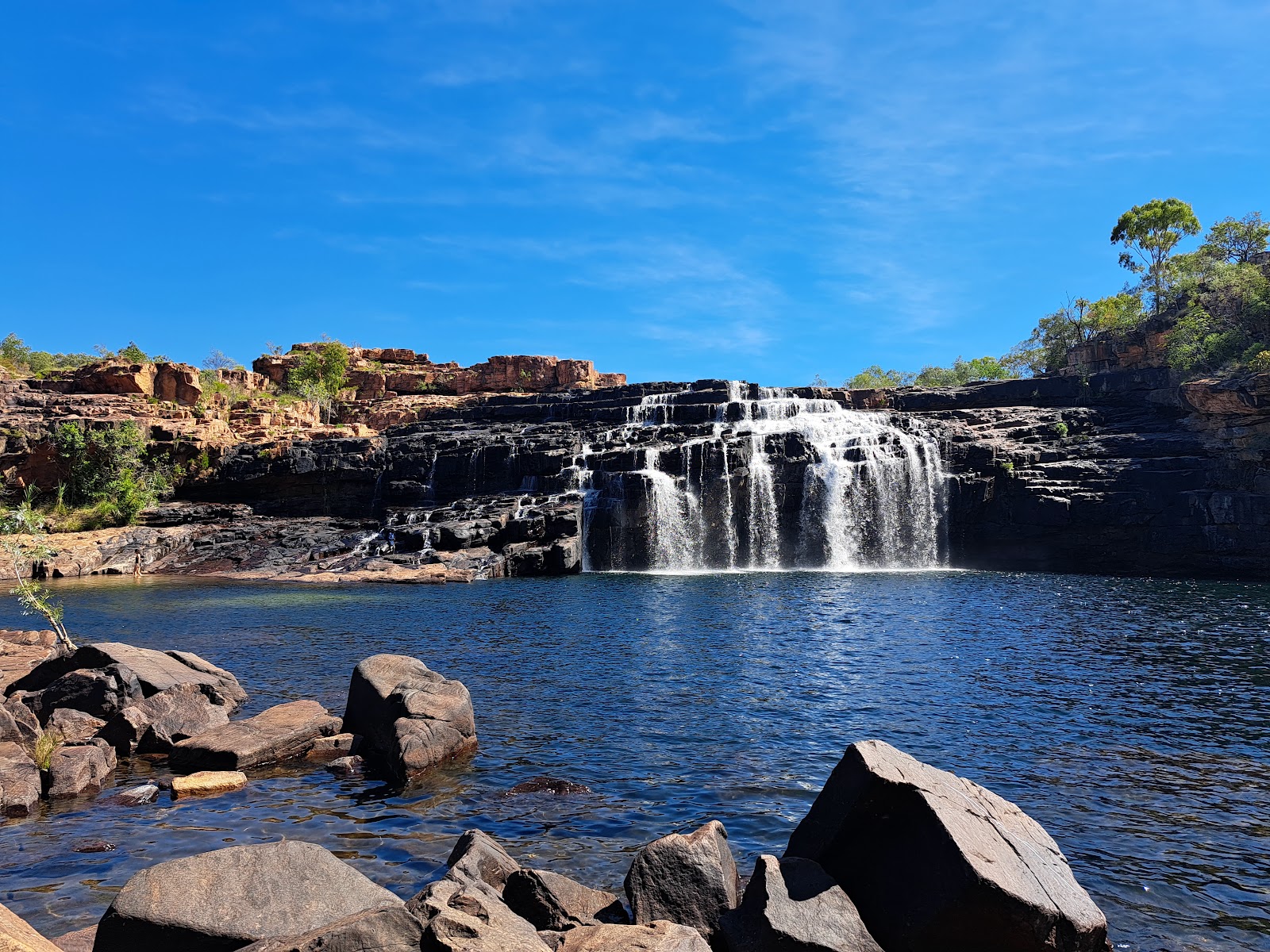
The Gibb River Road is the most rewarding drive in the Kimberley and, for many travellers, in Australia. It is also genuinely demanding -- corrugations that loosen your fillings, river crossings that require judgement, heat that requires respect, and remoteness that demands preparation rather than improvisation. The travellers who remember it most fondly are the ones who prepared properly and then let the place unfold at its own pace.
Do not rush it. The gorges are the Gibb, and you cannot experience them from a moving vehicle. Seven days is a minimum; ten to fourteen days is the version you'll be glad you took. Fill your tank every time you see fuel. Carry two spares. Tell someone where you're going. And start every gorge walk before 8am. The Gibb will do the rest.
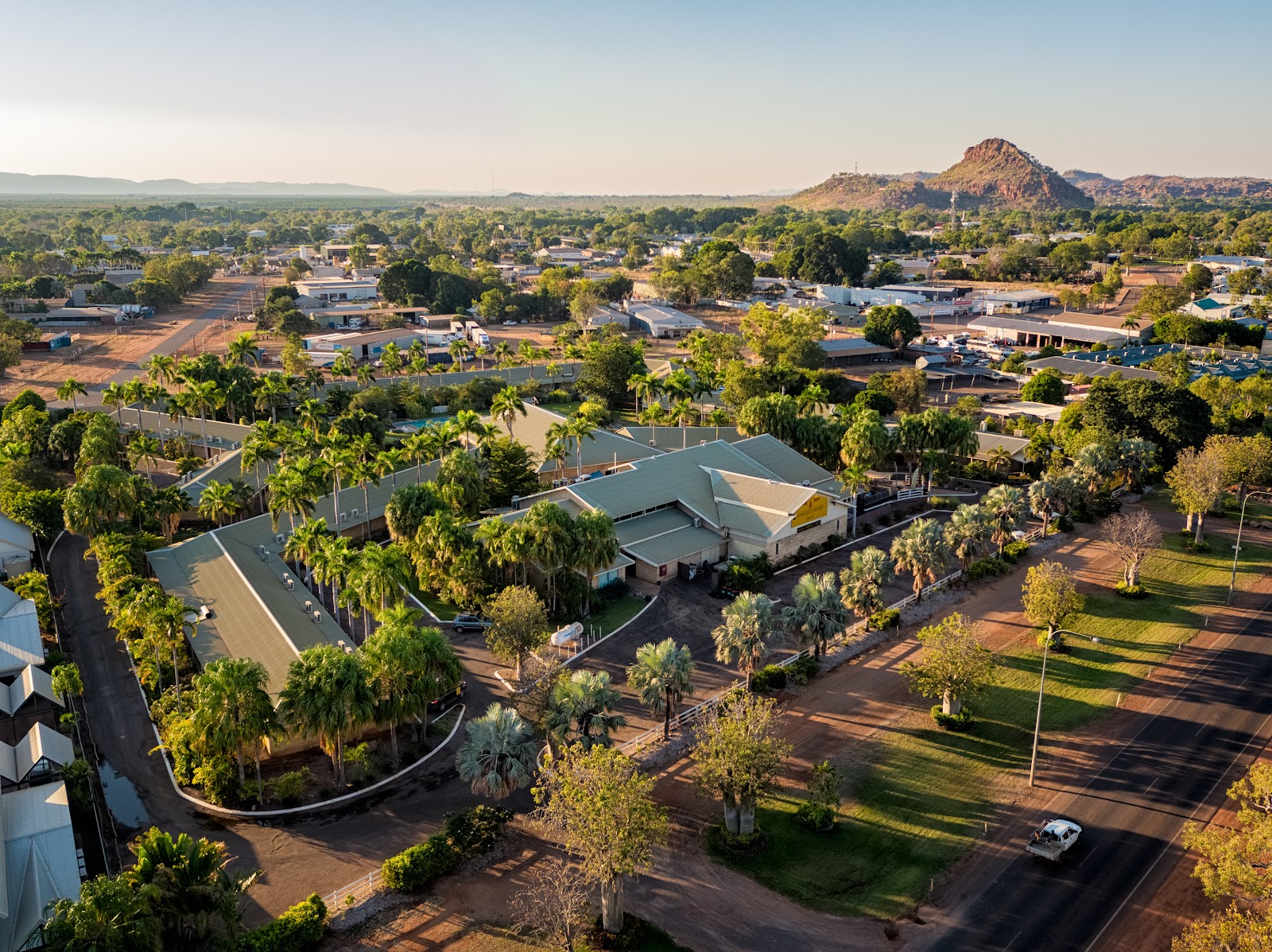
The Kimberley Grande Resort — The Kimberley
Book Direct & Save →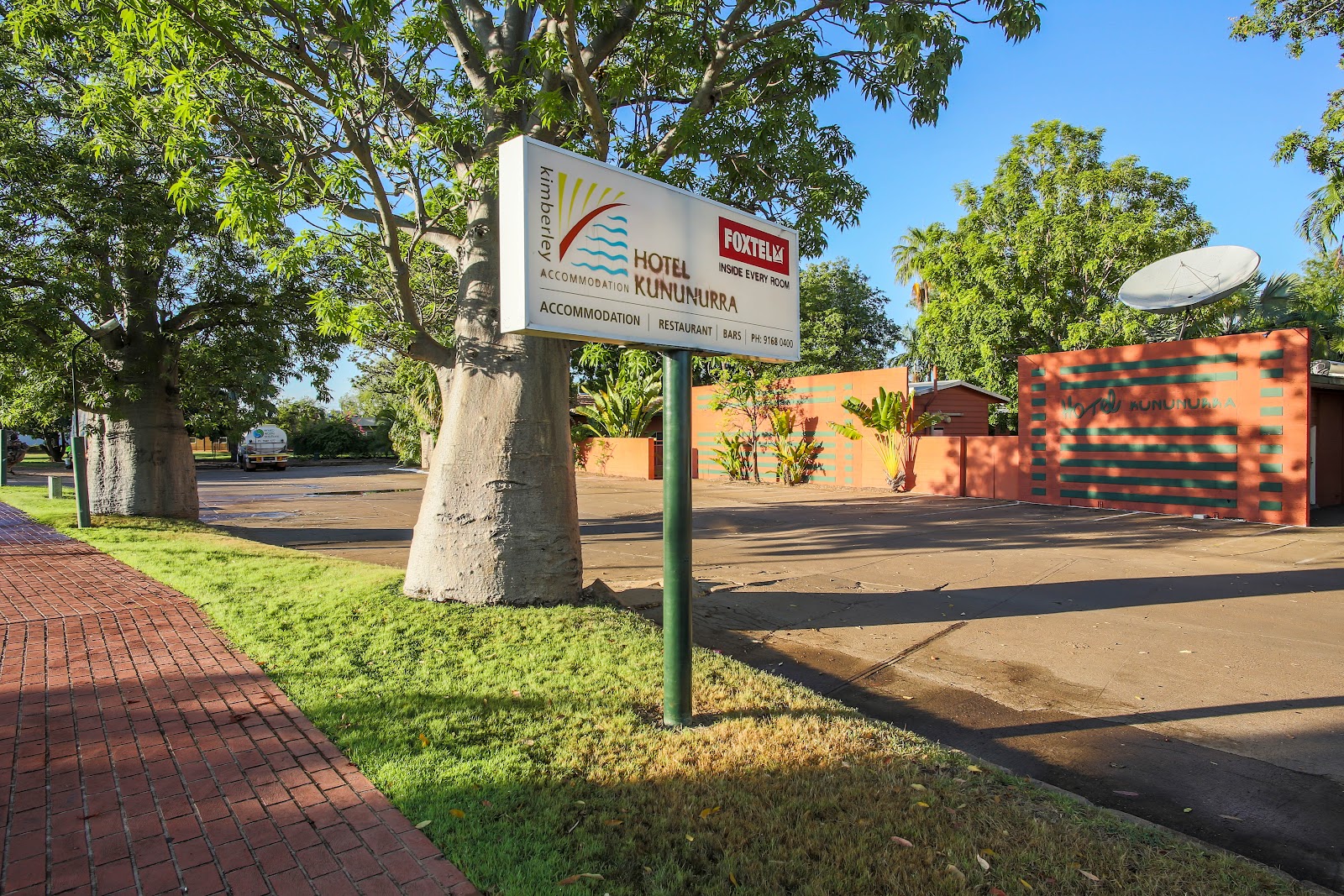
Best Western Cambridge Hotel Kununurra — The Kimberley
Book Direct & Save →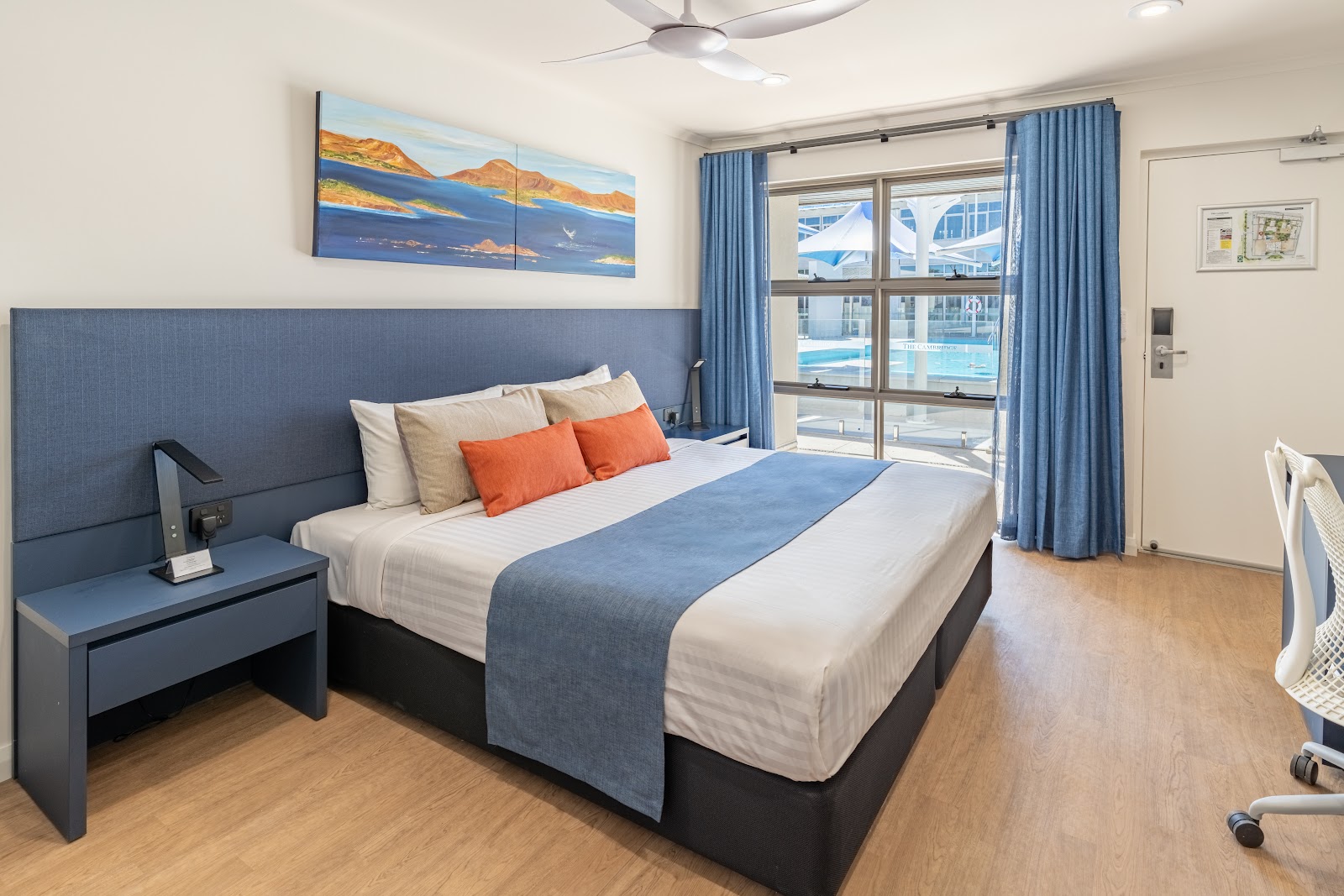
Hotel Kununurra — The Kimberley
Book Direct & Save →Skip OTA fees. Connect directly with The Kimberley owners for the best rates and a truly personal experience.
We match any online rate. No service fees — 100% of your payment supports local owners.
Direct guests receive complimentary hampers, early check-in, and priority access to experiences.
Speak directly with the people who manage the properties. No call centres, just local expertise.
Part of Western Australia · Australia's North West
 Glen Aplin
Granite Belt, Queensland
Queensland's most underrated wine valley
Explore the guide →
Glen Aplin
Granite Belt, Queensland
Queensland's most underrated wine valley
Explore the guide →
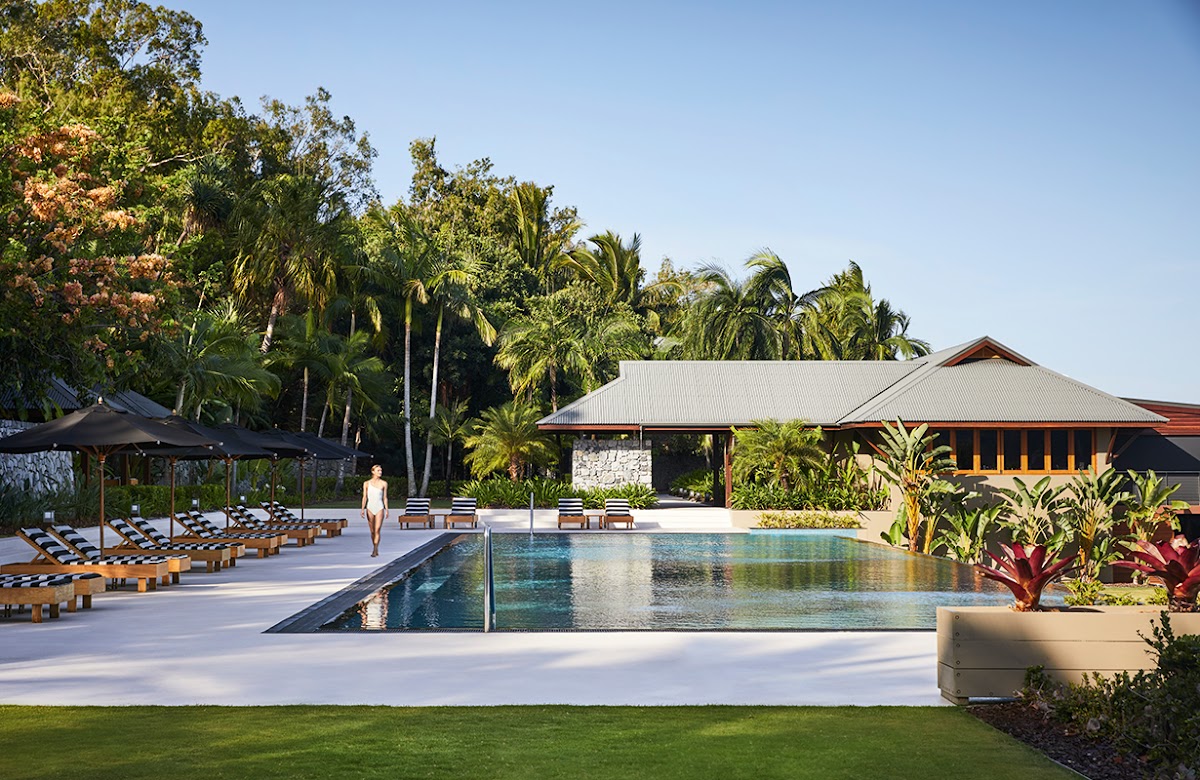 Hamilton Island
The Whitsundays, Queensland
Whitsundays island resort — Whitehaven Beach, reef trips and golf-buggy life
Explore the guide →
Hamilton Island
The Whitsundays, Queensland
Whitsundays island resort — Whitehaven Beach, reef trips and golf-buggy life
Explore the guide →
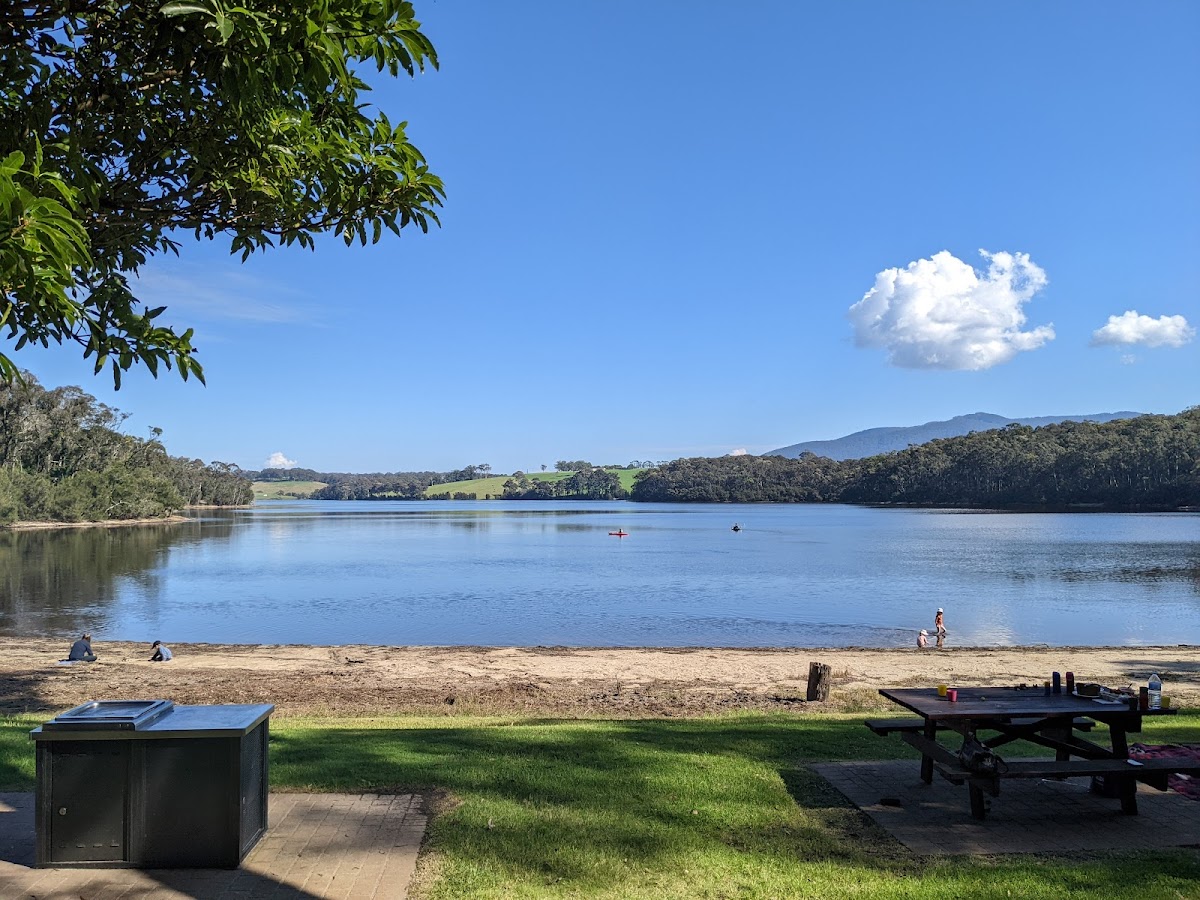 Narooma
South Coast, New South Wales
Crystal-clear inlet, surf beaches, oysters and Montague Island
Explore the guide →
Narooma
South Coast, New South Wales
Crystal-clear inlet, surf beaches, oysters and Montague Island
Explore the guide →
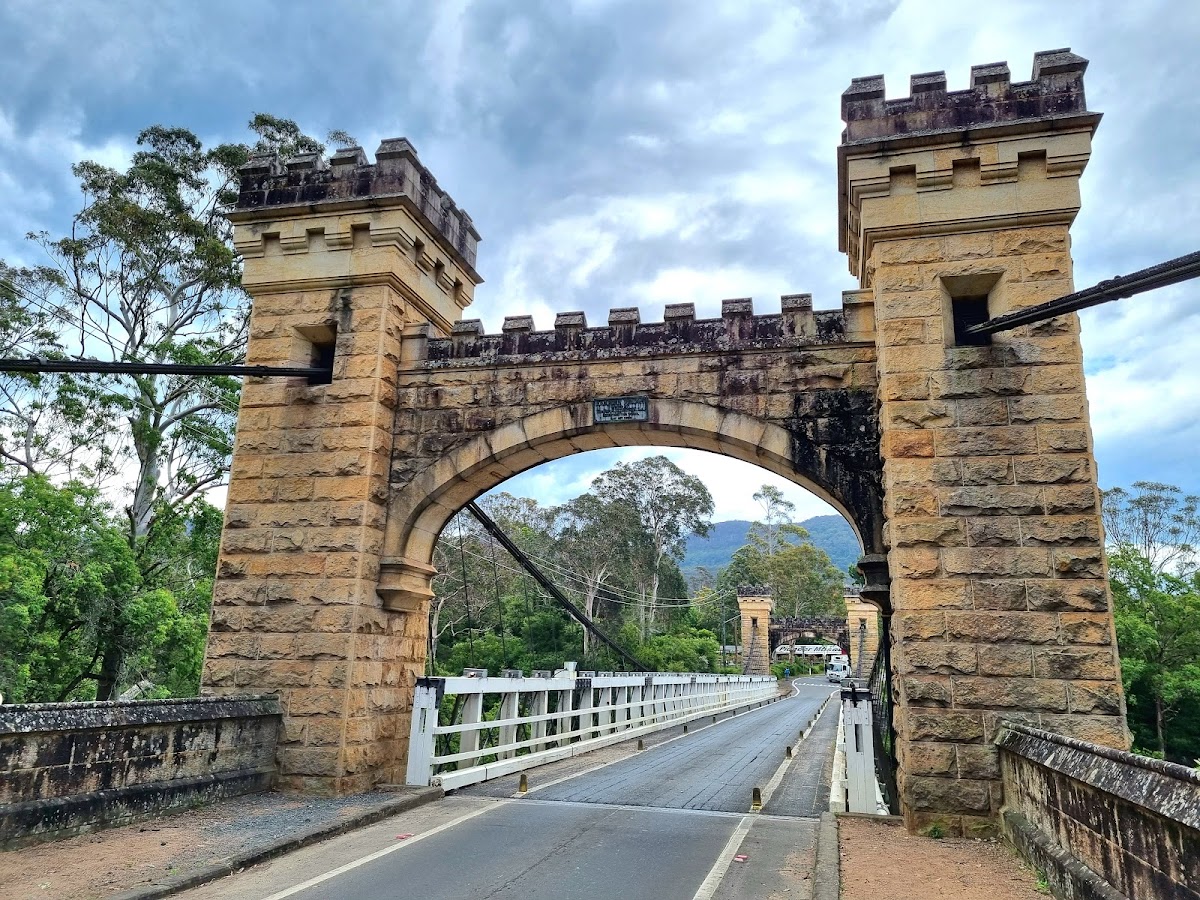 Kangaroo Valley
Shoalhaven, New South Wales
Hampden Bridge, kayaking and wombats in a green valley
Explore the guide →
Kangaroo Valley
Shoalhaven, New South Wales
Hampden Bridge, kayaking and wombats in a green valley
Explore the guide →
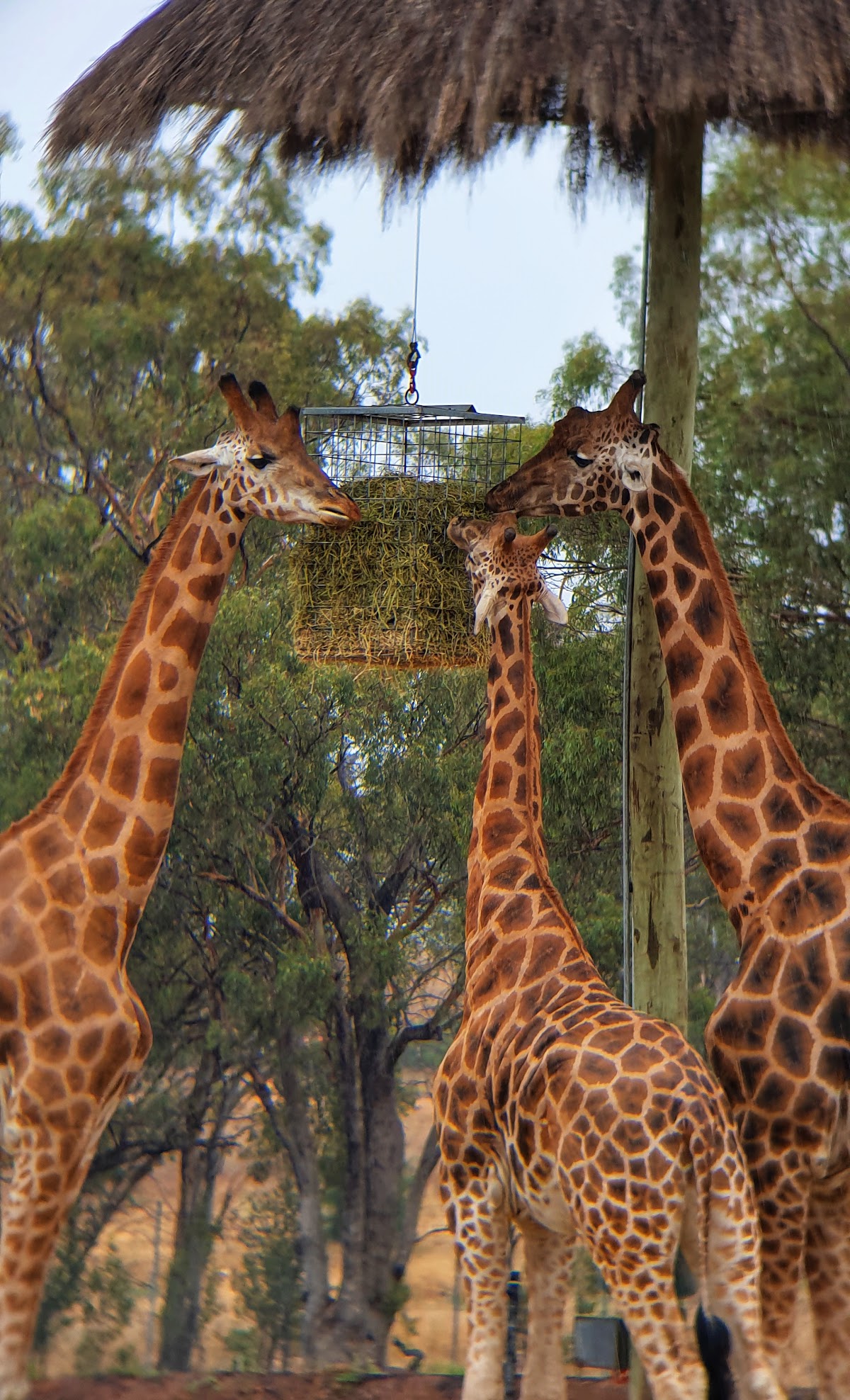 Dubbo
Central West, New South Wales
Open-range zoo and Outback gateway on the Macquarie River
Explore the guide →
Dubbo
Central West, New South Wales
Open-range zoo and Outback gateway on the Macquarie River
Explore the guide →
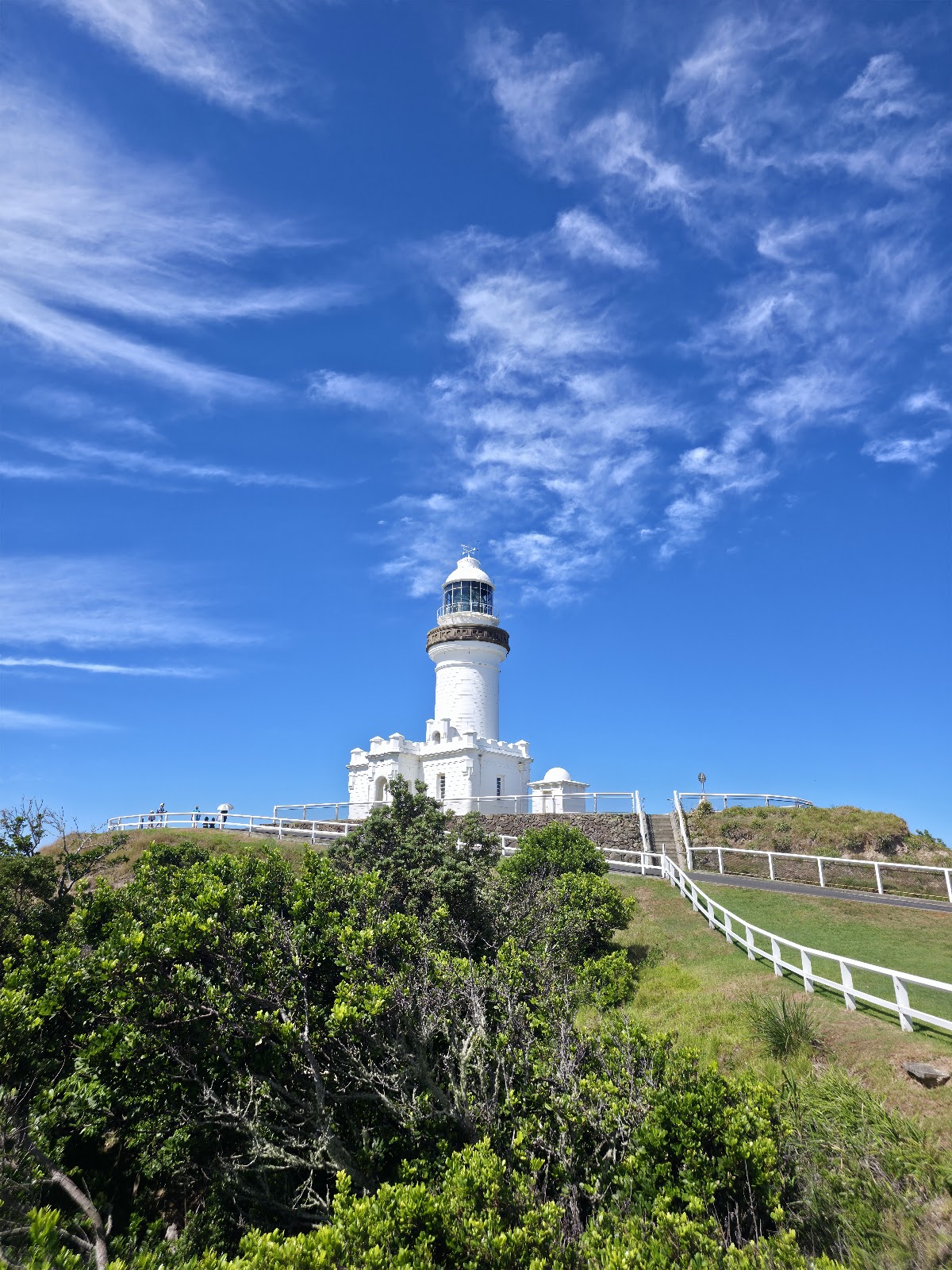 Byron Bay
Northern Rivers, New South Wales
Australia's iconic beach town and most easterly point
Explore the guide →
Byron Bay
Northern Rivers, New South Wales
Australia's iconic beach town and most easterly point
Explore the guide →
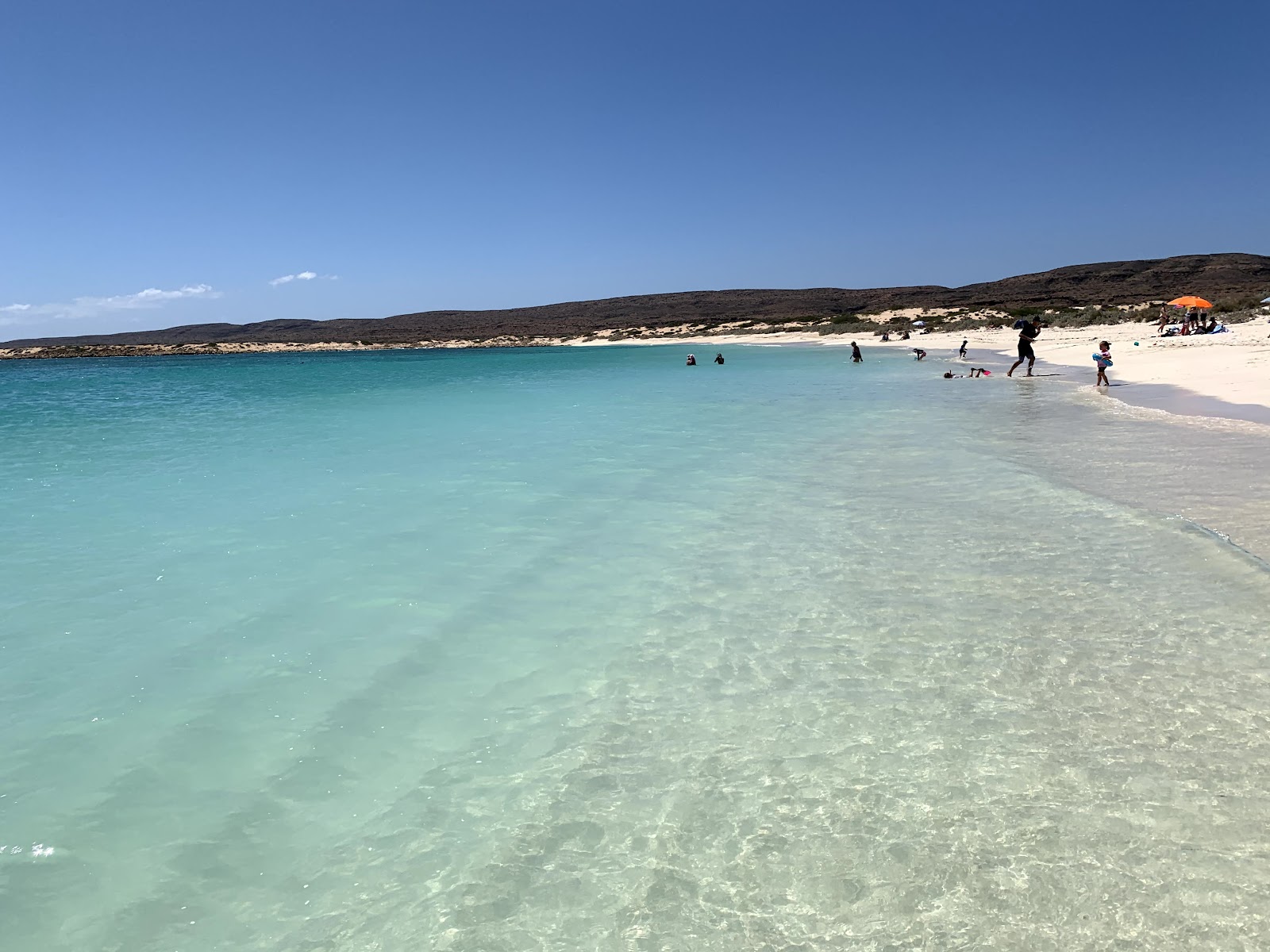 Ningaloo Reef
Australia's Coral Coast, Western Australia
Swim with whale sharks and snorkel a World-Heritage reef straight off the beach
Explore the guide →
Ningaloo Reef
Australia's Coral Coast, Western Australia
Swim with whale sharks and snorkel a World-Heritage reef straight off the beach
Explore the guide →
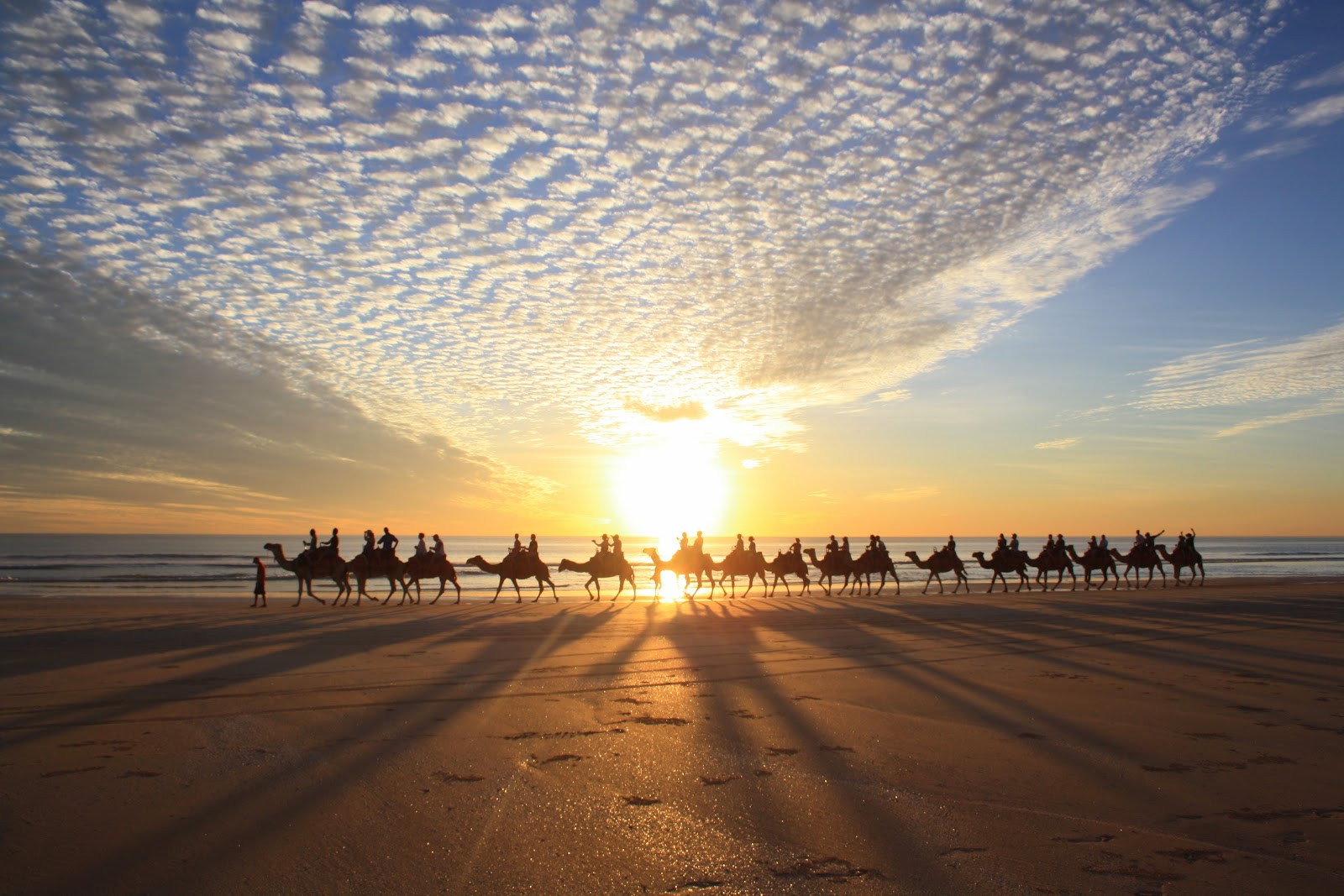 Broome
Australia's North West, Western Australia
Cable Beach sunsets, pearling history and camels on 22km of sand
Explore the guide →
Broome
Australia's North West, Western Australia
Cable Beach sunsets, pearling history and camels on 22km of sand
Explore the guide →
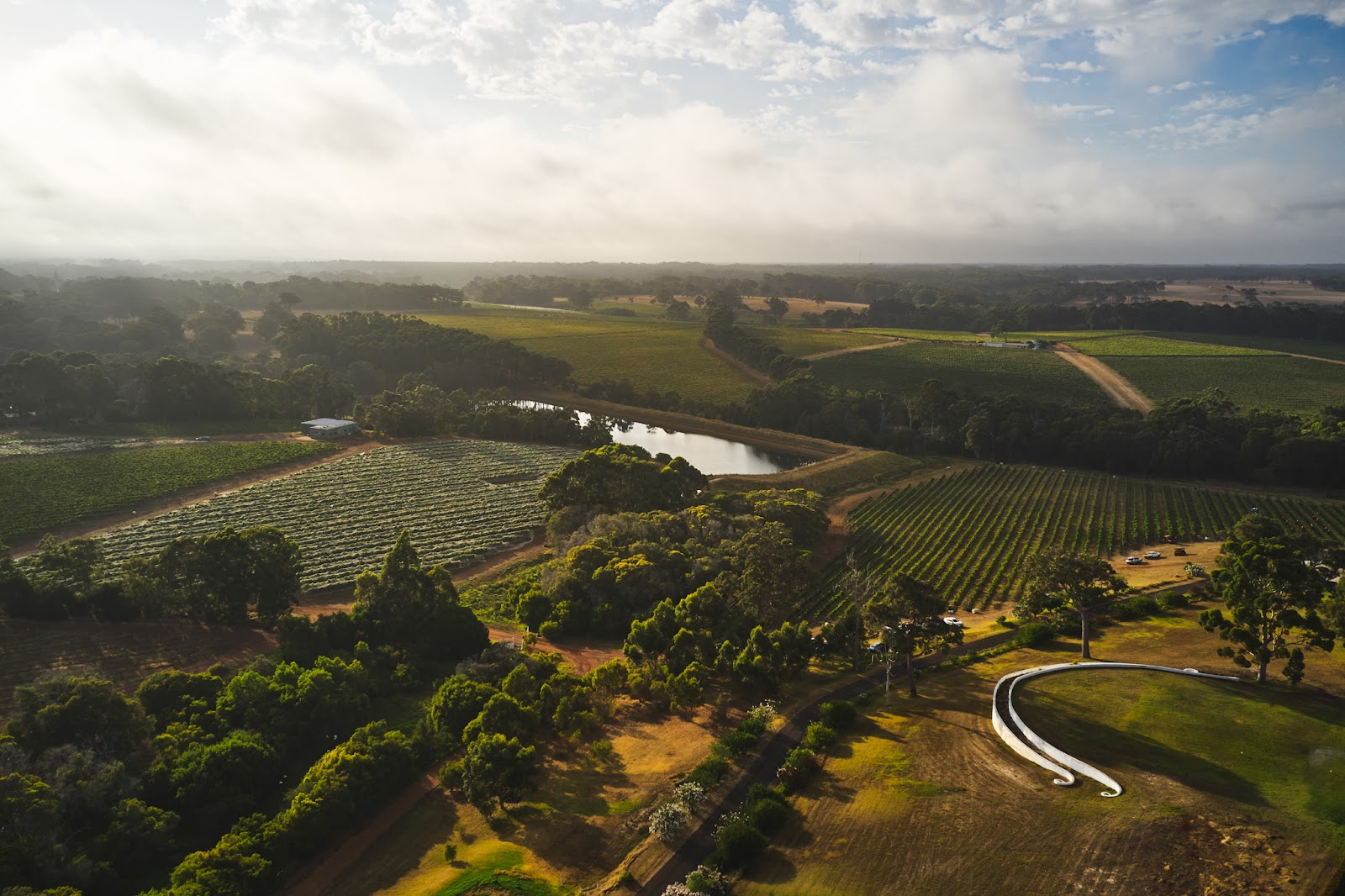 Margaret River
Australia's South West, Western Australia
World-class wineries, surf breaks and limestone caves three hours south of Perth
Explore the guide →
Margaret River
Australia's South West, Western Australia
World-class wineries, surf breaks and limestone caves three hours south of Perth
Explore the guide →