01. Cable Beach Club Resort & Spa
4.5 (968 reviews)
Cable Beach Club Resort & Spa — Broome
Book Direct & Save →Cable Beach is 22 kilometres of bone-white sand lapped by the Indian Ocean, and it is, quite simply, one of the finest beaches in Australia. It faces due west, which means the sunsets here are not a minor attraction — they are a daily event that draws the whole town to the sand. The camel trains walking the waterline at dusk are one of Australia's most photographed images. All of that is real, and it lives up to it.
View 3 Properties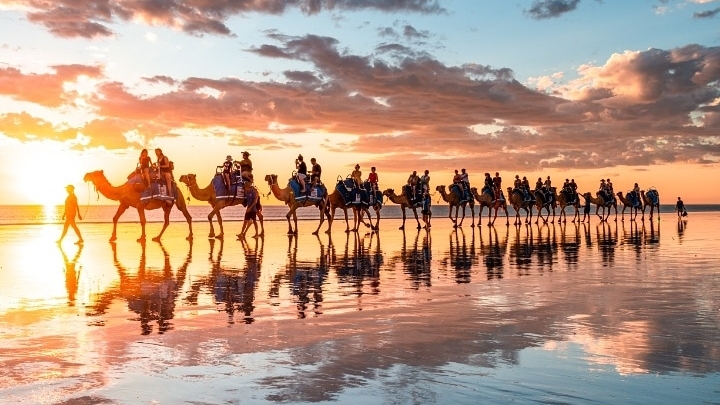
"Iconic, expansive, golden-hour magic"
But Cable Beach rewards people who know how to use it. The beach is divided by a rock groyne roughly a kilometre from the main access point — the flagged swimming area is south of the rocks, the 4WD-access stretch is north, and the sunset camel rides run the full length. The stinger and saltwater crocodile warnings are not performative; they are real, and following them makes the difference between a memorable swim and a dangerous one. This guide covers all of it: where to swim, how to get onto the 4WD section, when to turn up for sunset, where the surf is, and what to honestly expect.
A practical note before you arrive: the beach has no shade and the Kimberley sun is severe. Bring reef-safe sunscreen, a hat and plenty of water regardless of what time of year you visit.
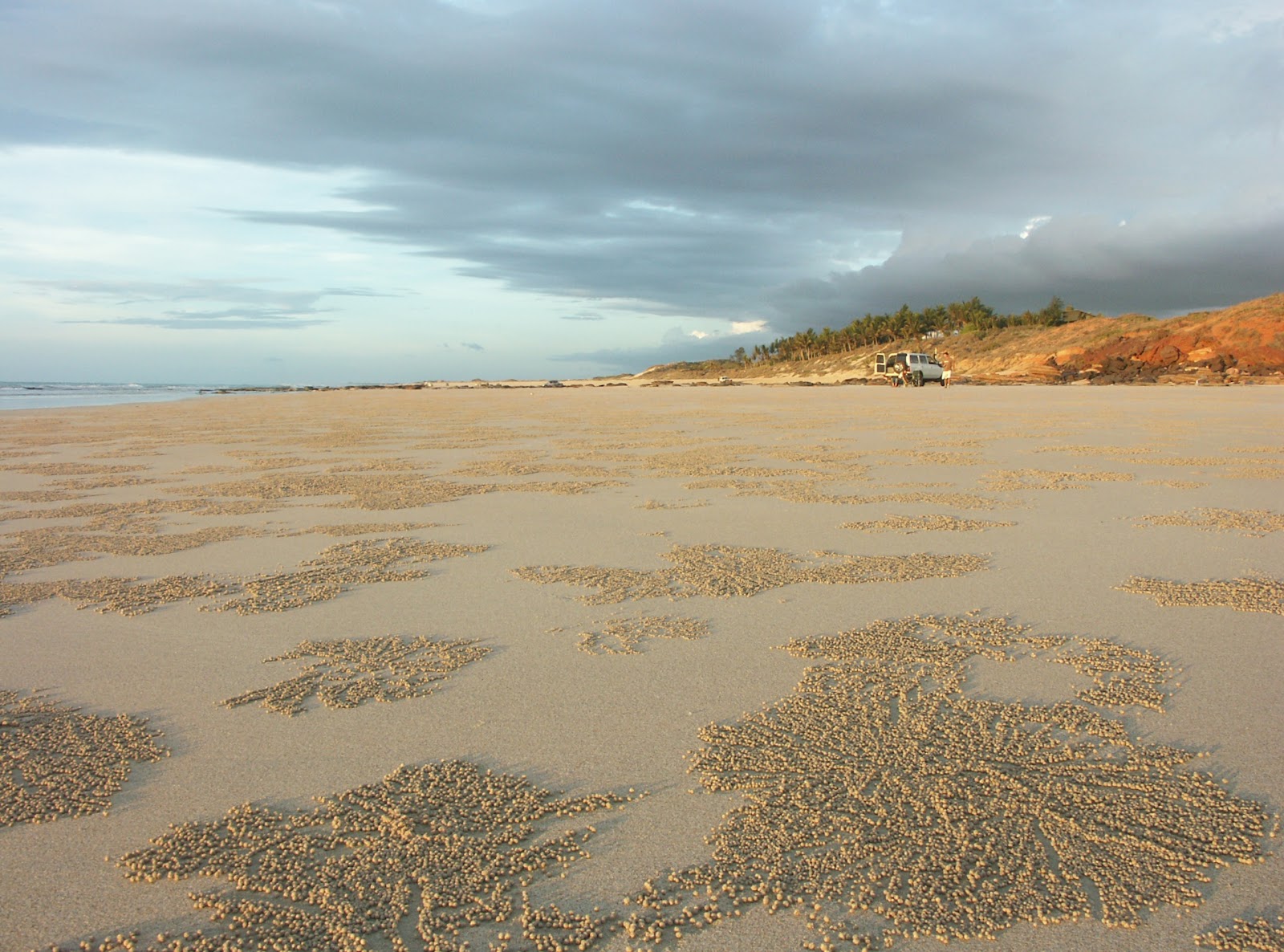
Cable Beach gets its name from the undersea telegraph cable that once connected Australia to Java, laid in 1889 and coming ashore here at the edge of what was then a remote pearling settlement. The beach itself predates all of that history — it's a Pleistocene landform, a 22-kilometre sweep of silica sand refined over millennia by the Indian Ocean. The colour of it, on a cloudless dry-season morning, is almost shocking: white verging on silver, set against water that moves through turquoise to deep blue to the orange and crimson of sunset.
The practical geography of Cable Beach is worth understanding before you turn up. The main public car park and facilities sit at the southern end, near the Cable Beach Club Resort. A rock groyne extends into the water roughly a kilometre north of the car park, and this groyne divides the beach into two distinct zones. South of the rocks is where the lifeguards patrol (in the dry season), where the flagged swimming channel is, and where families and casual visitors should base themselves. North of the rocks is the 4WD beach, where vehicles can drive directly onto the sand at low tide — a completely different and wilder experience.
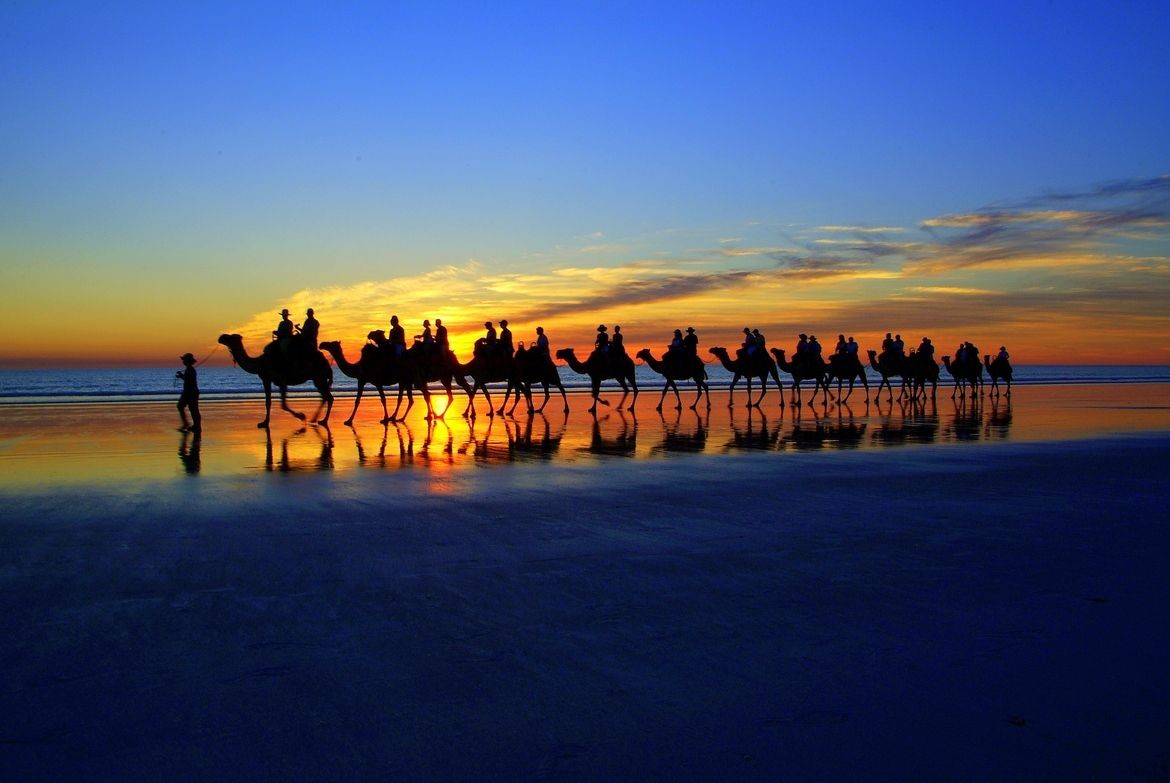
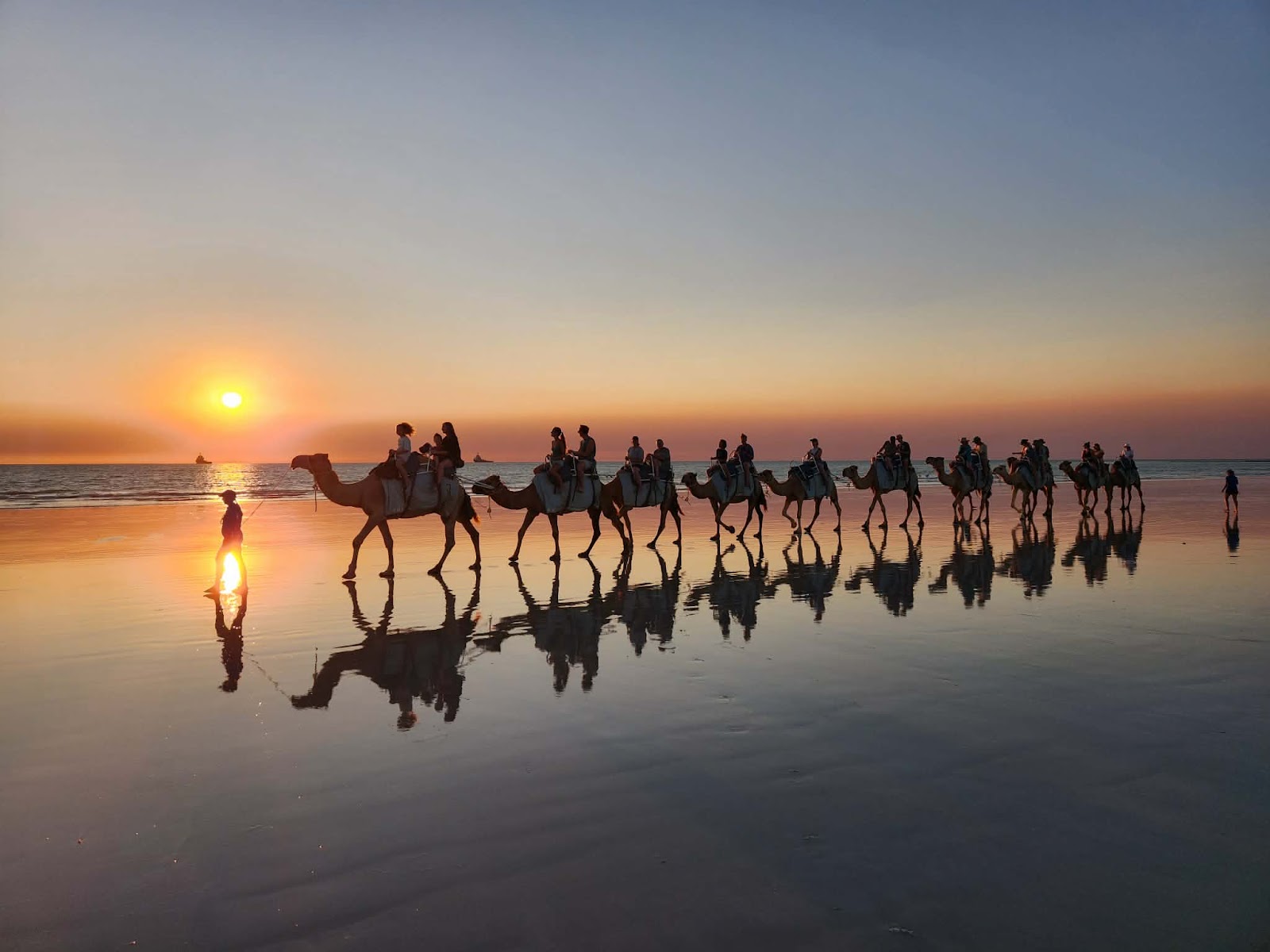
Sunsets at Cable Beach are genuinely extraordinary. The western aspect means the full arc of the sky catches the light, and with the flat Indian Ocean as a reflector, the colours are bigger and louder here than at almost any other west-facing beach in the country. The camel trains walking the waterline in that light are not a gimmick — they are the right-sized drama for the right-sized sky, and the image has become iconic for good reason.
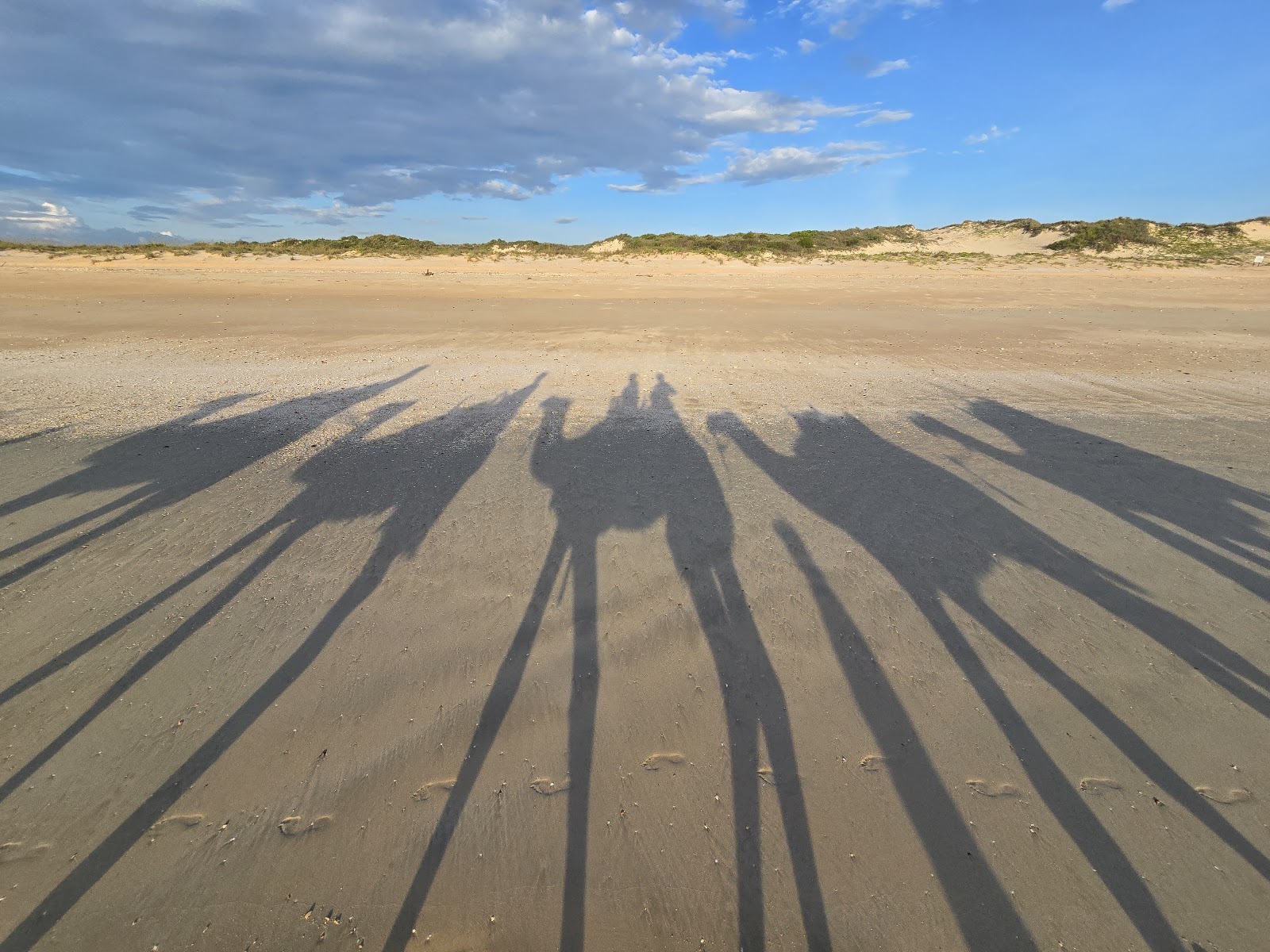
The sunset camel ride along Cable Beach is one of those rare tourist experiences that genuinely delivers on the image. You sit two metres above the sand on a lurching, surprisingly comfortable dromedary, walking the waterline as the Indian Ocean turns every shade of orange and the shadows stretch long across the beach. The camels are unperturbed by the sunset crowds and the competing camera phones. The whole thing takes roughly an hour and produces photographs you will still be pleased with in twenty years.
Two main operators run the evening rides: Red Sun Camels and Broome Camel Safaris. Both are reputable and have been operating for years; the main practical difference is the departure point (check with each operator, as these can shift seasonally) and group size. Both offer morning rides as well, which are quieter, cooler and better for anyone who wants the beach to themselves rather than the golden-hour crowd. Morning rides have a different quality — the light is softer, the sand is cooler, and you are almost certainly the only group on the beach. Evening rides have the drama.
The ride suits most travellers physically — you don't need to be fit, and the camels are manageable for children from about age three upwards, though operators have their own minimum-age policies. The limiting factor for some is the elevated position: if you are uneasy at height or have mobility issues that make mounting difficult, ask the operator in advance. Book well ahead in peak dry season (June to September), when evening rides sell out days in advance.
It's one of the very few "iconic" experiences in Australian tourism that actually matches the photograph — the camels, the light, the Indian Ocean all show up at once.
“We've done dozens of tourist experiences in Australia and this was the one our kids talked about for months. The sunset colours from up on the camel were extraordinary.”
— Traveller review
Riding at the waterline as the sky turns orange and crimson over the Indian Ocean — book the evening ride and arrive 15 minutes early to watch the camels being saddled.
Evening rides book out in peak season — reserve at least a week ahead in July and August. Those uneasy at heights or with mobility concerns should ask operators about mounting assistance before booking.
Swimming at Cable Beach requires knowing the rules, because the rules here are not bureaucratic — they exist because the Indian Ocean and the surrounding Kimberley coast have genuine hazards. South of the rock groyne is the designated swimming area. During the dry season (roughly May to October) this section is flagged and patrolled by lifeguards from the Shire of Broome, and this is where families, casual swimmers and anyone without strong local knowledge should swim. Always swim between the flags when they are up.
The beach shelves gently in the flagged section, making the entry and exit manageable, and the water in the dry season is clear, calm and an extraordinary shade of turquoise. It is, when conditions are right, as beautiful a swimming beach as any in Australia. The catch is the wet season (roughly November to April): this is when box jellyfish (Chironex fleckeri) are present in the near-shore waters and the flags come down. Box jellyfish are potentially lethal, and during this period swimming at Cable Beach is genuinely risky without a full-body stinger suit. The Shire updates warning signage regularly, but local advice from the visitor centre or your accommodation is the most current source.
Saltwater crocodiles are a separate hazard, and one that does not respect season. Do not swim at creek mouths, in mangrove areas or at the northern end of the beach where drainage channels are present. Do not swim at night. The southern flagged section — in daylight, in dry season — is the safe choice, and it is an excellent swimming beach when conditions are right.
In the dry season, on a calm morning, the flagged section is as beautiful a sheltered swim as any beach in Australia — turquoise water, white sand, and the Indian Ocean to yourself.
“Water was clear as anything and about 27 degrees — swam between the flags for an hour and it was genuinely world-class. Just don't go in wet season without a stinger suit.”
— Google review
A morning swim in calm, clear, turquoise water in the flagged section during the dry season — arrive before 9am to have the beach to yourself.
Box jellyfish are present Oct–Apr (wet season) — swimming during this period without a full-body stinger suit is risky. Saltwater crocodiles: never swim near creek mouths, mangroves or at night.
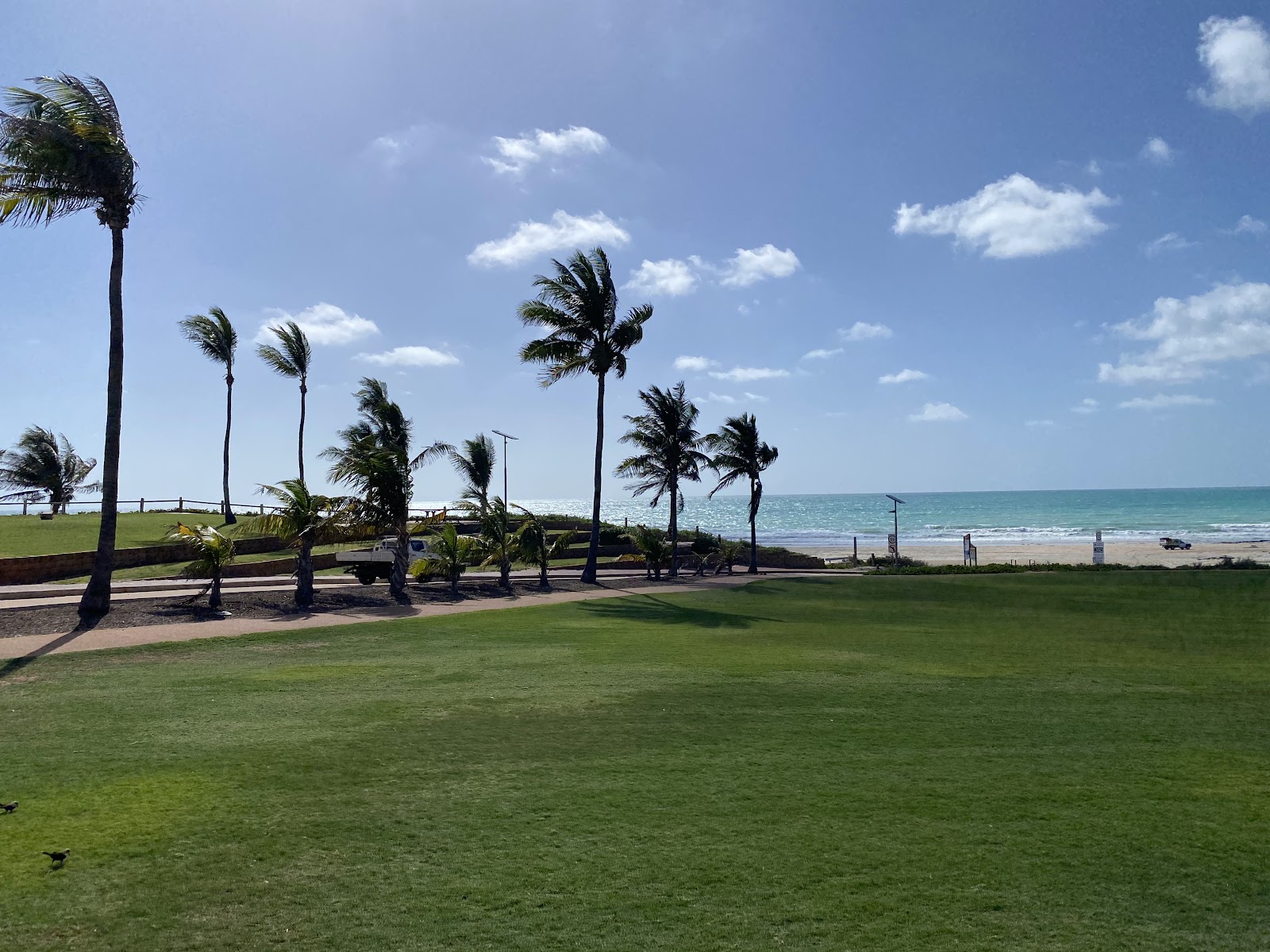
North of the rock groyne, Cable Beach transforms. The camel trains don't come up here, the car park crowd has thinned, and the sand stretches ahead for kilometres with nothing between you and the horizon but occasional 4WD tracks and the Indian Ocean. This is the part of the beach that gives you a sense of how the Kimberley coast actually scales. Getting here requires a four-wheel-drive vehicle, a valid beach driving permit (available from the Shire of Broome), and the knowledge to drive on tidal beach sand safely.
The practicalities matter and are worth taking seriously. Access onto the beach from Gubinge Road is tide-dependent — you need to check the tide chart before driving down, because the access point becomes impassable at high tide and getting stuck is not a minor inconvenience on a beach this remote. Let air down in your tyres before you drive on the sand (roughly 18–20 PSI is a common starting point; ask locally), carry a recovery kit and tow rope, and tell someone where you're going. The beach driving here is straightforward soft sand rather than technical terrain, but a flat tyre or a bogged vehicle on an incoming tide is still a situation you want to be equipped for.
For travellers who do it right, the north section delivers one of the most satisfying beach experiences in Western Australia: your own private kilometre of Cable Beach, completely at your own pace, with the sunset light the same as everyone else gets but half the people. Fishing is popular from the 4WD section, and camping is available at the northern end — check current permit requirements with the Shire.
It's the same extraordinary Cable Beach sunset with a fraction of the crowd — your own patch of the Indian Ocean for the afternoon.
“We drove north until we were the only vehicle on the beach and set up chairs at the waterline for sunset. One of the best decisions of the trip.”
— Traveller review
Driving far enough north to have the beach to yourself, setting up at the waterline, and watching the sunset with the whole Indian Ocean to yourself.
Tide-dependent access — check the tide chart before driving onto the beach. No 4WD permit, no beach drive. Carry a recovery kit; deflate tyres before going on sand. Do NOT swim near the creek drainage at the northern end.
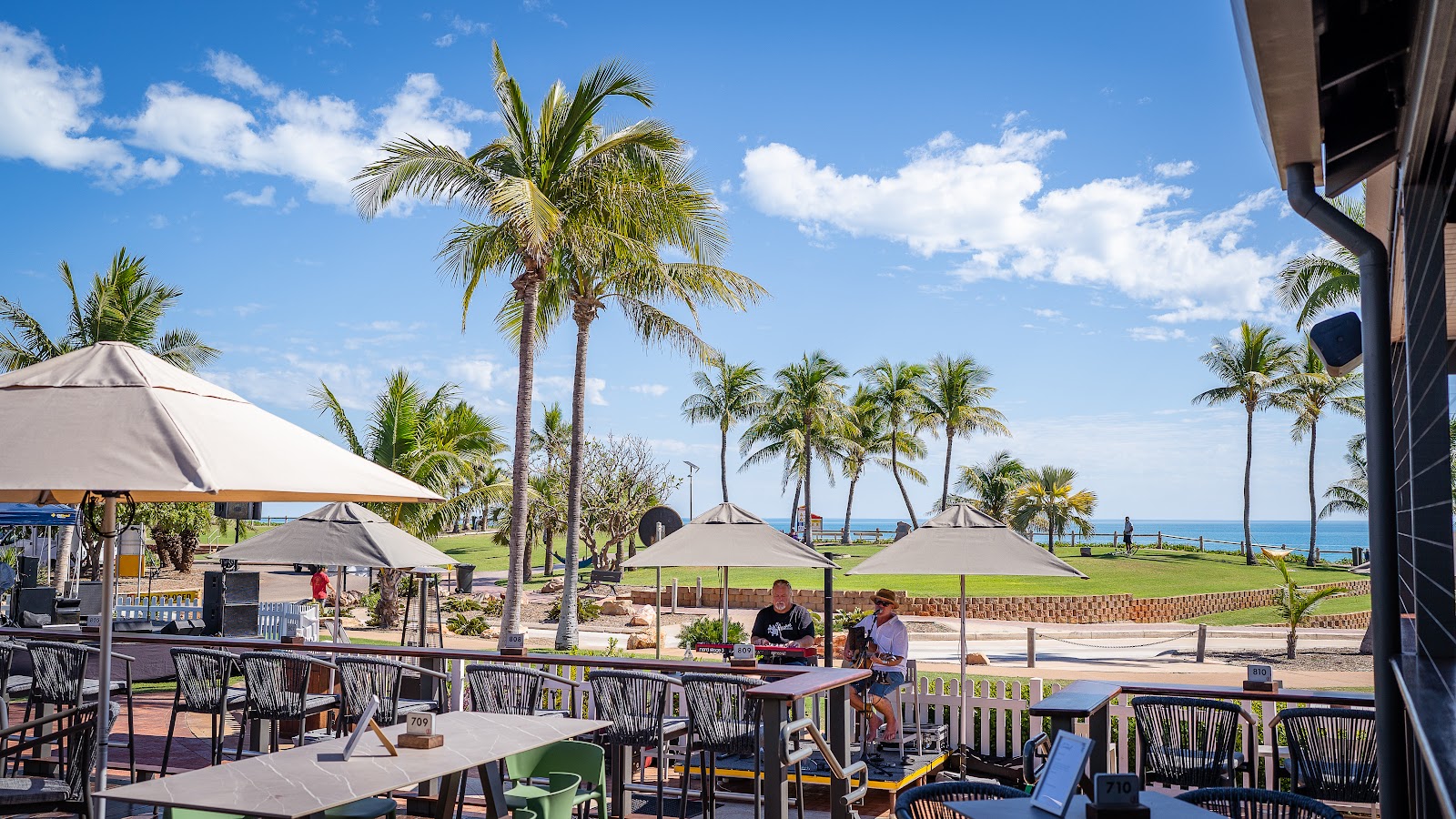
For sunsets with more comfort than sand between your toes, the Cable Beach Club Resort and its Zanders beachfront restaurant provide the most scenic sundowner situation in Broome. The Cable Beach Club sits directly on the beachfront, and its pool terrace and bar face due west across the beach. You can sit here with a drink as the light changes and watch both the ocean and the camel trains at the waterline without walking anywhere. It is, in the right company, about as pleasant a late afternoon as the Kimberley offers.
Zanders is the resort's beachfront restaurant — casual enough for sandy feet, but with a proper cocktail list and a menu that does Kimberley seafood well. The barramundi is locally sourced and the prawns are worth ordering. The sundowner set — roughly 5pm to 7:30pm in the dry season — draws a mixed crowd of resort guests and walk-ins, and while it's rarely uncrowded in peak season, the atmosphere is genuinely good. The crowd is part of it.
This works as a separate activity or as the beginning or end of a beach afternoon: walk the sunset, then come to Zanders for dinner, or book ahead at the bar, arrive early, and watch the camel rides go past from your table. Non-guests of the resort are welcome at the bar and restaurant — you don't need to be staying here. Dress is smart-casual; sandy feet are fine.
Watching the Cable Beach camel trains from a bar stool with a cold drink in hand as the sky turns orange — it's the same sunset, considerably more comfortable.
“Came for sundowners at Zanders and ended up staying for dinner. The barramundi was excellent and the sunset from the terrace is exactly what you fly to Broome for.”
— Google review
A cocktail on the pool terrace as the camel trains pass at waterline — book a table at Zanders for the evening and stay for dinner.
Busy and pricey during peak dry season — book ahead for dinner; walk-ups are harder to accommodate at sunset time in July and August.
Cable Beach produces a consistent Indian Ocean beach break that suits longboarders, SUP riders and confident beginners more than serious shortboarders chasing high-performance waves. The swell wraps in from the north-west and south-west, and while it's rarely heavy or powerful in the way that Southern Ocean surf is, it's a perfectly enjoyable wave — warm-water surfing on an uncrowded beach under a Kimberley sky. On a mid-sized dry-season swell, there's genuine fun to be had.
Broome does not have a surf culture in the way that the south coast does, and the line-up reflects it: you are unlikely to encounter crowding or territorial behaviour in the water, and a traveller paddling out at Cable Beach will generally find it easygoing. Gear hire and lessons are available in Broome, though the surf school scene is smaller and more informal here than at dedicated surf towns. Check what's currently operating through your accommodation or the visitor centre, as operators change.
The real attraction for SUP riders is the flat morning water before the trade wind picks up, typically before 10am. The beach is wide, the water is warm and clear, and paddling north along the waterline early in the morning — before the crowds arrive — is one of the quieter, more underrated things you can do at Cable Beach. Bring a full-length rashie and SPF50+ for any time on the water; the UV intensity in Broome is extreme by most Australian-city standards.
Warm-water beach-break surfing and flat-water SUP on one of Australia's most beautiful beaches, with almost no one else in the water — the underrated active option at Cable Beach.
“Got up early and did an hour's SUP before breakfast. Flat water, warm, not another person on the beach. That's the way to see Cable Beach.”
— Traveller review
An early morning SUP paddle north along the waterline before the trade wind fills in — flat, warm, and you'll likely have the water to yourself.
The trade wind picks up most afternoons, making SUP harder after mid-morning. The surf is genuinely fun but not powerful — experienced shortboarders may find it underwhelming on smaller days.
The rock groyne dividing the northern and southern sections of Cable Beach reveals excellent rock pools at low tide, and they are the beach's most underrated free attraction. The Kimberley tidal range is dramatic — among the largest in Australia, running up to nine metres in nearby Roebuck Bay — and as the tide drops on the ocean side of the groyne, it exposes a wide platform of reef rock that traps sea stars, small fish, crabs, anemones and other marine life in shallow pools. For children it's endlessly engaging, and for patient adults with a camera it's genuinely photogenic.
The timing requires attention, because the experience only works at a lower tide stage, and the Kimberley tides are fast-moving. Check tide tables (freely available at the visitor centre and online) before planning a rock pool visit. Wear old shoes or water shoes on the rocks — the surfaces are irregular and can be sharp — and be conservative about how far from the swimming section you wander with children, particularly as the tide turns.
The groyne itself also offers a vantage point for watching the flagged swimming section from above, and in the early evening the rocks catch the warm light in a way that makes the whole beach look like a painting. It's a calm, low-energy way to spend an hour at Cable Beach that doesn't require booking anything or spending money — a pleasant contrast to the organised sunset activities.
The Kimberley's massive tidal range turns the groyne into a free, living rock pool at low tide — the kind of thing children remember from a holiday for years.
“Kids spent an entire hour finding sea stars and tiny crabs in the pools by the groyne. Free, completely engaging, and they didn't want to leave.”
— Google review
Arriving at low tide to find the groyne platform exposed, with sea stars and marine life in every pool — time it right and it's the best free hour at Cable Beach.
Only works at low to mid tide; the Kimberley tidal cycle is fast and the range is extreme — check tide times before going, wear shoes on the rocks, and don't let children wander towards the open ocean side.
The honest truth about Cable Beach sunsets is that the free version — walking down to the waterline, taking off your shoes, and standing there as the sky turns — is as good as any of the paid versions. The light doesn't cost anything. The Indian Ocean doesn't charge admission. And a sunset at Cable Beach, unmediated by a camel ride or a cocktail list, is still one of the most beautiful things you will see in Australia.
The main car park off Cable Beach Road is the easiest access point for the main sunset gathering. In the dry season, particularly in July and August, the southern end of the beach fills up considerably around sunset — bring a towel, find a patch of sand, and sit. Many visitors walk the waterline in both directions, and the beach is wide enough that even on a busy evening it never feels cramped in the way that a city beach does at peak time.
Wear shoes you can take off easily and leave at the waterline. Bring a layer for after sunset — the temperature drops quickly once the sun is down in the dry season, and standing around in damp boardshorts on a beach at dusk can be unexpectedly cold. Arrive 20 to 30 minutes before sunset to settle in and watch the light build; the best colours typically come in the fifteen minutes either side of the sun touching the horizon, and staying for five minutes after the sun has gone gives you the last of the pink on the water.
The free version of the Cable Beach sunset is still one of the most extraordinary things you can see in Australia — the light here is simply the best west-facing light in the country.
“We just walked to the water's edge and stood there. The colours were extraordinary. No camel, no cocktail — just the Indian Ocean going from turquoise to orange to dark. Worth the flight to Broome on its own.”
— Traveller review
Standing at the waterline as the sky transitions from deep blue to crimson — arrive 20 minutes before sunset and stay until the last colour fades from the water.
The south end of the beach fills up on peak dry-season evenings — if you want space and quiet, walk 20 minutes north along the waterline before the sun gets low.
| Season | Conditions | Highlights | Crowds |
|---|---|---|---|
| Dry season (May–Oct) | Warm days (25–35°C), cool nights, light trade winds in the afternoon, negligible rainfall | The peak Cable Beach season — swimming is safe in the flagged section, camel rides are running at full schedule, sunset crowds are large, 4WD beach access is reliable | High (especially Jul–Aug school holidays) |
| Shoulder (Apr & Nov) | Building or fading humidity, some storm activity | April and November offer quieter beaches and lower prices; the stinger season begins in October so check local advice before swimming | Moderate |
| Wet season (Nov–Apr) | High humidity (up to 40°C), monsoonal rain and storms, occasional cyclone risk | Lush green Kimberley landscape; storms and lightning at sunset can be spectacular from the beach — but swimming is off due to box jellyfish; 4WD conditions variable; camel operators may reduce schedules | Low |
What recent visitors say:
“Cable beach is a lovely spot to sit and relax and go for a dip. You can ride a camel or take your bike on the compact sand. Later in the day drive onto the beach have a glass of wine and watch the sunset.”— Pamela Rivers (on Cable Beach), Google review
“Excellent place, they’re currently doing renovations on the for-sure but since there are life guards, there’s safe excellent beach swimming along with a easy walk to the beachside business/restaurants. Great views allowed by 4x4 vehicles able to view the sunset while driving on the beach. Also able to see the camel rides with the tide being quite volatile so”— Kyle Sapphire (on Cable Beach), Google review
“Cable Beach: An absolute gem for sunset enthusiasts, Cable Beach offers stunning views with a vibrant atmosphere. Crowds gather to admire the breathtaking sunset, and the sight of people enjoying camel rides adds a unique charm to the experience. A must-visit spot for those seeking beauty and a lively beach ambiance.”— Amy Elizabeth (on Cable Beach), Google review
Safety first — the stinger and croc warnings are real: Box jellyfish (Chironex fleckeri) are present in near-shore Broome waters from approximately October through April, and swimming at Cable Beach outside the flagged dry-season section without a full-body stinger suit is a serious risk. The Shire of Broome's signage is your most current source of advice; ask at your accommodation about current conditions. Separately, saltwater crocodiles inhabit Broome's coastal waterways including Roebuck Bay and the creek systems that drain onto Cable Beach — never swim near creek mouths, drainage channels or mangrove edges, and never swim at night anywhere on Cable Beach.
Tides matter more here than at most beaches: the Kimberley has one of the largest tidal ranges in Australia, and it directly affects what you can do. The 4WD access point to the north section becomes impassable at high tide. The rock pools appear only at low tide. The swimming conditions change with the tide — check tide tables (available at the Broome Visitor Centre or online via the Bureau of Meteorology) before planning activities that depend on specific tide stages.
Practical notes: The main car park at Cable Beach Road West has toilets, showers, a kiosk and paid parking. There is no shade on the beach — bring an umbrella, a hat and 50+ sunscreen for any time of day. The UV index in Broome is extreme; the latitude is lower than most Australians are used to. Camel rides must be booked in advance in peak season. If you are visiting with elderly family members or anyone with limited mobility, the car park to waterline walk is manageable, but the sand is soft and a walking frame or wheelchair will struggle past the firm wet sand at the tide line.
Cable Beach is one of the very few places in Australia that genuinely justifies flying to get there. The 22 kilometres of white sand, the west-facing Indian Ocean, the camels at sunset — none of it is hype. It is as beautiful and as big-feeling as the photographs suggest, and the sunset is, by any honest reckoning, among the finest in the country.
Go to the flagged section and swim. Do the sunset camel ride at least once. Walk north of the rocks for space and quiet. Get on the water early for SUP. Eat barramundi at Zanders. And spend at least one evening just standing at the waterline as the sky turns — that costs nothing and delivers everything. Cable Beach is one of Australia's best beaches because it earns it.
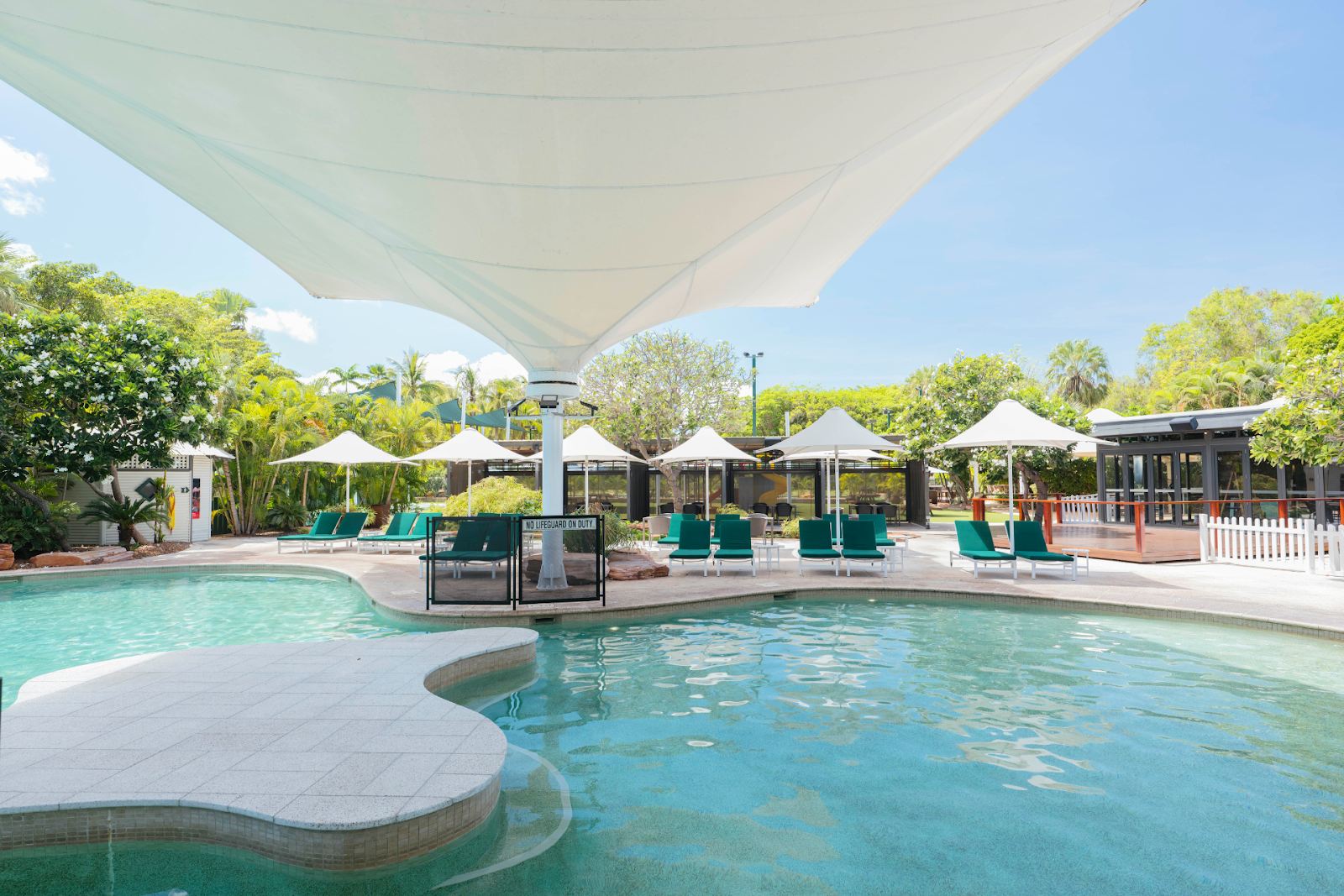
Cable Beach Club Resort & Spa — Broome
Book Direct & Save →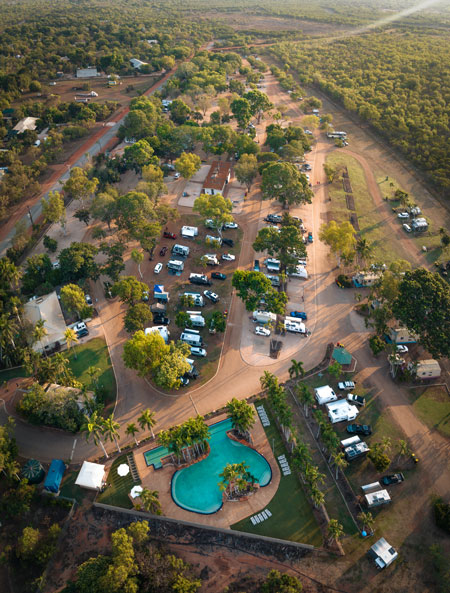
Broome Caravan Park — Broome
Book Direct & Save →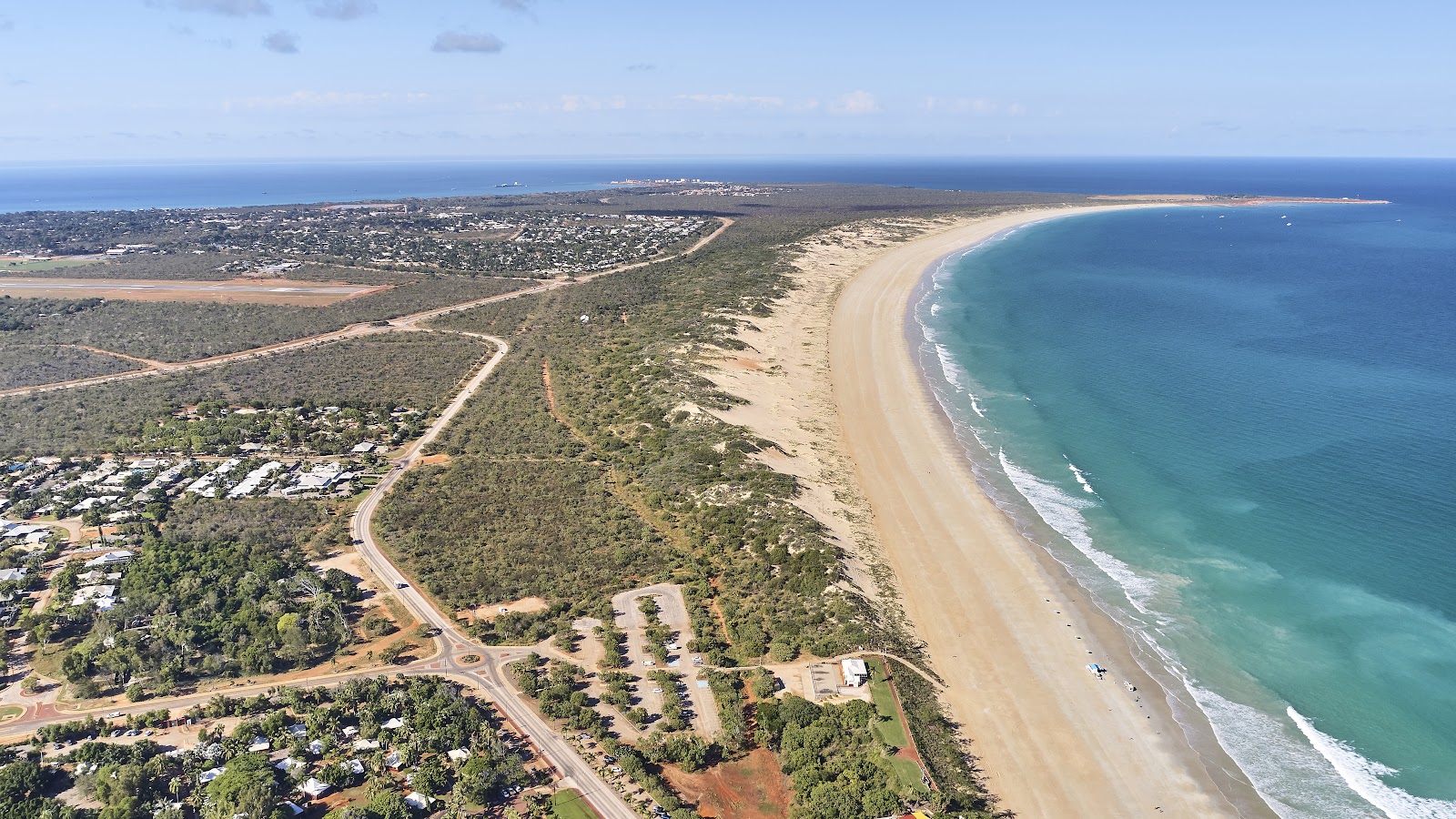
Beaches of Broome — Broome
Book Direct & Save →Skip OTA fees. Connect directly with Broome owners for the best rates and a truly personal experience.
We match any online rate. No service fees — 100% of your payment supports local owners.
Direct guests receive complimentary hampers, early check-in, and priority access to experiences.
Speak directly with the people who manage the properties. No call centres, just local expertise.
Part of Western Australia · Australia's North West
 Glen Aplin
Granite Belt, Queensland
Queensland's most underrated wine valley
Explore the guide →
Glen Aplin
Granite Belt, Queensland
Queensland's most underrated wine valley
Explore the guide →
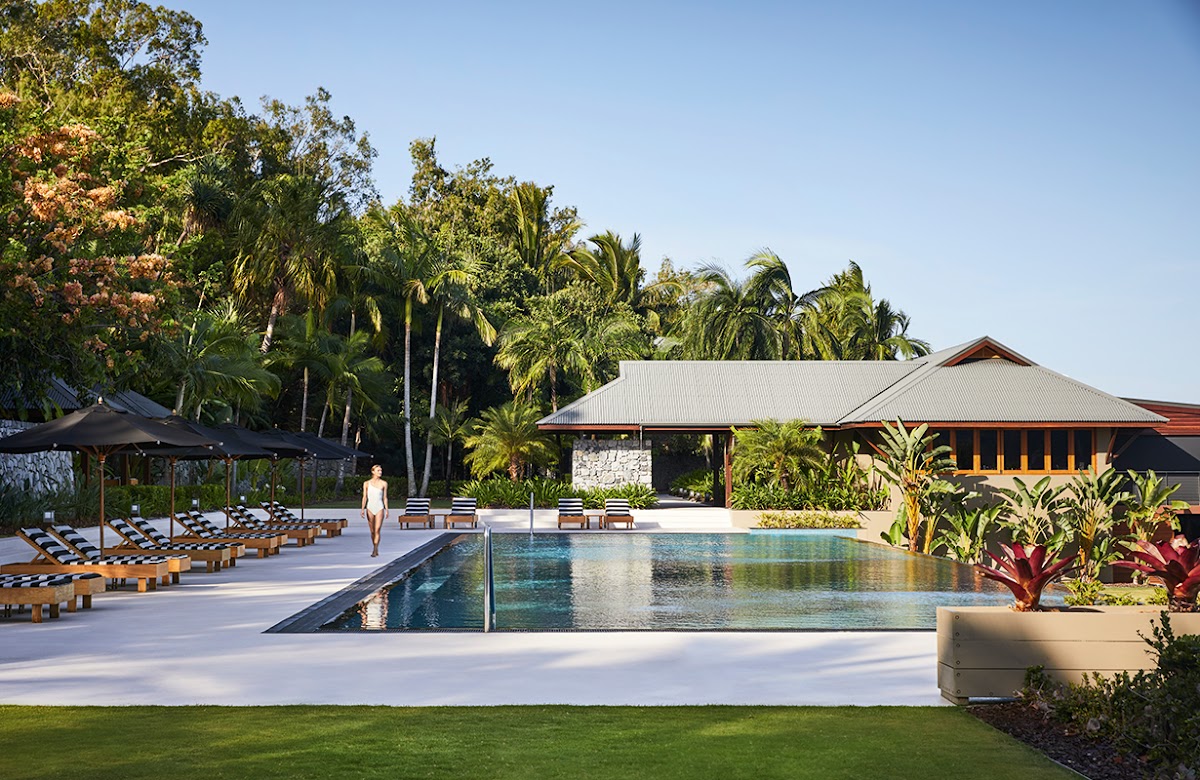 Hamilton Island
The Whitsundays, Queensland
Whitsundays island resort — Whitehaven Beach, reef trips and golf-buggy life
Explore the guide →
Hamilton Island
The Whitsundays, Queensland
Whitsundays island resort — Whitehaven Beach, reef trips and golf-buggy life
Explore the guide →
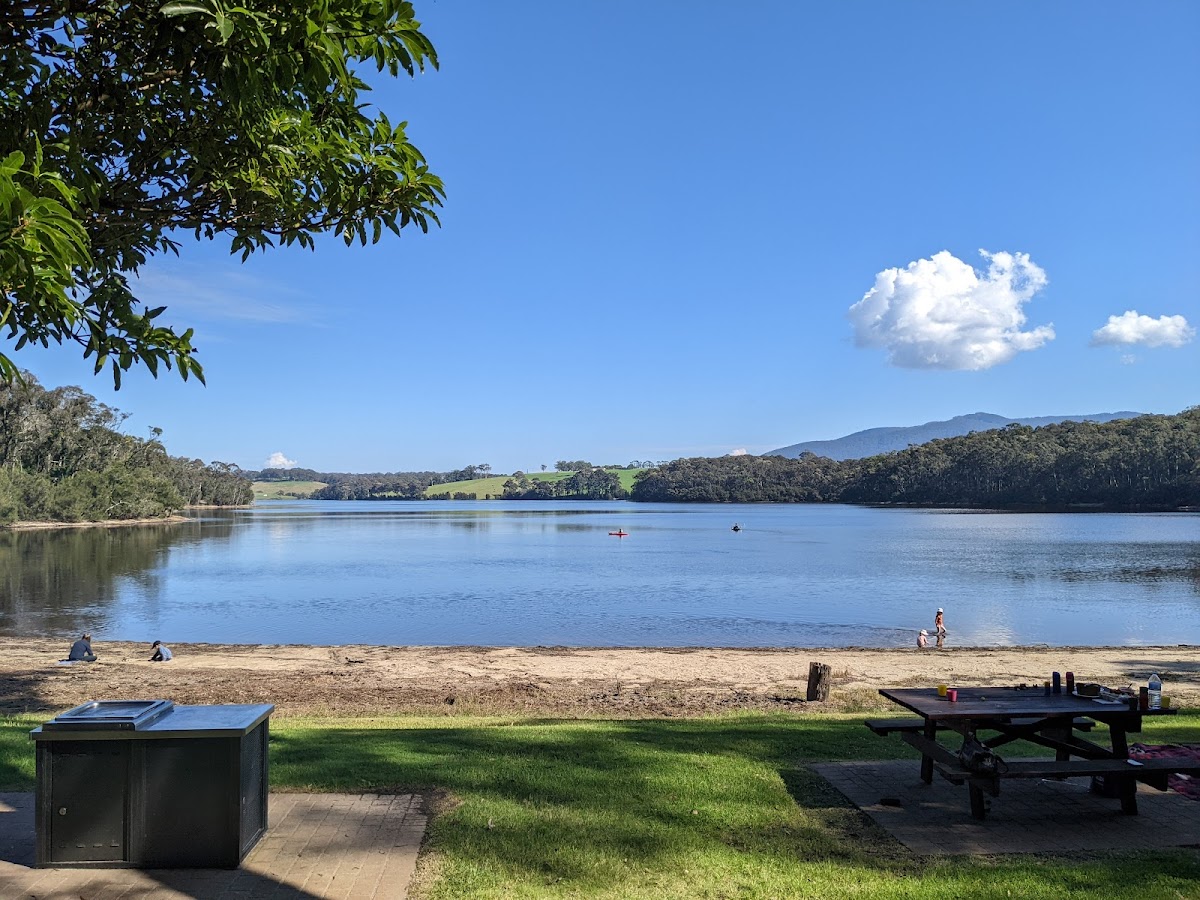 Narooma
South Coast, New South Wales
Crystal-clear inlet, surf beaches, oysters and Montague Island
Explore the guide →
Narooma
South Coast, New South Wales
Crystal-clear inlet, surf beaches, oysters and Montague Island
Explore the guide →
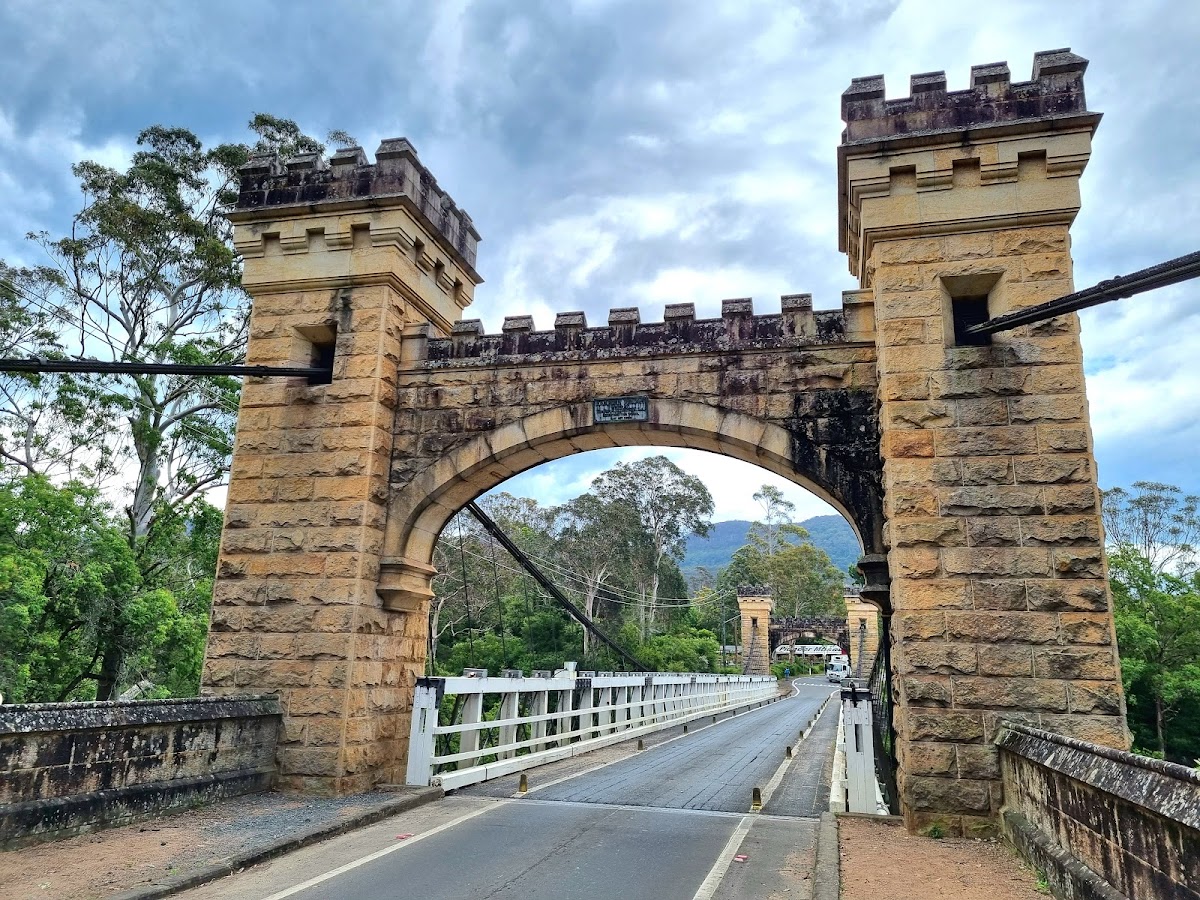 Kangaroo Valley
Shoalhaven, New South Wales
Hampden Bridge, kayaking and wombats in a green valley
Explore the guide →
Kangaroo Valley
Shoalhaven, New South Wales
Hampden Bridge, kayaking and wombats in a green valley
Explore the guide →
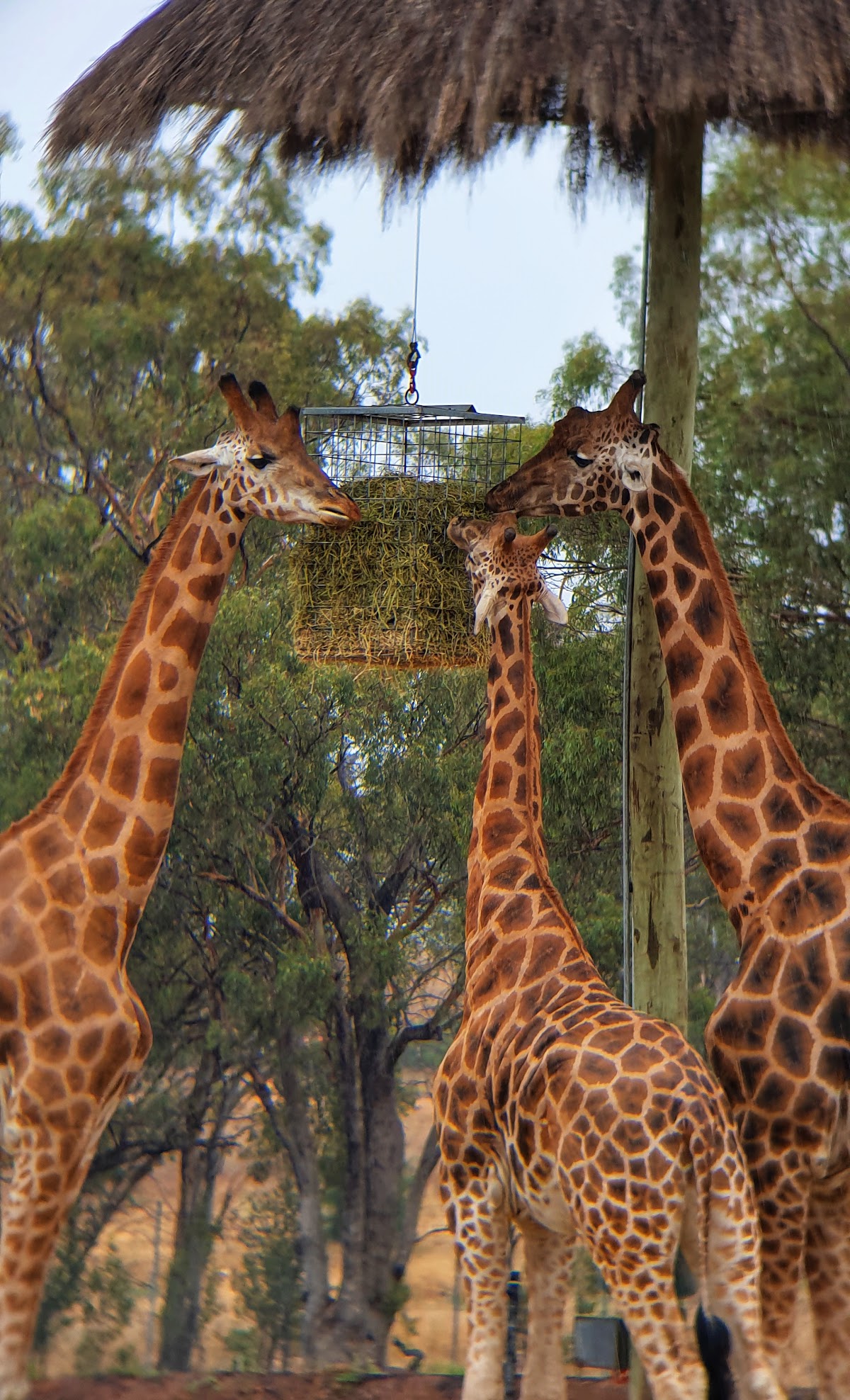 Dubbo
Central West, New South Wales
Open-range zoo and Outback gateway on the Macquarie River
Explore the guide →
Dubbo
Central West, New South Wales
Open-range zoo and Outback gateway on the Macquarie River
Explore the guide →
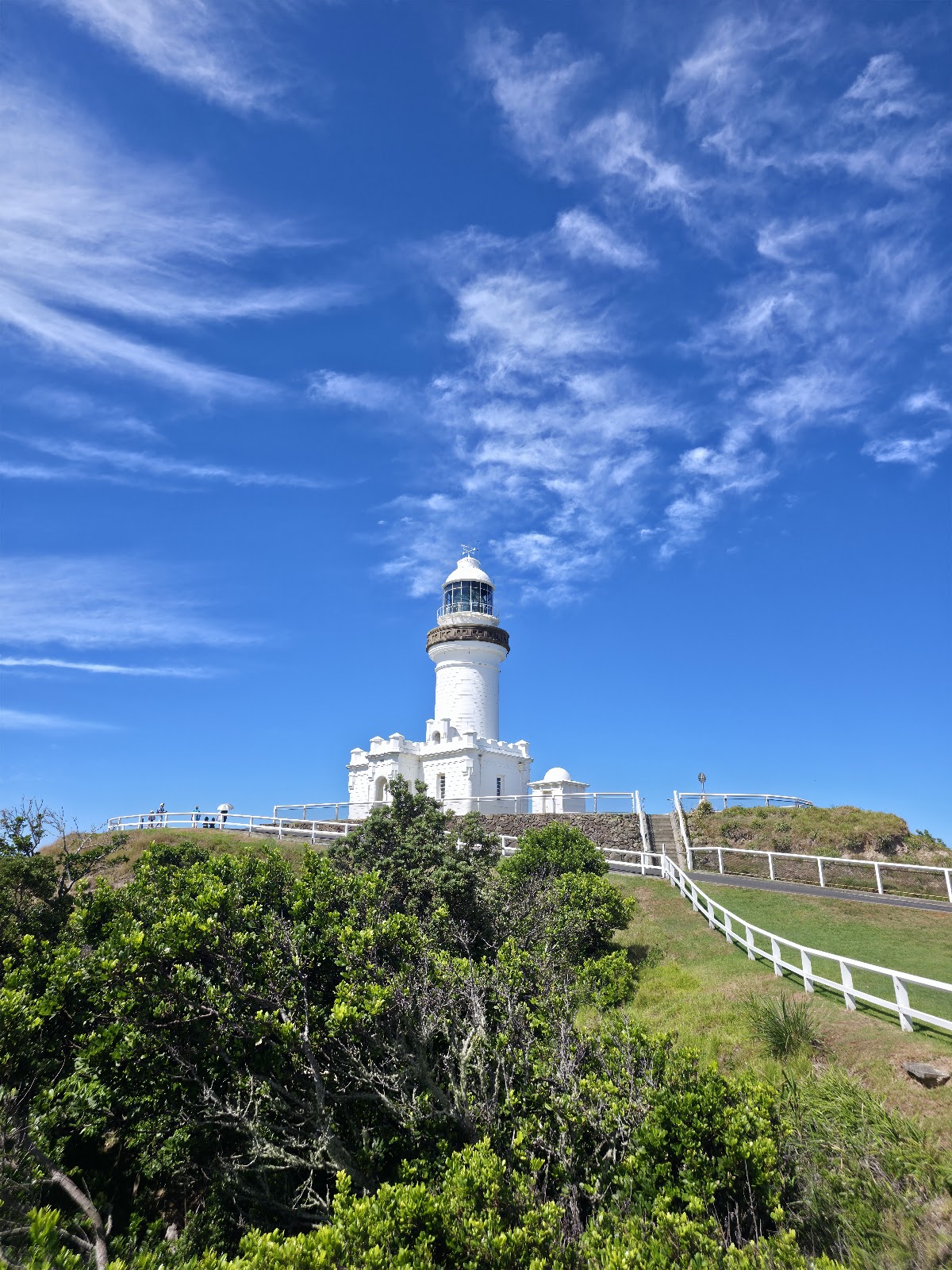 Byron Bay
Northern Rivers, New South Wales
Australia's iconic beach town and most easterly point
Explore the guide →
Byron Bay
Northern Rivers, New South Wales
Australia's iconic beach town and most easterly point
Explore the guide →
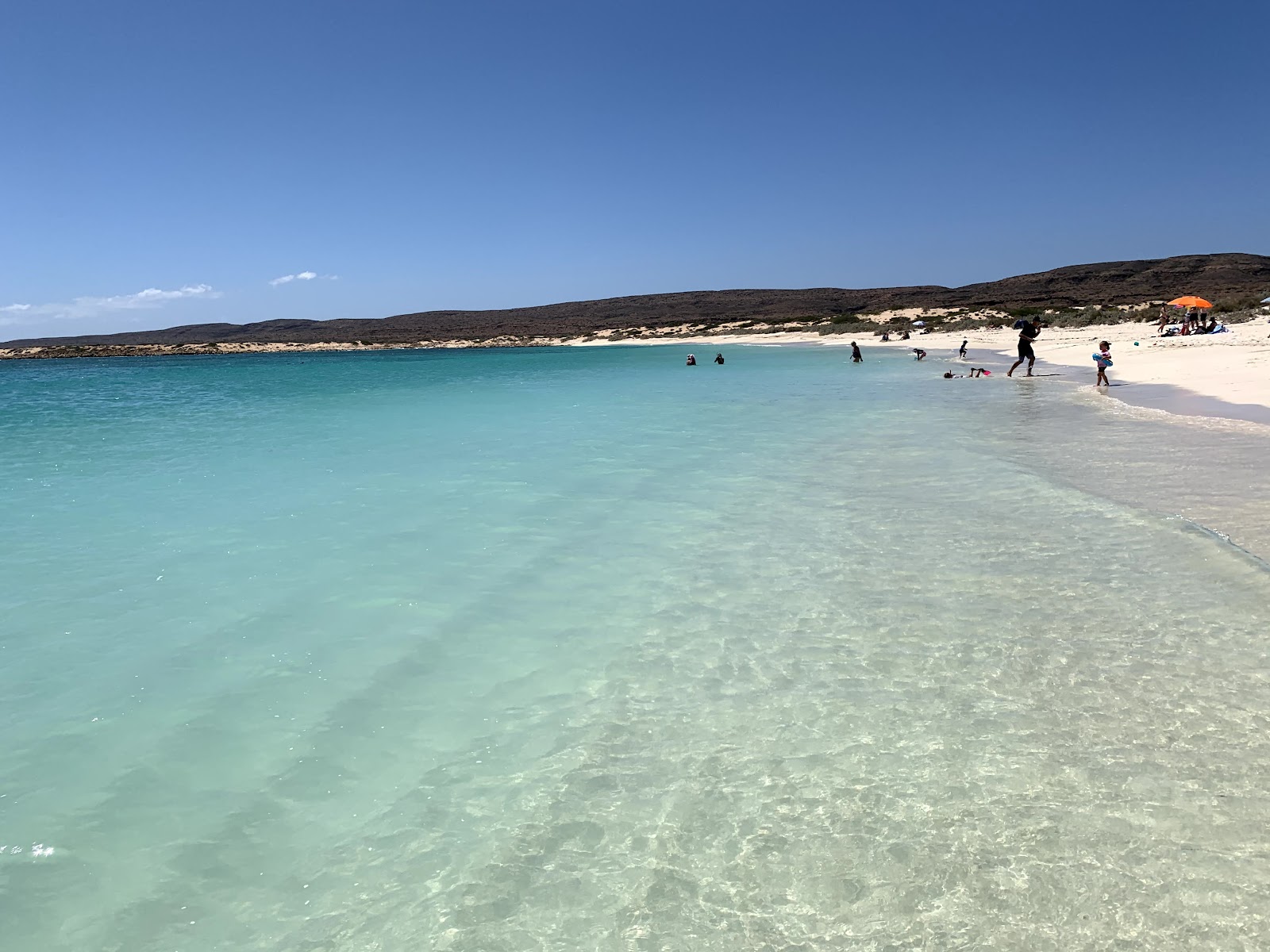 Ningaloo Reef
Australia's Coral Coast, Western Australia
Swim with whale sharks and snorkel a World-Heritage reef straight off the beach
Explore the guide →
Ningaloo Reef
Australia's Coral Coast, Western Australia
Swim with whale sharks and snorkel a World-Heritage reef straight off the beach
Explore the guide →
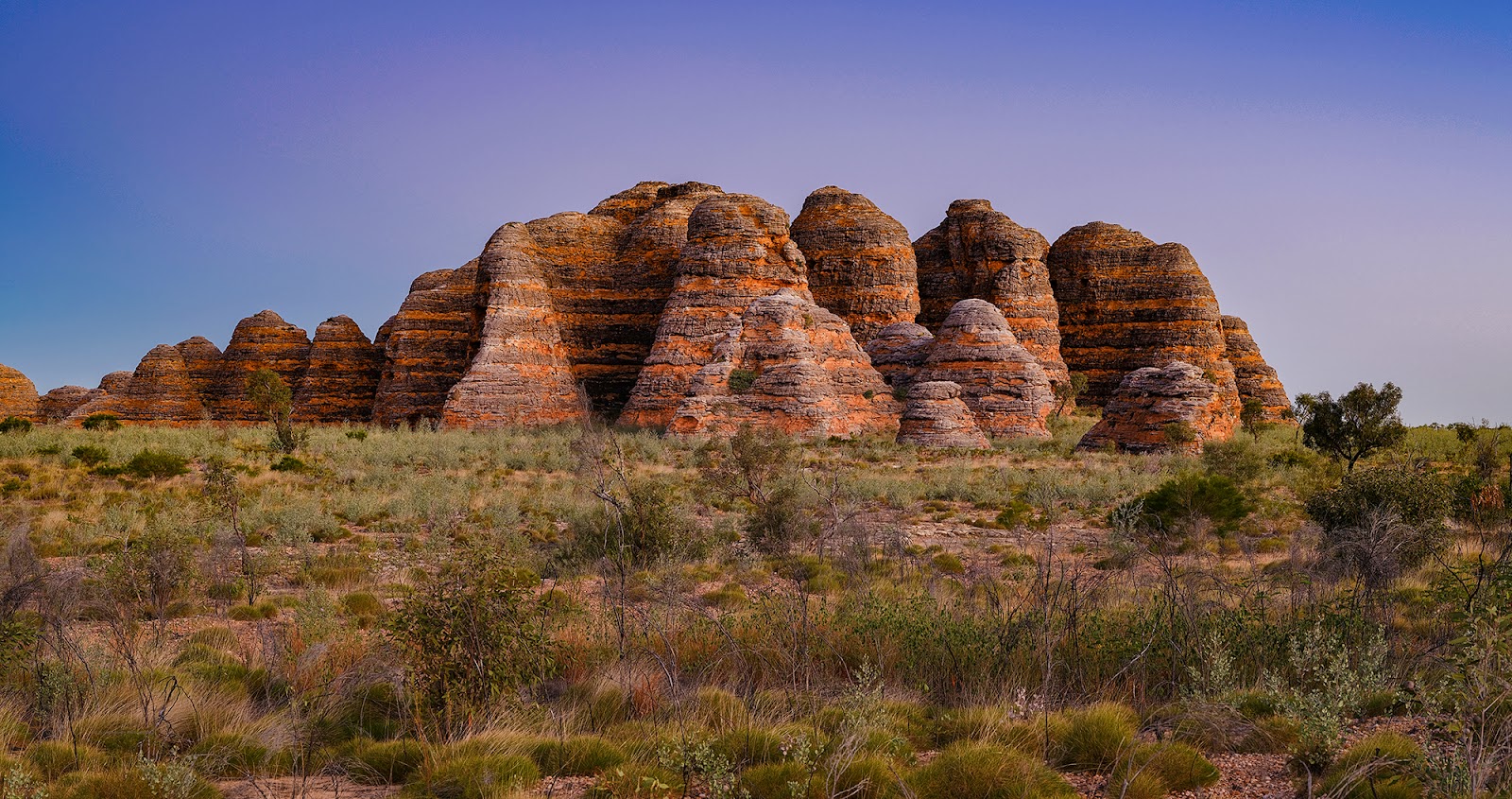 The Kimberley
Australia's North West, Western Australia
Gibb River Road, the Bungle Bungles, gorges and waterfalls in Australia's last frontier
Explore the guide →
The Kimberley
Australia's North West, Western Australia
Gibb River Road, the Bungle Bungles, gorges and waterfalls in Australia's last frontier
Explore the guide →
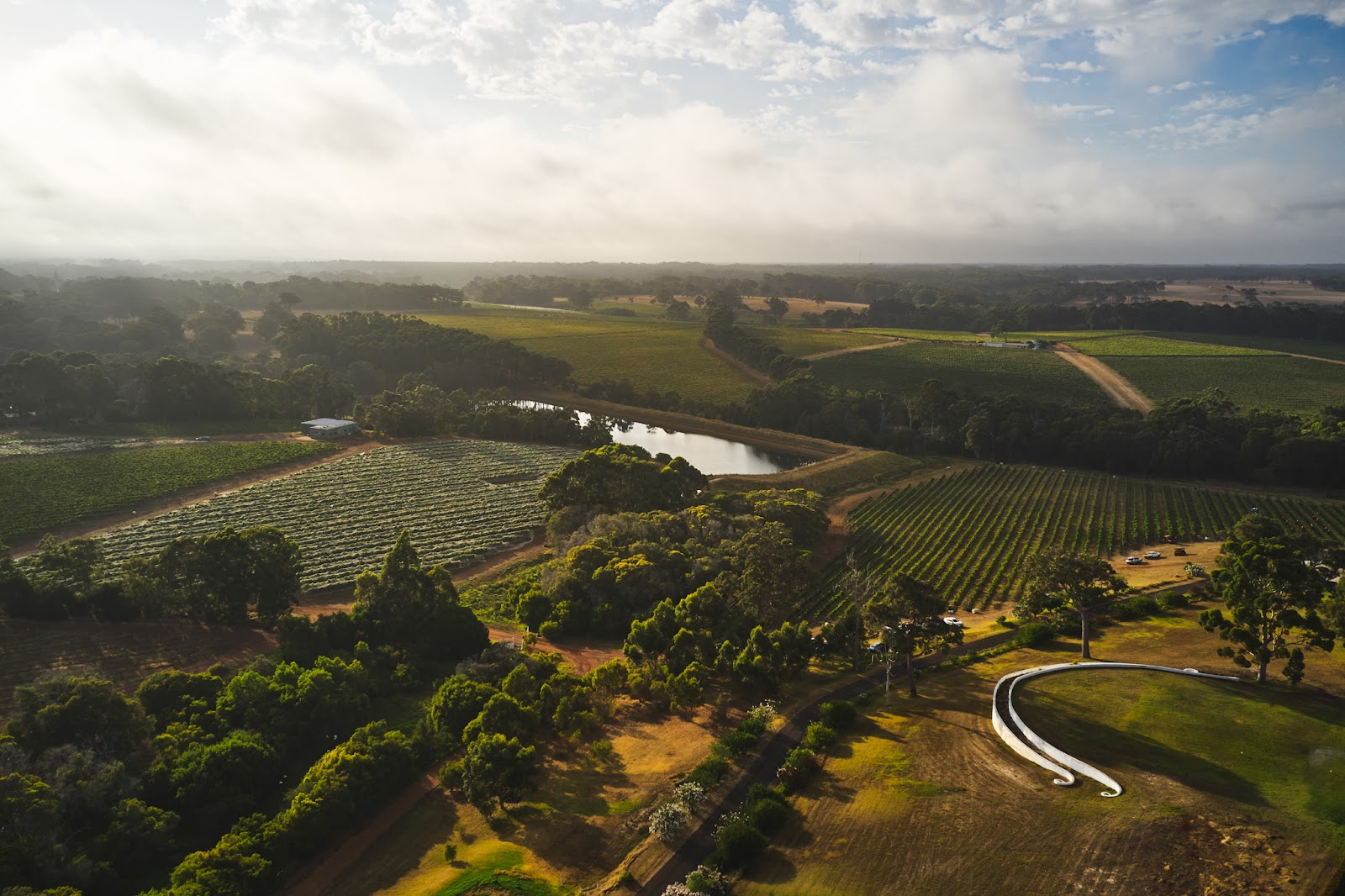 Margaret River
Australia's South West, Western Australia
World-class wineries, surf breaks and limestone caves three hours south of Perth
Explore the guide →
Margaret River
Australia's South West, Western Australia
World-class wineries, surf breaks and limestone caves three hours south of Perth
Explore the guide →